
Prospective franchise partners evaluating Clean Eatz often arrive with a mental picture of the customer that is close to accurate but wrong in one consequential respect. They imagine someone deeply invested in fitness, tracking macros, training six days a week, and treating nutrition as a form of personal identity. That customer is real and shops frequently, but a business built exclusively around them would struggle, because they represent a modest share of the traffic at a typical location.
The customer who actually sustains a Clean Eatz cafe is less dramatic and considerably more valuable. They are trying to get through a demanding week without their eating collapsing somewhere around Wednesday afternoon, and they have concluded, usually after several failed attempts at doing it themselves, that removing the decision entirely is the only approach that holds.
Consistency is the goal, and perfection is not on the table
The defining attitude of this customer is a kind of practical realism about their own follow-through.
They are not pursuing a magical transformation. They have generally been through at least one of those already, and they understand that the ambitious version of themselves who was going to meal prep every Sunday afternoon did not survive contact with an actual week. What they want now is a floor rather than a ceiling: a reliable set of meals that keeps Monday through Friday from becoming a series of compromises made at 12:40 p.m. in a parking lot.
This shift is visible well beyond any single brand. Recent analysis of 2026 food trends describes a broad consumer move away from aspirational eating and toward functional, everyday nutrition, favoring what the report calls the foods that actually get eaten on busy weekdays because they deliver satiety and convenience without demanding that anyone adopt a new identity to justify them.
For a franchisee, this matters operationally. A customer chasing transformation churns when motivation fades. A customer solving a logistics problem stays as long as the logistics problem exists, which for most working adults is indefinitely.
Their week has a shape, and it is not evenly distributed
The Monday through Friday framing in this customer’s behavior is literal rather than figurative.
Weekdays are when their eating is most exposed, because those are the days structured around obligations they did not choose: meetings that run long, school pickups, commutes, shifts. Weekends look different, and most of these customers are perfectly comfortable eating whatever they want on Saturday night. They are not seeking permission to be strict. They are seeking coverage during the window when their available time and planning capacity is lowest.
That produces a demand curve that looks unlike a conventional restaurant’s. Meal plan pickups cluster early in the week. Grab-N-Go moves steadily through weekday afternoons rather than spiking at dinner. Catering arrives on weekday mornings from offices and practices. The revenue arrives distributed across the week instead of concentrated in a Friday and Saturday evening window, which is precisely why the Clean Eatz business model supports the operating hours it does.
The routine is the product
Once this customer establishes a pattern, the pattern itself becomes the reason they return.
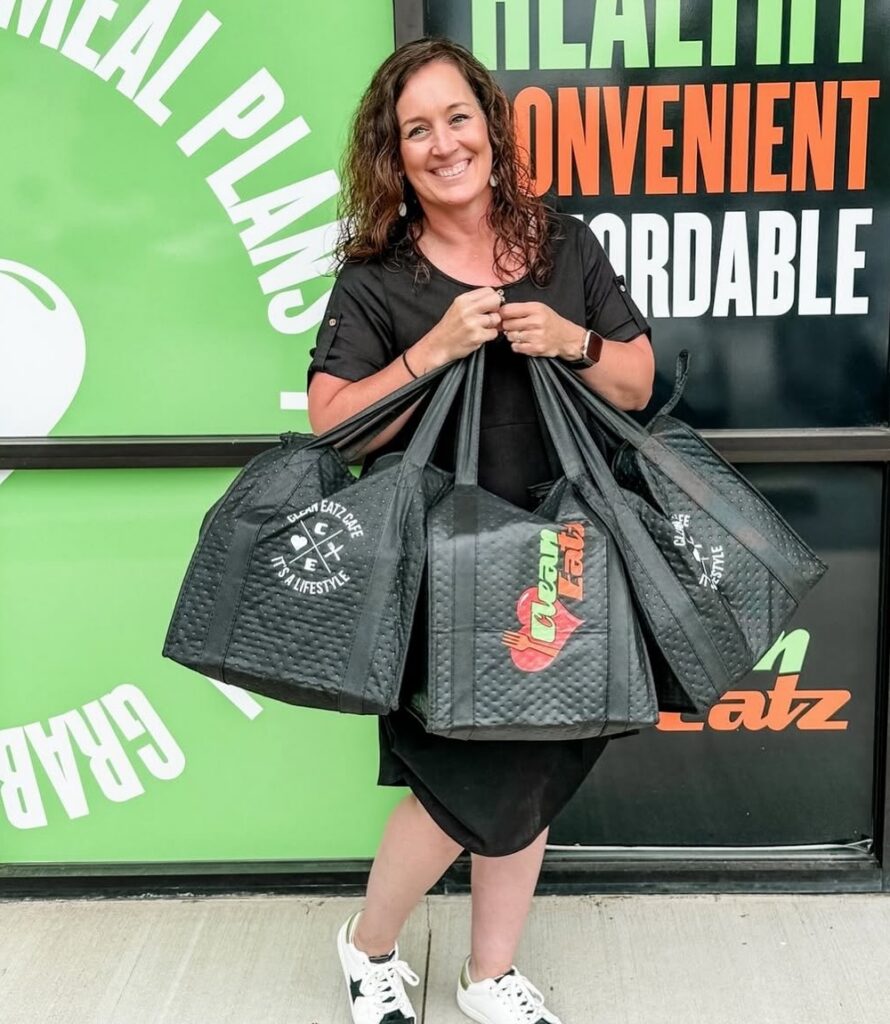
A meal plan subscriber is not making a purchase decision each week so much as maintaining a standing arrangement, and the pickup becomes a fixed point in their schedule the way a gym class, yoga session or a standing meeting does. Franchisees consistently report recognizing the same faces on the same afternoons, and that recurring behavior is the single most important characteristic of the customer base, because it converts a food business into something closer to a subscription business with a storefront attached.
It also means the relationship is durable but not unconditional. This customer will tolerate a menu they find slightly repetitive far more readily than they will tolerate an order that is not ready when they arrive with fifteen minutes between obligations. Reliability is the loyalty mechanism.
The category is moving toward this customer, not away
Two national trends are working in this customer’s favor, and prospective franchisees should understand both.
Protein has become the organizing nutrient of American eating. Survey data for 2026 found that 29 percent of consumers want to increase their protein intake, up ten percentage points in a single year, with roughly 65 percent of Gen Z and millennial consumers actively trying to eat more of it. Portioned, protein-forward meals are no longer a niche request.
The second trend is GLP-1 medication, which has moved from novelty to structural force. Roughly one in eight American adults currently takes one of these drugs, and industry analysis indicates that dinner traffic has fallen about 6 percent among consistent users as appetites shrink and eating occasions become smaller and more frequent. Separate research found that 44 percent of current users are buying more fresh produce and 35 percent more packaged protein. A brand organized around portion-controlled, protein-dense meals sold outside the dinner window is positioned well against a shift that is genuinely difficult for traditional full-service restaurants.
What does this all mean for a Clean Eatz franchisee?
Understanding this customer changes how a location runs.
You are not competing primarily on flavor innovation or on being the most exciting option in town. You are competing on being the dependable one, which means order accuracy, consistent portioning, pickup times that hold, and staff who recognize regulars by name. Clean Eatz has grown to more than 120 locations across 24 states largely because that customer profile repeats across markets that otherwise have little in common, from suburban North Carolina to metropolitan areas west of the Mississippi.
Your customer is not asking you to change their life. They are asking you to make one part of it stop being difficult, five days a week, without fail.
Request our Clean Eatz franchise kit and take a closer look at who you could be serving locally.