
To buy a franchise, first confirm you clear the brand’s cash and net worth floors. Then apply, test your market with the franchise team, read the franchise disclosure document with a franchise attorney, call current owners and visit headquarters. Only then do you sign and pay the franchise fee. Site selection, the lease, training and the build follow, on your market’s real estate and permit schedule.
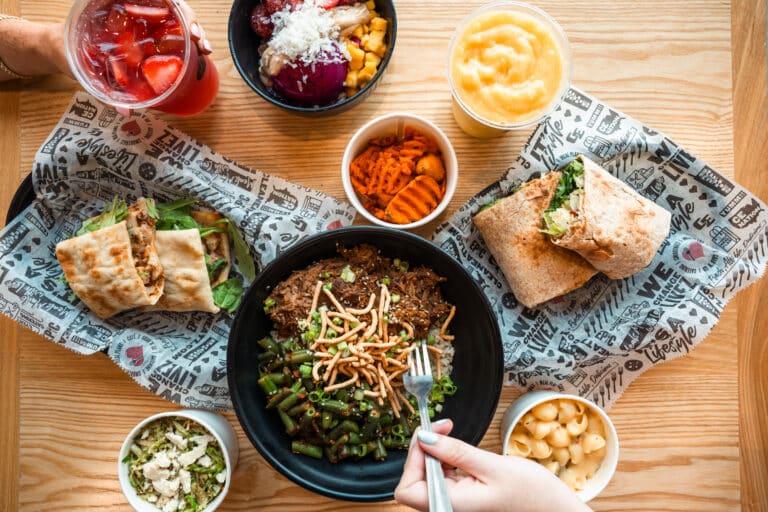
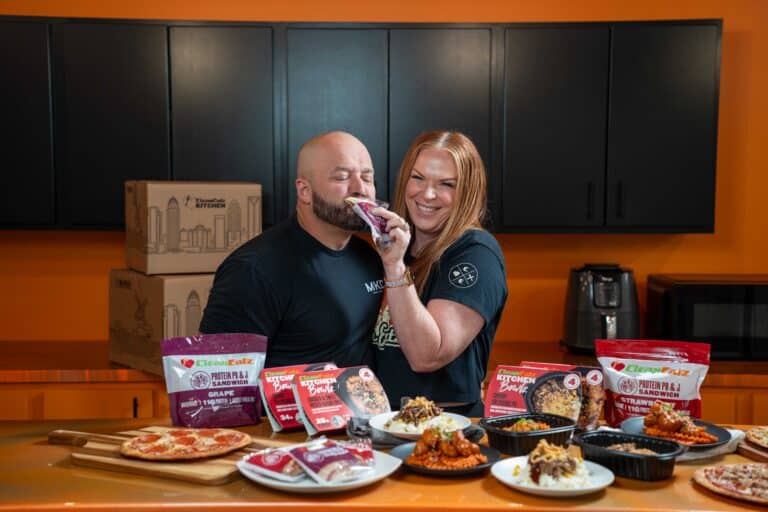
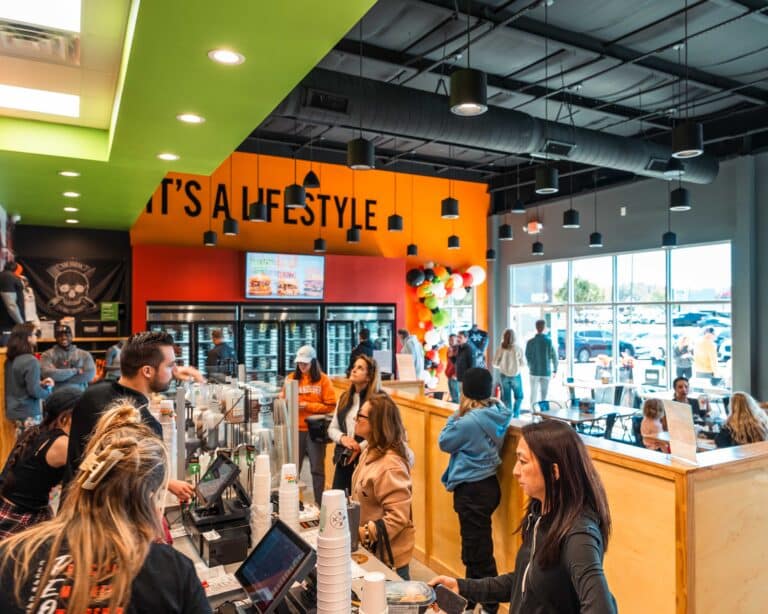
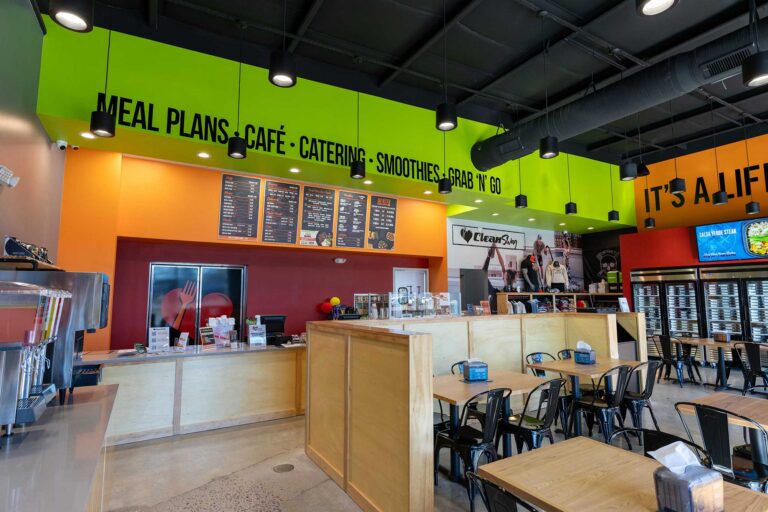
Clean Eatz, a healthy cafe franchise with five revenue streams, roughly 11am to 7pm hours and no fryers, is the worked example at each step. Its own process has eight steps, and every step before signing is free. This is a process guide, not legal or financial advice.
The short answer
Apply and study your market. The FDD must reach you at least 14 calendar days before you sign or pay, and you read it with a franchise attorney. Call owners, visit headquarters and sign only the agreement your attorney read. Site, lease, training and build-out come next, and how long they take depends on your market.
What you need before buying a franchise
Cash, time & two advisors
Most advice on how to buy a franchise starts with the brand. Start with yourself. The SBA business & franchise purchase guide asks three things before you shop: how much you are willing to spend, whether your skills and lifestyle fit the business, and what comes with the purchase. It also names the trade: “Franchising gives you more guidance but less control.”
Buying a franchise is a cash test first. Brands publish minimum liquid capital and net worth, and lenders add their own rules. Have these four in place before the first call.
- Liquid cash & net worthClean Eatz asks for $250,000 liquid and $1,000,000 net worth for a single unit, and $600,000 liquid and $2,250,000 net worth for a three-unit development deal.
- A financing planUnder SBA SOP 50 10 8.1, effective October 1, 2026, every 7(a) loan to a start-up needs a 10% equity injection based on total project cost, and a franchise brand must be on the SBA Franchise Directory to qualify. Clean Eatz does not lend. It is SBA-friendly and can point you to lenders who know franchise loans, and the lender alone sets terms.
- Time to run itItem 15 of any FDD states whether you must take part personally in running the business. Clean Eatz looks for owner-operators within roughly a one-hour drive of their cafe, and “It isn’t designed as an absentee investment.”
- A franchise attorney & an accountantLine them up now, with written fee estimates, so the FDD review in step 3 does not wait.
Then narrow the concept. If you are still shortlisting, read up on the healthy food franchises to look for: more than one way to earn, demand that predates the trend and support you can verify with owners.
Send a franchise application
A short form, then the first call
For a buyer, how to start a franchise begins with an inquiry form and a phone call, not a lease. Franchisors want to know where you would open and roughly what capital you have. The franchise application comes next. It covers your background, work history and finances, and the brand uses it to confirm fit on paper before it spends discovery time on you. Be exact about liquidity, because the lender will check it later.
The steps to buying a franchise carry different names at different brands. Clean Eatz uses eight, and the table maps them to this guide, with what each one costs you.
- Tell Us About You. Your details and market, then a call with the franchise sales representative. Free.
- Submit Your Application. Background, experience and financials, to confirm fit on paper. Free.
- Get to Know the Brand. Discovery calls and materials on the model and the support. Free.
- Review the FDD. The disclosure document, read with your attorney and accountant. Free.
- Talk to Our Owners. Validation calls with current owners, unscreened. Free.
- Discovery Day. A visit to headquarters in Wilmington, North Carolina. Free.
- Sign On. Sign the franchise agreement and join CE Nation. The $49,500 initial franchise fee is due.
- Find Your Site. Site selection with real estate and construction support, and the rest of Item 7 spending begins.
In the brand’s own words on the Clean Eatz steps to own page, “Financial commitment comes only when you sign a franchise agreement.” Your attorney and accountant bill you separately.
Talk through your market with the franchise team
Test the market before the brand
Discovery calls are where the franchise process moves from forms to substance. Your job is to turn every general answer into a specific one about your town.
Start with availability. As of October 31, 2026, Clean Eatz lists 37 states and DC as open, seven as limited (AL, GA, KY, NC, OH, SC and TN) and four as sold out (CA, MD, OR and WA). If your state is limited, ask the franchise team what that means for your town.
- Where are the nearest cafes, and how does Item 12 of the FDD describe the territory I would get?
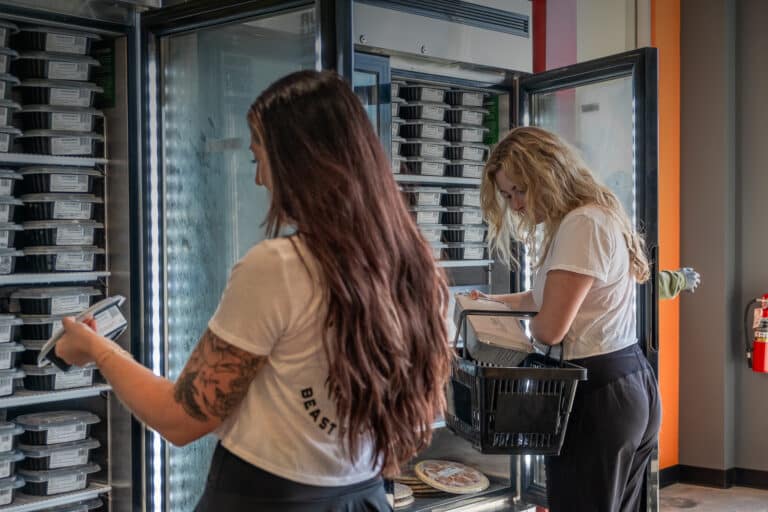
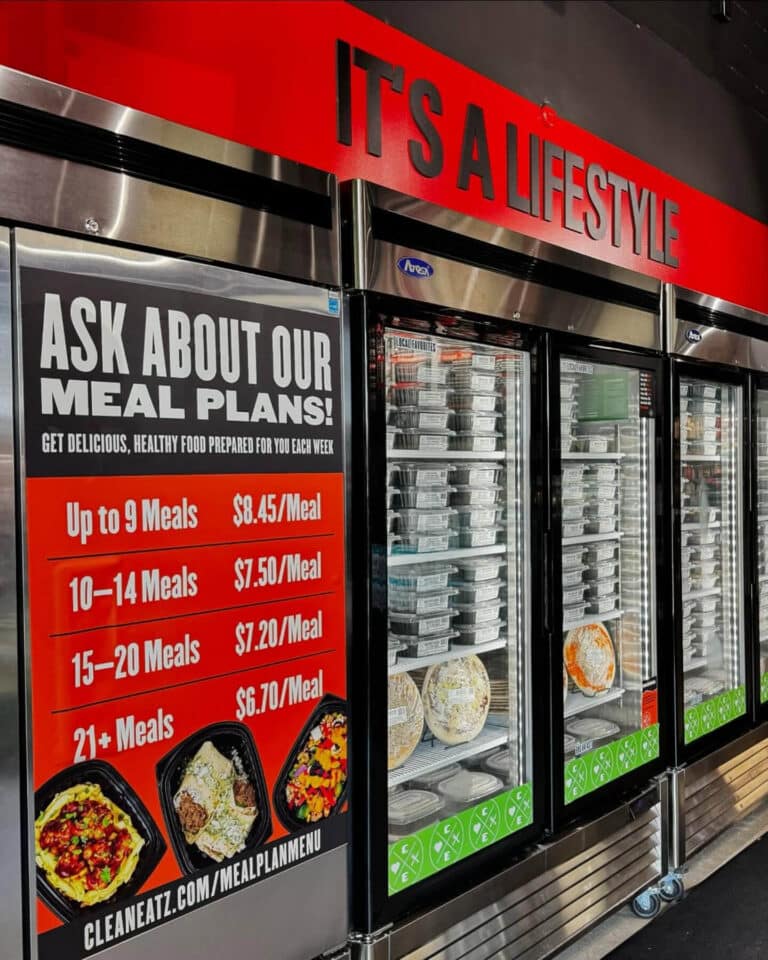
- Which of the five revenue streams (Meal Plans, Grab-N-Go Meals, In-Store Cafe, Retail and Catering) does a market like mine lean on, and who in my area buys weekly meals?
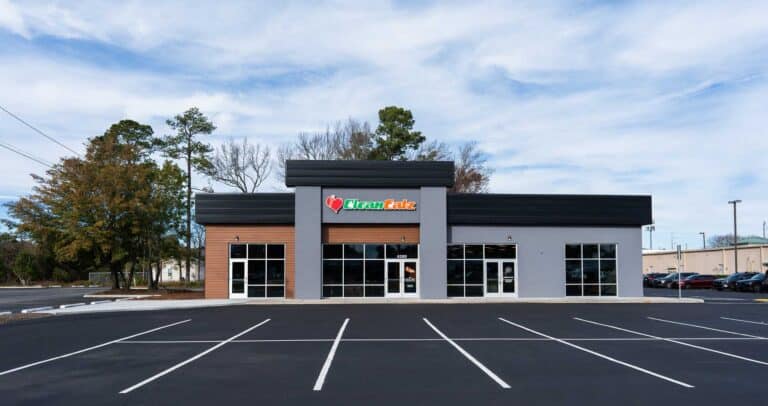
- Can I find 1,800 to 2,400 square feet with parking near the people who would pick up meal plans?
Earnings talk belongs in Item 19
Under the FTC Franchise Rule, a franchisor’s claims about sales or earnings must have a reasonable basis and appear in Item 19 of the FDD. If a number comes up on a call, ask where it sits in the document. If it is not there, do not plan around it.
Read the disclosure document with an attorney
Fourteen days is the minimum
The FTC is plain about timing. Its consumer’s guide to buying a franchise says that under the Franchise Rule, “you must receive the document at least 14 days before you are asked to sign any contract or pay any money to the franchisor.” The rule itself, at 16 CFR 436.2, counts those as 14 calendar days and covers payments to an affiliate of the franchisor too.
Use all of them. The same guide tells buyers to “Choose a lawyer who is experienced in franchise matters,” and suggests an accountant review the required financial statements. A franchise lawyer also knows what your state adds to the federal rule.
Clean Eatz calls this step “Review the FDD” and asks you to “take the time to review it with your attorney and accountant.” Its current FDD is dated April 30, 2026.
- Your attorney readsItem 5 refund conditions, the Item 6 fees, Items 12, 15 and 17 and the Item 22 agreement, and flags any earnings claim made outside Item 19.
- Your accountant readsItem 7 against your quotes and loan terms, the basis and spread of Item 19, and the Item 21 audited statements.
Sign the receipt, keep a copy
Item 23 is the receipt page. Sign and date the copy the franchisor asks for, keep the other, and count your 14 days from that date.
Call current franchise owners
The calls that settle the decision
The FTC’s guide says talking to current and former franchisees “may be the most reliable way to verify the franchisor’s claims.” It also says to “Talk to several franchisees who have been in business just over one year.” Item 20 lists current franchisees with each outlet’s phone number, plus every franchisee who left the system in the last fiscal year.
Clean Eatz calls this step “Talk to Our Owners” and describes it as “the most important step in the process.” The brand says “we don’t screen who you speak with,” so pick names from the Item 20 list yourself, not only the ones you meet on its Clean Eatz franchisee stories page.
I started as a store manager and worked my way up to owning two locations.
Dylan Richmond, 2 locations, Virginia
Call owners who came up through a cafe, like Dylan Richmond, and owners from other careers. Five questions to ask each one:
- How long did it take from signing to opening, and what held it up: the lease, permits or the build?
- Which Item 7 lines came in over the estimate?
- Which of the five revenue streams carried your first year, and which took longest to build?
- What did 10 Days at HQ prepare you for, and what did you learn only after opening?
- Knowing what you know now, would you sign again?
Visit headquarters for Discovery Day
Meet the people behind the system
Discovery Day is the in-person check on everything you have read and heard. At Clean Eatz it means a trip to Wilmington, North Carolina: “Come to Wilmington, meet the departments behind the brand, and see the operation for yourself.” It costs nothing, and the brand says it is designed so you “walk in informed and walk out clear either way.”
Bring the questions the FDD and the owner calls left open, and ask the department that would answer them after you sign: real estate on site approval, training on the 10 days at HQ, operations and marketing on support after launch. Then sleep on it. The next step costs money.
Sign the agreement & pay the franchise fee
Sign the version your attorney read
Signing is the first step that commits you. At Clean Eatz it is step 7, “Sign On,” where you “Sign your franchise agreement and officially join CE Nation.” The $49,500 initial franchise fee is due at signing, per Item 7. Service members at E-5 rank or above qualify for a reduced franchise fee and favorable financing terms.
One more federal clock applies. Under 16 CFR 436.2(b), if the franchisor changes the agreement on its own in a material way, you must get the revised version at least seven calendar days before you sign it. Changes that come from negotiations you started do not restart that clock.
- At least 14 calendar days have passed since you received the FDD, the date on your Item 23 receipt.
- Your attorney has read the final agreement, and every negotiated change is in it.
- Your accountant has rebuilt the Item 7 budget with your own quotes.
- Your lender has given you its commitment in writing, if you are borrowing.
- You know what Item 5 says about refunds of the fee.
A loan approval is not a review
The FTC’s guide warns that “bank approval of a franchise loan doesn’t necessarily mean the franchise is a safe or good investment.” The lender is checking repayment, not fit.
Franchise site selection & your lease
The site sets your build cost
Franchise site selection is shared work. If the franchisor helps find a site, Item 11 must say whether it picks the site or approves one you find, the factors it weighs (the rule lists location and neighborhood, traffic patterns, parking, size, the building and lease terms as examples), and its time limit to approve or reject a site, with what happens if you cannot agree. The FTC’s guide warns that a franchisor “may not approve a site you select.”
At Clean Eatz, site selection is step 8, “Find Your Site,” with “our real estate and construction support behind you.” The cafe runs in roughly 1,800 to 2,400 square feet. Item 7 budgets $2,500 to $18,000 for rent before opening, $15,000 to $22,000 for the architect and a $3,500 footprint design fee.
The space you pick moves the biggest line in Item 7. Clean Eatz estimates cafe construction at $100,000 to $343,000, and notes that actual costs vary by market, site, construction and lease terms. For independent restaurants, a 2018 RestaurantOwner.com survey of more than 350 owners put the median cost to remodel an existing restaurant space at $275,500, against $425,500 to convert a non-restaurant space. Those are dated figures, but they show how far a space’s starting condition can move a budget.
- Use clause. Does it allow food preparation, weekly meal production and retail sales?
- Rent start. Does rent begin at signing, at possession or at opening?
- Improvements. What will the landlord build or pay for, and when?
- Contingencies. Can you exit if permits or financing fall through?
- Franchisor terms. Does the brand require its own lease rider, and has your attorney read it?
Train, build out & open your doors
Permits, a crew, then opening week
Learning how to own a franchise, as opposed to buying one, happens here. The short answer to how to open a franchise is permits, a build and a trained crew, in that order.
Item 11 must disclose the typical time between signing (or your first payment) and opening, and the factors that change it: the lease, financing, building permits, zoning, weather, shortages and late equipment. Clean Eatz says time from signing to opening “depends on real estate and build-out in your specific market,” and gives a timeline for your situation as you go. Rely on Item 11 and owner calls, not a sales pitch. In March 2026 the FTC announced a settlement with Xponential Fitness, with a $17 million judgment. The FTC alleged the brand claimed studios typically opened within six months of signing, when franchisees typically took more than a year, if they opened at all.
- The buildConstruction, then equipment at $60,200 to $156,500 and the technology package at $8,700 to $12,000. With no fryers, Clean Eatz describes “a smaller, simpler equipment package.”
- 10 Days at HQOne-on-one training in Wilmington “covering operations, food, and the Clean Eatz system end to end,” plus On Demand Training with operating standards, recipes and daily checklists.
- Stock & marketingAn opening food order of $20,100 to $28,500, initial inventory of $10,000 to $18,000 and $7,000 to $12,000 for advertising and initial marketing funds.
- Opening weekGrand Opening Support puts the brand’s team on site through your first week, “so day one runs like day one hundred.” The Ops & Marketing Team stays with you after launch.
Keep cash in reserve. Item 7 sets aside $20,000 to $40,000 in additional funds for the first three months. In the brand’s words, “You’re in business for yourself, but not by yourself.”
How much does it cost to buy a franchise?
Item 7 first, then the weekly fees
How much does it cost to buy a franchise? Item 7 of the brand’s FDD answers it, line by line, with a low and a high estimate for each cost and when it falls due. For Clean Eatz the estimated initial investment is $307,500 to $733,500, including the $49,500 franchise fee and excluding a real estate purchase and ongoing fees. The table groups its 17 lines.
| Low | High | |
|---|---|---|
| Franchise fee, due at signing | $49,500 | $49,500 |
| Construction, architect, design, furniture, signage | $125,500 | $384,500 |
| Equipment and technology package | $68,900 | $168,500 |
| Opening food order and initial inventory | $30,100 | $46,500 |
| Advertising and initial marketing funds | $7,000 | $12,000 |
| Rent, insurance, travel, miscellaneous | $6,500 | $32,500 |
| Additional funds, first three months | $20,000 | $40,000 |
| Total | $307,500 | $733,500 |
Ongoing fees are easiest to judge per $100,000 of gross sales. Clean Eatz charges a 6% royalty ($6,000), collected weekly by ACH, plus 2% to the brand fund ($2,000) and at least 1% in local marketing ($1,000). That is at least $9,000 on every $100,000, plus a $638 monthly technology fee, $7,656 a year at any sales level.
The full table, with each line’s payee and the Item 19 notes, is on the Clean Eatz investment & earnings page. Add your own lease quote and loan terms.
Sources
- A Consumer’s Guide to Buying a Franchise, Federal Trade Commission, September 2020
- 16 CFR Part 436, Disclosure Requirements and Prohibitions Concerning Franchising (FTC Franchise Rule), eCFR, current as of 2026
- Buy an existing business or franchise, US Small Business Administration
- SOP 50 10 8.1, Lender and Development Company Loan Programs, US Small Business Administration, effective October 1, 2026
- FTC Secures Settlement Against Xponential Fitness for Franchise Rule Violations, FTC press release, March 18, 2026
- How Much Does It Cost to Open a Restaurant, RestaurantOwner.com survey release, PR Newswire, November 15, 2018
How to buy a franchise questions
Quick answers before you apply
Short answers to what buyers ask about how to get a franchise, with healthy food franchises as the example.
Can you buy a franchise with no restaurant experience?
Yes, if the brand allows it, and each franchisor sets its own requirements. Clean Eatz requires no restaurant background and says “Experience helps, mission alignment matters most.” Restaurant management, fitness or wellness, manufacturing and military service at E-5 or above are the backgrounds it lists as good fits.
How long does it take to open after you sign?
It depends on the lease, permits and build in your market. Item 11 of every FDD must disclose the typical time from signing to opening and what changes it. Clean Eatz’s site says it depends on real estate and build-out in your market, so read Item 11 and ask owners who opened recently how long theirs took.
Do healthy food franchises need fryers?
Not necessarily. It depends on the menu. Clean Eatz cafes run with no fryers, which the brand says means “a smaller, simpler equipment package.” It explains the operating side in its post on closing at 7 with no fryers.