No franchise is recession proof, and a sales page that says otherwise is asking you to skip your homework. What the data does show is that some businesses bend less than others. From December 2007 to June 2009, U.S. payroll jobs fell 5.3%, while jobs at limited-service restaurants fell 1.2%, according to Bureau of Labor Statistics employment counts.
This list turns that pattern into 8 traits you can check in any healthy franchise’s Franchise Disclosure Document and in calls with its owners. Each trait starts with the industry evidence, then shows where Clean Eatz lands, including the parts that cut the other way.
The short answer
A recession-resistant franchise sells something people keep buying when money is tight, earns it through more than one channel and carries modest fixed costs. Food spending dips in a recession but does not disappear, and limited-service formats have held up better than full-service ones. No brand is immune, so test each trait against the FDD.
What makes recession proof businesses hold up
Resistance is a set of traits you can test
People search for recession proof businesses because they want certainty, and there is none to buy. The National Bureau of Economic Research dates the last two U.S. recessions to December 2007 through June 2009 and February 2020 through April 2020. Almost every industry lost ground in at least one of them.
What separates recession resistant franchises from the rest is structure. Demand that customers protect, revenue that repeats, costs that stay small when sales slip, and numbers you can verify. Most lists of recession proof franchises skip that last part, yet a brand that publishes its costs and results lets you test the claim instead of trusting it.
Use the 8 traits as a screening sheet. Its last column says where the evidence lives:
| Trait | The question to ask | Where to check |
|---|---|---|
| 1. Protected demand | Would customers cut this before they cut groceries? | USDA spending data, your own market |
| 2. Recurring revenue | How much of next week’s sales is already ordered? | Owner calls |
| 3. Diversified revenue | How many separate channels bring in sales? | Item 1 description, owner calls |
| 4. Lean labor | How many people must be on the clock to open? | Owner calls, Item 19 labor line |
| 5. Short hours | How many hours a day do you pay to stay open? | Operating standards, owner calls |
| 6. Compact footprint | How much fixed cost do you sign up for? | Item 7 construction, equipment and rent lines |
| 7. Growing health demand | Is the customer base widening? | Public health data, menu fit |
| 8. Transparent numbers | Can you see the bottom quartile as well as the average? | Item 19 |
Demand that people do not cut first
Food spending dips, then changes format
Recession resistant businesses sell something customers keep buying while they cut elsewhere. Food qualifies only in part. In the USDA food spending data, real food-away-from-home spending fell 5.0% from 2007 to 2009 in 2025 dollars, and food-at-home spending fell 4.0%. People spent less, but they kept eating out: about 55% of food dollars went to food away from home in both years.
Format mattered more than category. Real sales at full-service restaurants fell 9.3% over those two years, while limited-service restaurants slipped 3.1%. The 2020 gap was far wider, with full-service down 26.2% in one year and limited-service down 5.8%.
| Real food spending, 2025 dollars | 2007 to 2009 | 2019 to 2020 |
|---|---|---|
| Food at home | Down 4.0% | Up 4.4% |
| All food away from home | Down 5.0% | Down 15.4% |
| Full-service restaurants | Down 9.3% | Down 26.2% |
| Limited-service restaurants | Down 3.1% | Down 5.8% |
Calculated from the ERS constant-dollar series (with taxes and tips), last updated June 2026. In plain terms, diners traded down a format more readily than they gave up the meal out.
The Clean Eatz answer
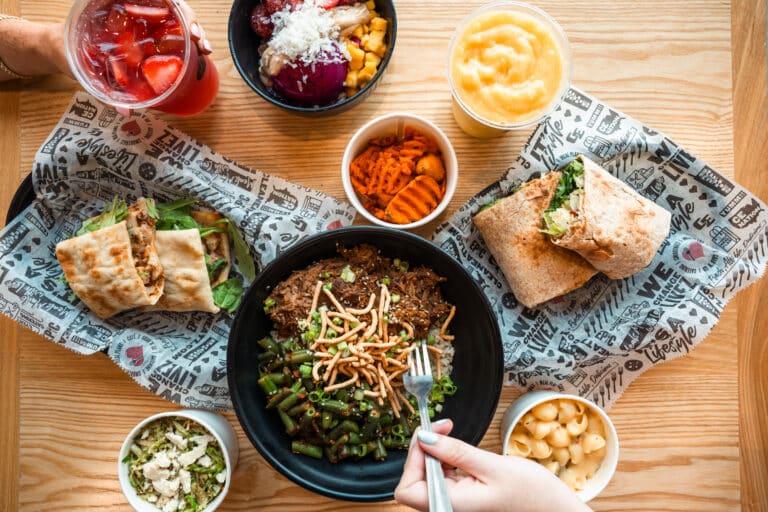
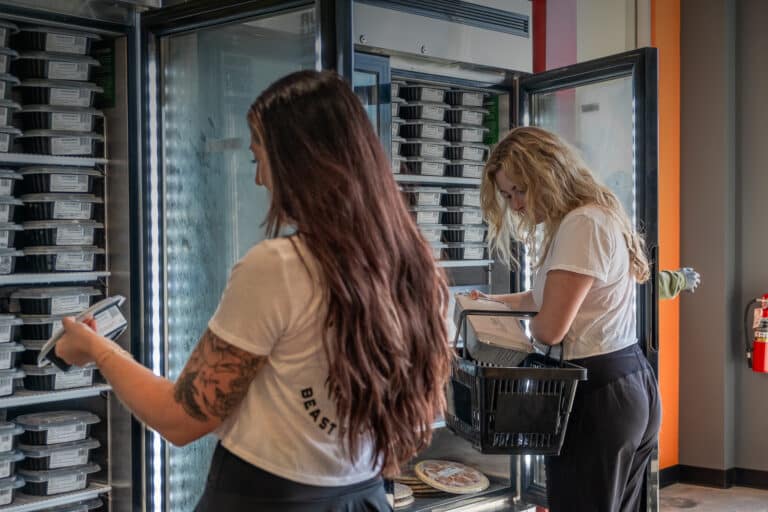
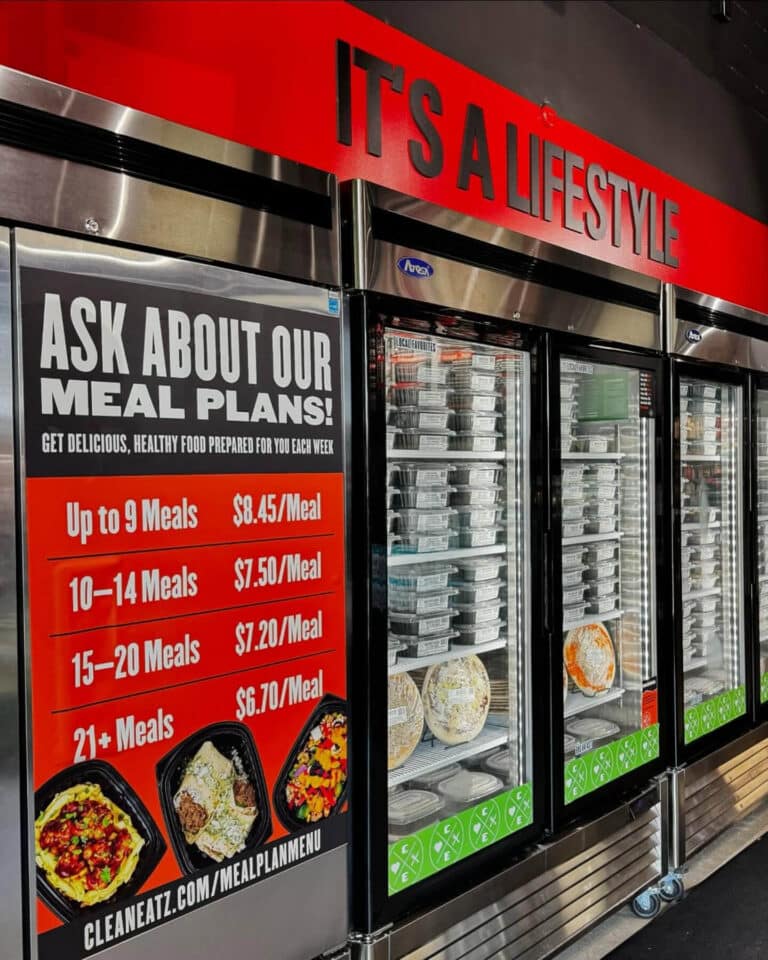
- Where it competes Meal Plans and Grab-N-Go Meals stand in for a week of grocery runs and cooking, a different decision from a night out.
- What no one can show you Clean Eatz began franchising in 2015, years after the 2007 to 2009 recession, so there is no system record from that downturn. Owners who were open in 2020 are your best evidence.
Recurring revenue from weekly meal plans
Repeat orders give you early warning
A recurring revenue business knows part of next week’s sales before the week starts. A weekly order is one decision a customer makes and then renews, instead of a fresh choice at every lunch. Pre-orders also let an operator buy food and schedule prep against known demand rather than a forecast.
Meal Plans are the recurring core at Clean Eatz: “weekly pre-portioned, healthy meals for breakfast, lunch and dinner, customizable for dietary needs.” Clean Eatz counts those weekly meal plan regulars as its recurring customer base.
Weekly cuts both ways
A weekly plan can be paused in a week. It lasts only as long as it saves the customer time and arrives right, and every renewal is a chance to stop. When a downturn hits, you see it in the order count within days.
The share of sales that Meal Plans bring in is not published, so ask for it in validation, along with these:
- What share of your gross sales comes from Meal Plans, and how has it moved in two years?
- How many plan customers are still ordering after three months?
- When customers paused, what reason did they give?
- If you were open in 2020, what happened to plan orders that spring?
Diversified revenue across five channels
Five ways to earn under one roof
Diversified revenue spreads a cafe’s sales across customers who buy for different reasons. It cannot stop a downturn. It lowers the odds that one shock, a dining room closure or an employer cutting its event budget, takes out most of the week.
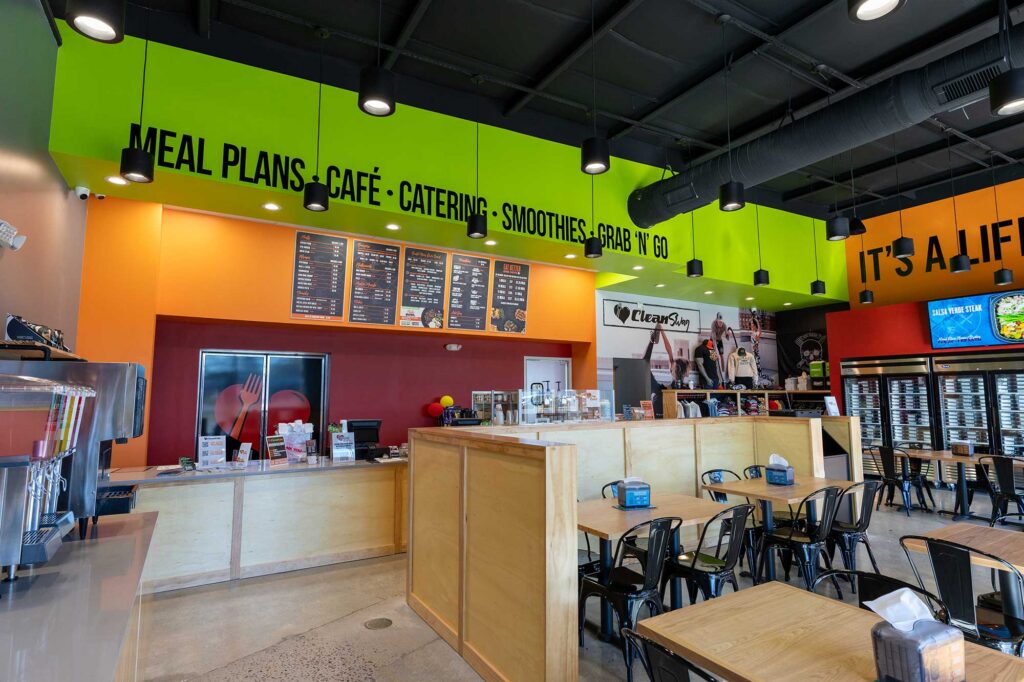
One Clean Eatz kitchen feeds five revenue streams, a model trade press has covered (see Fast Casual on diversified revenue). Here is what each stream sells, and the question each one raises for a slow economy:
| Stream | What it sells | Downturn question for owners |
|---|---|---|
| Meal Plans | Weekly pre-portioned meals for breakfast, lunch and dinner | Do plans pause when household budgets tighten? |
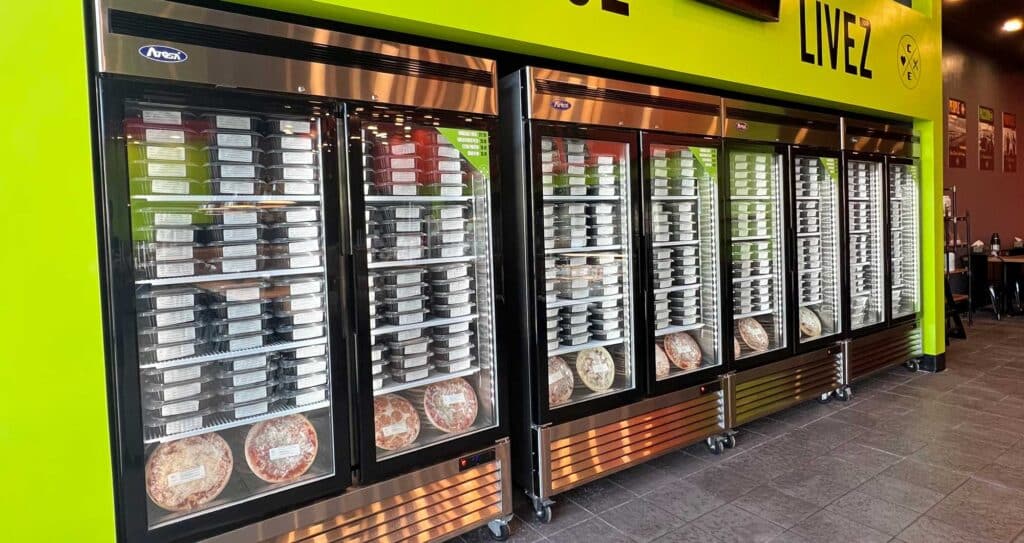
| Grab-N-Go Meals | Frozen, pre-packaged, ready-to-eat meals | How does the price compare with grocery prepared food? |
| In-Store Cafe | Dine-in and carry-out burgers, flatbreads, bowls and smoothies | Does dine-in traffic drop first? |
| Retail | Healthy snacks, supplements and related products | Which add-on items do customers trim? |
| Catering | A fresh alternative to traditional event menus | How tied are orders to local employers? |
Five streams also mean more to manage. Each one carries its own inventory, pricing and marketing, and a stream that runs badly is a drain, not a hedge. Ask owners which streams they lean on and which they would drop.
A lean labor model
Fewer roles to fill when sales slip
Labor is the cost you least want to carry into a slow quarter. The National Restaurant Association’s 2025 operations data, covering 2024, found that limited-service operators with a pre-tax profit ran median labor of 30.0% of sales, against 34.1% for operators that lost money. Among full-service operators the split was 34.2% against 42.9%.
A lean model has fewer positions that must be filled before the doors open, and fewer skilled roles that are hard to replace. Clean Eatz is built for a smaller crew than a full-service restaurant, and it has no fryers, so there is no fry station to staff or train. See the brand’s summary, Lean labor & condensed hours.
What the FDD will and will not show
No crew size is published. The Item 19 table reports labor as its own cost line (trait 8), with EBITDA stated before owner and manager salary. Ask owners how many people they schedule on a slow weekday and on their busiest day.
Shorter hours & lower overhead
Every open hour has a price
Hours behave like a fixed cost. Every open hour needs staff, lights and HVAC whether or not customers come, and late, thin hours are hardest to cover in a slow year.
Run the arithmetic for any concept. BLS put average hourly earnings at food services and drinking places at $22.17 in August 2026 (preliminary). Two extra hours a night with a crew of three comes to about $133 in wages, or roughly $47,900 over 360 nights, before payroll taxes, utilities and a manager on duty. That crew of three is an example, not a Clean Eatz figure.
At Clean Eatz, cafes run a condensed daypart, roughly 11am to 7pm, with no late nights. That has a plain cost: a cafe that closes at 7 gives up evening sales entirely, so daytime traffic and pre-ordered meals have to carry the day.
A four-line worksheet for any brand you compare:
- List every hour the franchisor requires you to be open.
- Multiply the staff on the schedule in each hour by the local wage.
- Ask owners which hours pay for their labor and which do not.
- Add utilities and supervision for the hours that do not.
A compact footprint & smaller equipment package
Less fixed cost to carry through a slump
Rent, loan payments and equipment leases do not shrink when sales do. Smaller fixed lines mean a cafe needs less revenue each month just to stand still.
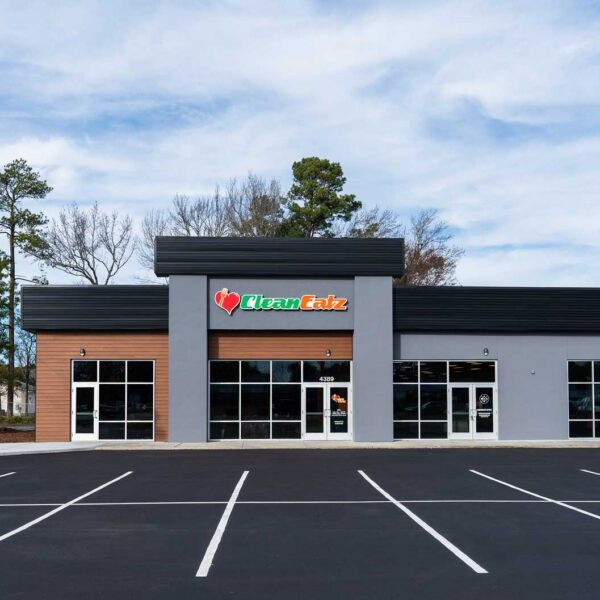
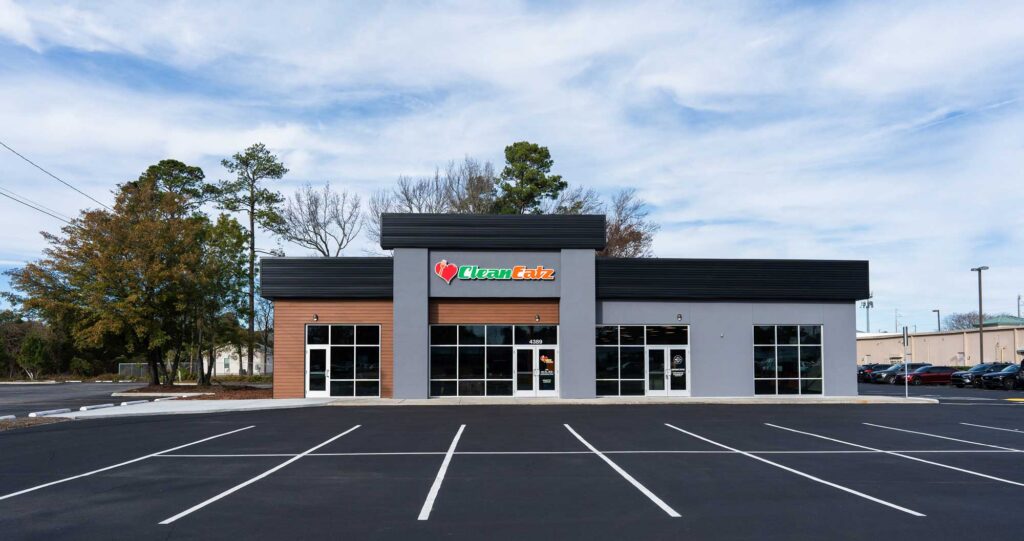
A typical Clean Eatz cafe runs roughly 1,800 to 2,400 square feet, and the brand ties its equipment package to the missing fryers: “No fryers means a smaller, simpler equipment package.” Item 7 of the FDD dated April 30, 2026 puts the build-out lines in dollars:
| Item 7 line | Low | High |
|---|---|---|
| Cafe construction | $100,000 | $343,000 |
| Equipment | $60,200 | $156,500 |
| Rent or real estate (before opening) | $2,500 | $18,000 |
| Total estimated initial investment | $307,500 | $733,500 |
Construction alone is about 33% of the low total and 47% of the high. The total includes the $49,500 initial franchise fee and excludes buying real estate, and Clean Eatz labels the figures “estimates only, actual costs vary by market, site, construction and lease terms.” Whatever share of it you borrow becomes a fixed payment, due in a slow month as in a busy one.
Health demand that keeps growing
A customer base that keeps widening
A healthy franchise sells into a long health trend that moves on its own timeline, not the business cycle’s. The CDC’s National Center for Health Statistics measured adult obesity at 40.3% for August 2021 to August 2023. A KFF poll fielded in fall 2025 found 12% of U.S. adults said they were currently taking a GLP-1 drug, and 18% had taken one at some point.
For a cafe that sells portion-controlled meals, that is a customer group to understand well. Clean Eatz sells a GLP-1 Meal Plan Bundle of “macro-friendly, portion-controlled meals,” and its blog covers the trend in The GLP-1 boom for cafe owners.
- 40.3%U.S. adults with obesity, Aug 2021 to Aug 2023CDC NCHS Data Brief 508
- 12%Adults currently taking a GLP-1 drug, fall 2025KFF Health Tracking Poll
- 56%GLP-1 users who said the drugs were hard to affordKFF, November 2025
Health spending is not immune
A downturn can push people off a costly medication or a premium lunch. Treat health demand as a long trend under the business, not a shield against a bad year.
Transparent unit economics in the FDD
The bottom quartile tells you the most
A franchisor that says its model holds up should show you the spread, not only the average. Item 19 of the FDD is the one place a franchisor may state sales or profit figures, with narrow exceptions, and including it is optional.
Clean Eatz reports 2025 in its Item 19. That year, 92 franchised cafes open at least 18 months reported average gross revenues of $1,030,285 and median gross revenues of $962,325. The lowest reported $389,339 and the highest $2,053,793. Average EBITDA was $128,312, before owner and manager salary and before debt service, depreciation and taxes. These are gross revenues, not owner income, and the full tables sit on the brand’s Published cost & earnings data page.
Average gross revenues by quartile, 2025
Item 19, Clean Eatz FDD dated April 30, 2026. 23 cafes per quartile.
| Item 19 line, 2025 average | Amount | Share of average gross |
|---|---|---|
| Cost of goods sold | $394,297 | 38.3% |
| Labor | $164,282 | 15.9% |
| Occupancy cost | $77,127 | 7.5% |
| Other operating costs | $266,267 | 25.8% |
| EBITDA, before owner and manager salary | $128,312 | 12.5% |
One year of data cannot show how cafes behave in a recession, and 2025 was not one. Validation fills that gap. The brand calls the step “Talk to Our Owners” and says “we don’t screen who you speak with.” See where it falls in the 8 steps to own, then ask:
- Were you open in 2020, and which streams held up best?
- What did you change in your labor schedule when sales dipped?
- Which quartile is your cafe in, and what would move it up?
- What does your occupancy cost look like next to the system average?
*Financial performance representation. These figures are taken from Item 19 of the Clean Eatz Franchise Disclosure Document dated April 30, 2026, and reflect January 1 through December 31, 2025. They represent 92 franchised restaurants open at least eighteen months as of December 31, 2025 and operated by the same franchisee throughout the period. EBITDA is stated before owner and manager salary. These are historical results for existing locations. They are not a projection or guarantee of what you may earn. Your results may differ, and there is no assurance you will do as well. Written substantiation is available upon request. See Item 19 of the FDD for complete information.
Recession proof industries & where food fits
Where restaurants land among industries
Lists of the best recession proof businesses usually lead with health care, and the 2007 to 2009 data backs that up. BLS payroll counts show health care and social assistance added 3.6% to its jobs from December 2007 to June 2009, while total nonfarm employment fell 5.3% and construction fell 19.8%.
Food sat in between. Jobs at food services and drinking places fell 2.5%, with limited-service restaurants down 1.2% and full-service down 3.0%. The 2020 recession was different in kind. Shutdowns hit in-person service directly, and even health care and social assistance shed 11.0% of its jobs between February and April 2020.
| BLS payroll jobs, seasonally adjusted | Dec 2007 to Jun 2009 | Feb 2020 to Apr 2020 |
|---|---|---|
| Total nonfarm | Down 5.3% | Down 14.4% |
| Health care & social assistance | Up 3.6% | Down 11.0% |
| Construction | Down 19.8% | Down 14.3% |
| Food services & drinking places | Down 2.5% | Down 48.6% |
| Full-service restaurants | Down 3.0% | Down 65.3% |
| Limited-service restaurants | Down 1.2% | Down 22.8% |
So is there such a thing as a recession proof franchise? Not in this record. What it supports is narrower: recession proof industries are rare, and inside food, limited-service restaurants gave up less than full-service ones in both recessions. That is a reason to screen for traits, not a promise about any single brand.
One caution: these are job counts, not sales or profits, and BLS revises the series, so they reflect current published values.
If a healthy franchise passes the traits on paper, the FDD and the owners are the next test. At Clean Eatz, exploring costs nothing: introductory calls, the FDD review, validation and Discovery Day all come before any financial commitment. Let’s talk about what a Clean Eatz could look like in your market.
Sources
- Food Expenditure Series, USDA Economic Research Service, updated October 2026
- Constant-dollar food and alcohol expenditures, with taxes and tips, USDA ERS, June 2026
- US Business Cycle Expansions and Contractions, National Bureau of Economic Research
- All employees, total nonfarm, BLS Current Employment Statistics
- All employees, food services and drinking places, BLS Current Employment Statistics
- All employees, limited-service restaurants, BLS Current Employment Statistics
- All employees, full-service restaurants, BLS Current Employment Statistics
- All employees, health care and social assistance, BLS Current Employment Statistics
- All employees, construction, BLS Current Employment Statistics
- Average hourly earnings, food services and drinking places, BLS, August 2026 (preliminary)
- Labor costs and restaurant profitability in 2024, Restaurant Economic Insights, National Restaurant Association, October 8, 2025
- Obesity and Severe Obesity Prevalence in Adults: United States, August 2021 to August 2023, NCHS Data Brief 508, CDC, September 2024
- Poll: 1 in 8 adults say they are currently taking a GLP-1 drug, KFF, November 14, 2025
- Investment & earnings (Item 7, Item 6 and Item 19 summaries), Clean Eatz Franchising
- Why Clean Eatz, Clean Eatz Franchising
- Steps to own, Clean Eatz Franchising
Common questions about recession proof franchises
Short answers to common questions
Buyers comparing recession proof business ideas tend to ask the same three things.
Are any franchises truly recession proof?
No. Total U.S. payroll jobs fell in both of the last two recessions, and even health care lost jobs in the spring of 2020. Some franchises are more recession resistant than others because of their demand, cost structure and revenue mix, and you can check those traits in the FDD and with owners.
Do people still buy healthy food in a downturn?
People keep buying food, though they spend less and change formats. USDA data shows real food-away-from-home spending fell 5.0% from 2007 to 2009, while limited-service restaurants fell 3.1%. The USDA series sorts spending by outlet, not by how healthy the food is, so ask owners in validation how their sales moved in 2020.
Which recession proof business ideas need the least staff?
Businesses with short, predictable hours, simple equipment and pre-ordered demand tend to need smaller crews. In food, a counter-service cafe with no fryers and a condensed daypart sits at the leaner end compared with a full-service restaurant. Clean Eatz does not publish a crew size, so ask owners how many people they schedule.