Fast casual and QSR are both limited-service restaurants. In the National Restaurant Association’s State of the Restaurant Industry 2025 segment definitions, quickservice and fast casual sit side by side in that group, where guests generally order at a counter, kiosk or online and pay before they eat. What separates them for a franchise buyer is what each format sells. A QSR sells speed and a low price, and many run a drive-thru. A fast casual concept sells a made-to-order meal at a higher price, usually without a drive-thru.
That one choice changes your site, your equipment, your labor plan and the guest you build the business around. This comparison scores the two formats on six factors a franchise buyer has to weigh, then shows where a healthy fast casual cafe like Clean Eatz lands.
The short answer
For most buyers who want a healthy food business, fast casual is the better fit: a fuller menu, a higher price point and room to add meal plans and catering. Choose a QSR if speed, a drive-thru and the lowest price point are what you want to compete on.
Fast casual vs QSR verdict for franchise buyers
Fast casual fits a healthy menu best
- A made-to-order menu built on bowls, salads & protein
- A higher price point than fast food
- No drive-thru lane to plan, permit or staff
- QSR still wins outright on speed of service
Fast-casual 3 | QSR 1 | Tie 2
7.0
Fast-casual score, vs 6.5
This fast casual vs QSR comparison scores both formats from 1 to 10 on six rounds and averages the results. Fast casual comes out at 7.0 and QSR at 6.5. Fast casual takes three rounds (menu, average ticket and build-out), QSR takes speed of service, and two rounds are a tie.
Ties matter here as much as wins. Labor ratios and guest demand land close together in the available data, so neither format is the safer bet on those two. Treat the scores as a guide for deciding, not a forecast of results.
Fast casual vs QSR rounds
Six rounds that decide it
Each round compares fast casual and QSR on one factor, with the source behind the score. Where no public data splits the two formats, the round says so instead of guessing.
Round 1 | QSR wins
Speed of service
Fast-casual 6 | QSR 9
QSR is built for the clock. In Intouch Insight’s 2025 Drive-Thru Study, the “Classic” chains (Burger King, McDonald’s, Taco Bell, Wendy’s and Arby’s) averaged a total drive-thru time of 5 minutes and 9 seconds, and order-to-exit service time across the study averaged 4 minutes and 15 seconds. Inside, the firm’s 2026 On-Premises Study timed counter orders at 10 QSR brands at 4 minutes and 3 seconds on average, and noted that the slowest brands serve more complex or made-to-order items. That is the fast casual trade. Building a bowl to order takes longer than wrapping a burger, and no public study located for this comparison times fast casual counters on their own.
Round 2 | Fast-casual wins
Menu & ingredients
Fast-casual 9 | QSR 5
Menu is the category this format was named for. Technomic’s definition, summarized on Wikipedia, calls for made-to-order food with more complex flavors than fast food. QSR menus are built around a few items that hold up at speed. Healthy menus lean toward the fast casual model, because portioned protein, bowls and fresh sides take prep time a drive-thru clock rarely allows.
Round 3 | Fast-casual wins
Average ticket
Fast-casual 7 | QSR 6
No public dataset splits average check between the two formats, so this round rests on price point and menu mix, and the edge is narrow. Technomic’s definition places fast casual above fast food on price. Menu mix matters too. At quick-service restaurants on its platform, Toast’s Q2 2024 Restaurant Trends Report priced bowls at $12.98, the highest of the items it listed, against $11.45 for burgers, $6.04 for fries and $3.00 for a soda. A menu built on bowls and protein sells from the top of that list. The risk is value. Restaurant Business, summarizing Technomic’s Robert Byrne, noted that customizable bowls can add to the price and hurt value perceptions.
Round 4 | Tie
Dining room & labor
Fast-casual 6 | QSR 6
A tie, because the data does not separate them. In the National Restaurant Association’s 2025 Restaurant Operations Data Abstract, limited-service labor ran a median of 31.7% of sales in 2024, a figure that covers both formats. Operators who made a pre-tax profit ran 30.0%, and those who lost money ran 34.1%. Square and Paperchase reported fast casual labor margins of 17.4% to 21.2% across 2024 and early 2025, and QSR falling from 21.1% to 18.8%, in their own client sample. What moves labor in either format is hours open and stations staffed, which is why the Clean Eatz five revenue stream model runs roughly 11am to 7pm with no fryers.
Round 5 | Fast-casual wins
Build-out cost
Fast-casual 7 | QSR 6
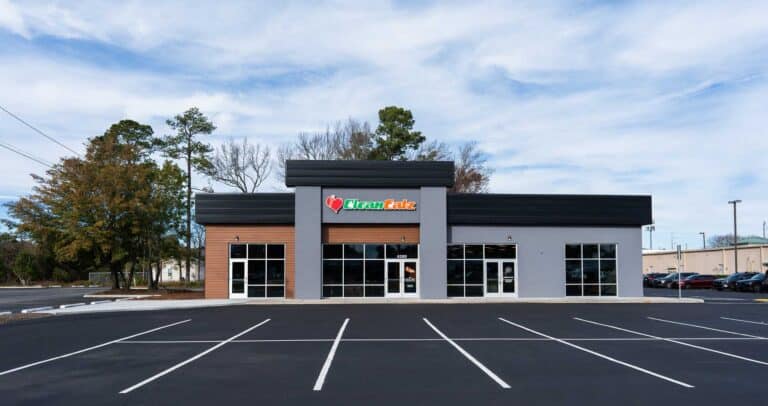
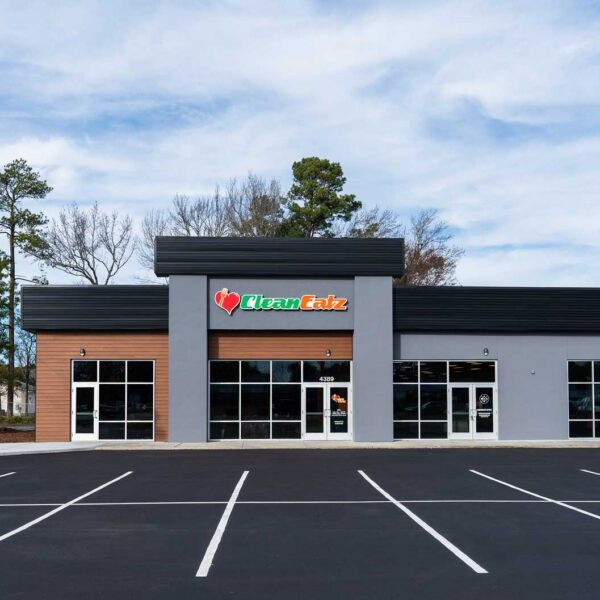
No neutral public source publishes a build cost for each format. Real numbers sit in each franchisor’s Item 7, so compare those line by line. Two items usually add cost on the QSR side. A drive-thru needs a lane, an order point, a window and room on the lot for cars to stack. Fryers add equipment and oil handling. Fast casual gives some of that back in decor, which the Technomic definition describes as upscale. For scale, a Clean Eatz cafe runs roughly 1,800 to 2,400 square feet, and its Item 7 estimated initial investment is $307,500 to $733,500, with cafe construction at $100,000 to $343,000.
Round 6 | Tie
Guest demand
Fast-casual 7 | QSR 7
Both formats have demand, and the sources pull in different directions. Technomic’s count of Top 500 chains, reported by Restaurant Business, had fast casual sales up 6% in 2025 to nearly $77 billion, with units up 5.1%, while quick-service chains grew sales 2.4%. Square and Paperchase saw the reverse in their sample: fast casual sales growth eased to 0.9% in 2025 while QSRs held between 8.7% and 9.1%. One number favors a healthy menu in either format. In the Association’s 2025 survey, 66% of guests who used a quickservice restaurant, snack place or deli said healthy options mattered when choosing one.
Read the scores as a map, not a ranking. A QSR buyer who wants volume through a drive-thru should weigh speed far above menu. Buyers who want to sell nutrition will weigh the opposite way, and the averages above assume the second reader.
Fast casual restaurant & quick service restaurant differences
Feature by feature
A fast casual restaurant and a quick service restaurant share a business model on paper. Guests order first and pay before they eat. The Wikipedia restaurant format history traces fast casual to the United States in the early 1990s and describes it as a middle ground between fast food and casual dining.
Here is where they split. Watch the margin row most closely, because industry data does not separate the two formats, so a higher price per item does not prove a fatter margin.
| Fast casual | QSR | |
|---|---|---|
| How guests order | Counter, kiosk or online, pay first | Counter, kiosk, online or drive-thru, pay first |
| Drive-thru | Most often none | Common, and timed to the second |
| Menu | Made to order, more complex flavors | A short menu built for speed |
| Price point | Above fast food, per Technomic’s definition | Lower, built around value pricing |
| Labor | Limited-service median 31.7% of sales | Same NRA median, no split |
| Pre-tax margin | Limited-service median 4.0% (2024) | Same NRA median, no split |
| Chain sales growth, 2025 | Up 6% (Technomic) | Up 2.4% (Technomic) |
The margin row comes from the Association’s 2025 Restaurant Operations Data Abstract, built from surveys of more than 900 restaurants. Limited-service restaurants earned a median 4.0% of sales before taxes in 2024, against 2.8% for fullservice. In its February 2026 release, the Association added that 42% of operators reported their restaurant was not profitable in 2025. Thin margins are the norm in both formats.
A third model sits beside both. Meal prep cafes sell a week of meals as well as a single lunch, the subject of the Clean Eatz piece on meal prep vs traditional restaurants. That model keeps the fast casual counter and adds pickups that do not depend on lunch-rush speed.
Where a healthy fast casual franchise fits
A counter with a weekly business behind it
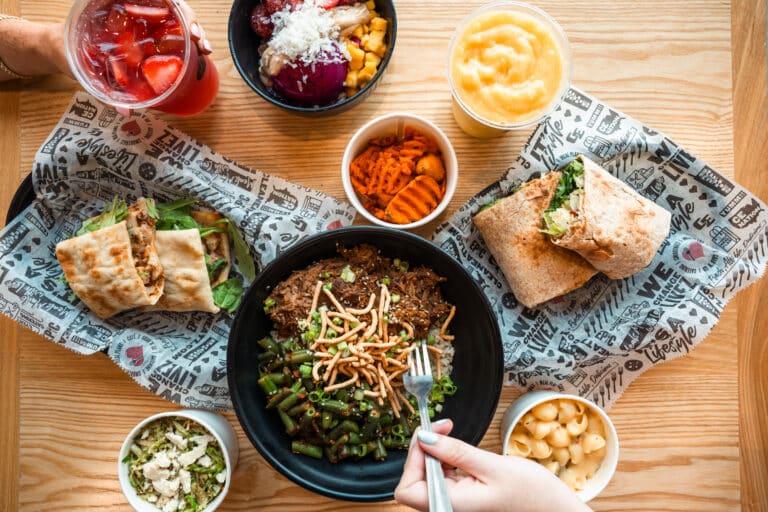
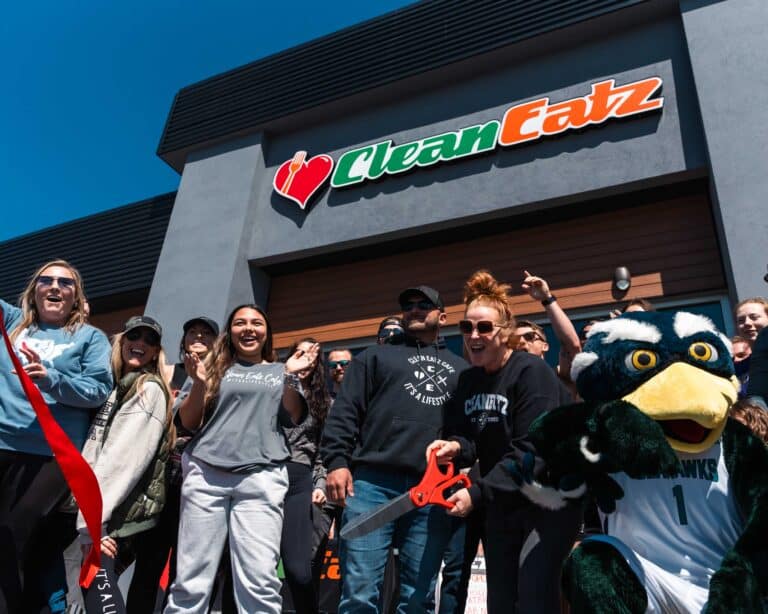
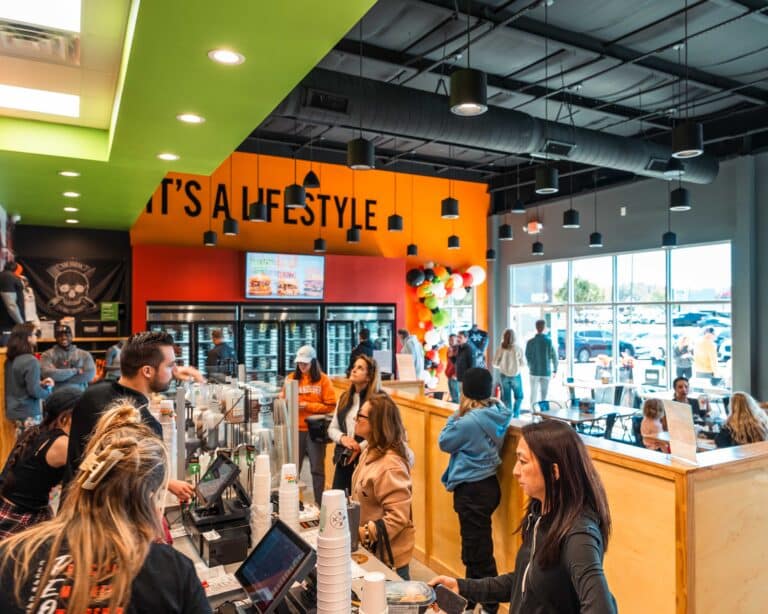
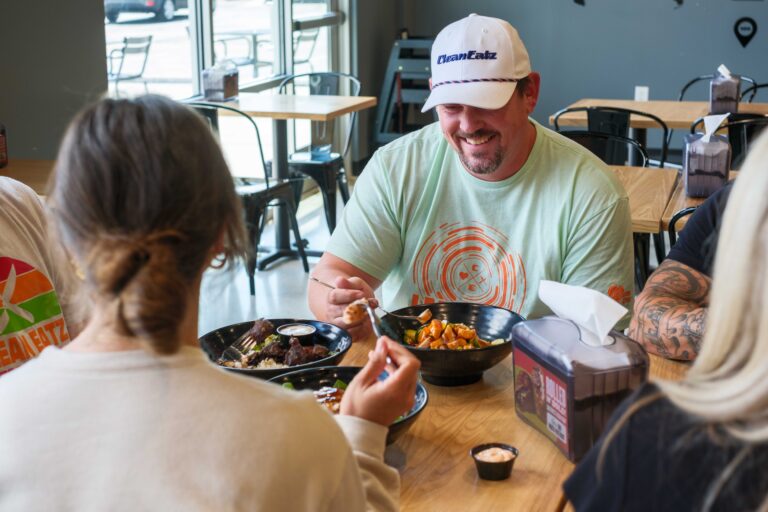
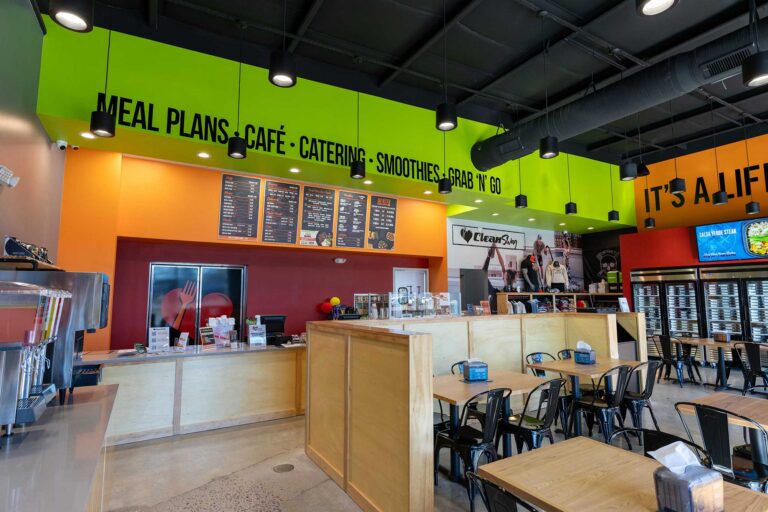
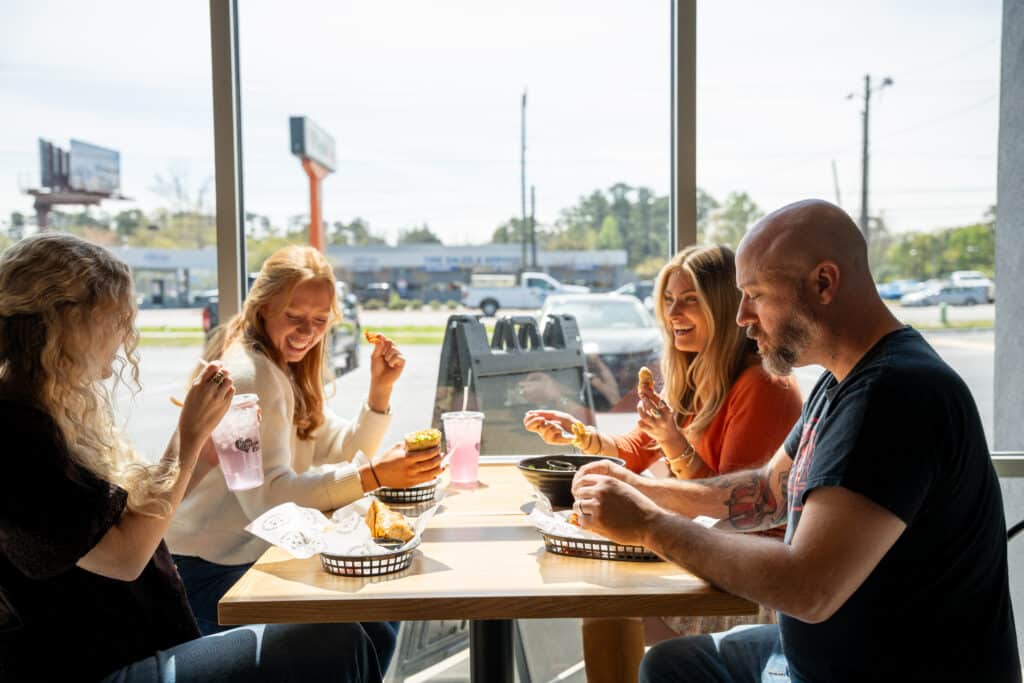
A healthy fast casual franchise takes the fast casual counter and builds a second business behind it. Clean Eatz is the worked example. Its In-Store Cafe serves burgers, flatbreads, bowls and smoothies for dine-in and carry-out, the part a guest would call fast casual.
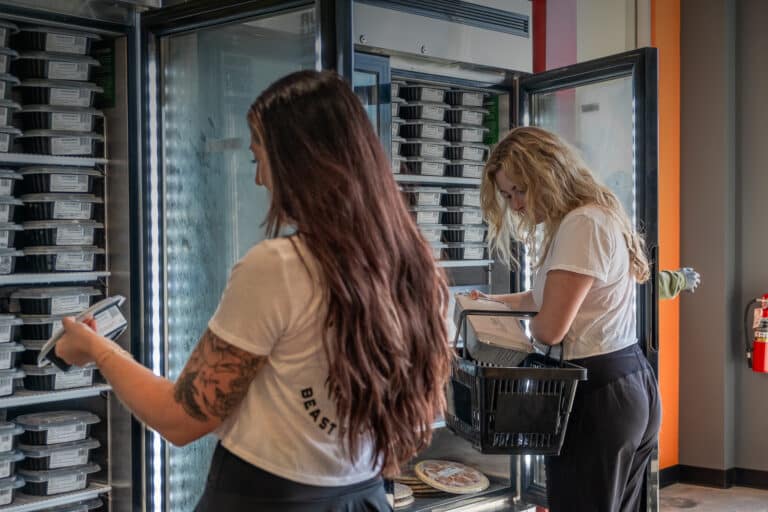
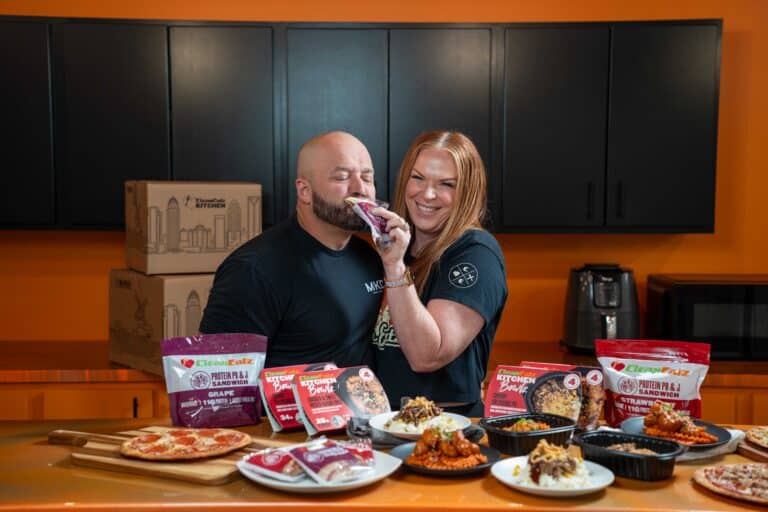
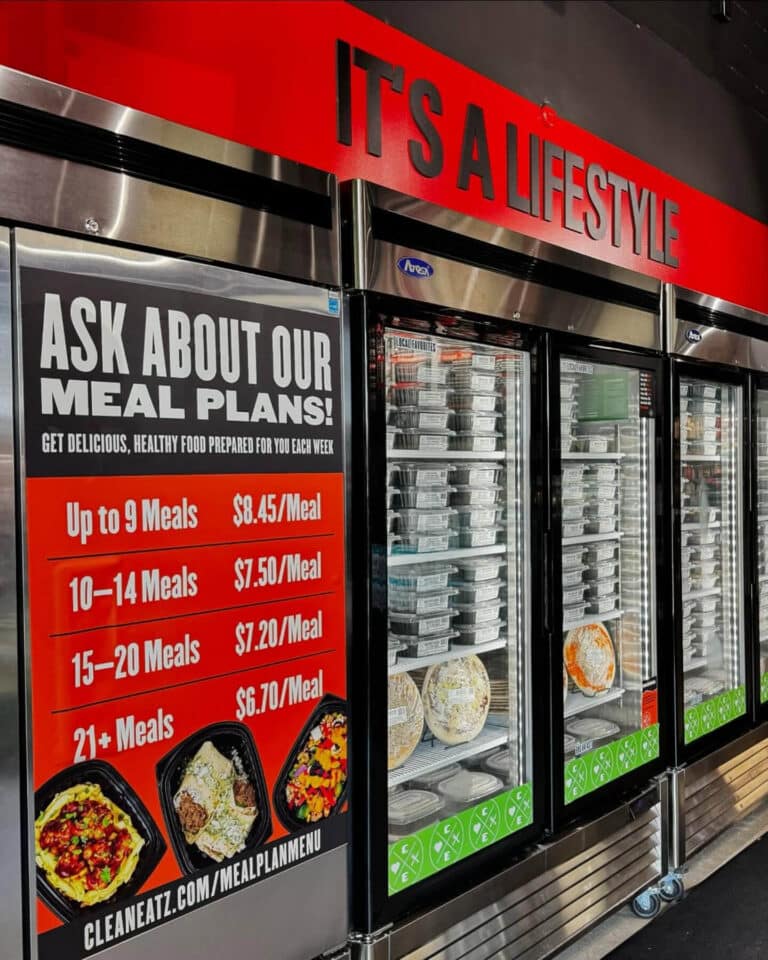
The other four revenue streams are what set it apart from a standard fast casual franchise. Meal Plans are weekly, pre-portioned meals for breakfast, lunch and dinner. Grab-N-Go Meals are frozen, ready-to-eat meals sold from freezers in the cafe. Retail covers healthy snacks and supplements, and Catering serves events. Trade coverage of the brand called it healthy fast casual goes convenient.
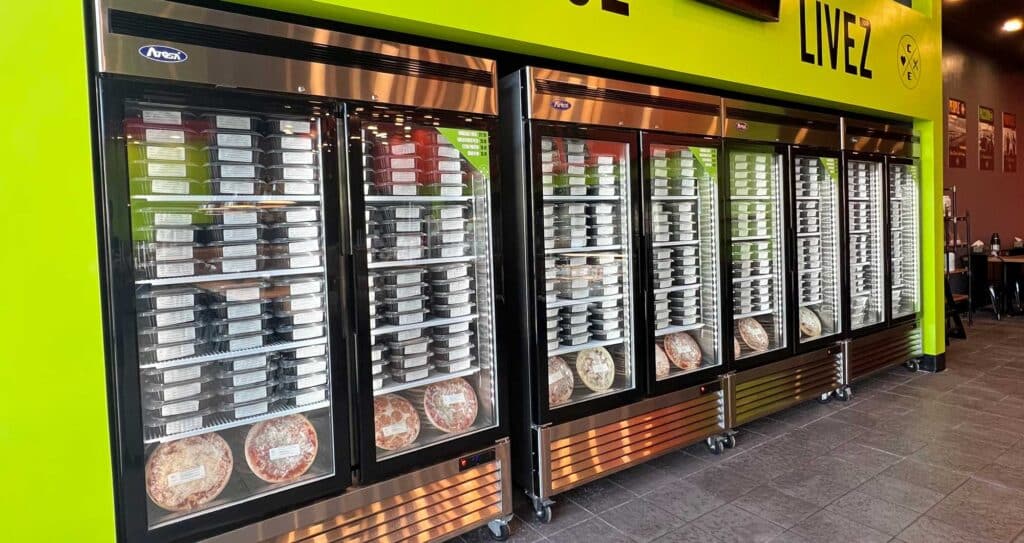
That changes how the speed round applies. A meal plan pickup or a freezer sale does not depend on how fast a bowl comes off the line, so a healthy cafe can trade some counter speed for a better meal without losing those sales. Clean Eatz cafes also run roughly 11am to 7pm without fryers, which keeps the equipment package smaller.
A QSR franchise fits a different buyer: one who wants to compete on price and minutes at a drive-thru.
A fast casual franchise fits
- A menu you believe in You want to sell food built to order, not food built for the clock.
- A mission behind the counter You come from fitness, wellness or nutrition and want a business that matches it.
- Recurring customers You want weekly meal plan guests, not one transaction at a time.
- Evenings back You want a day that ends around 7pm rather than a late close.
A QSR franchise fits
- Speed as the product You want to win on minutes per car and a drive-thru lane.
- Value pricing You want the lowest price point in your trade area.
- Long hours You are ready to staff early opens and late closes.
Five questions settle the format faster than any score. Bring them to your attorney, your accountant and your validation calls.
- Does the site allow a drive-thru, and does the concept need one? Ask before you sign a lease.
- Which Item 7 lines change with format: construction, equipment and site work? Compare them side by side.
- What share of sales comes from outside the counter line? Ask owners in validation, not the sales team.
- What hours does the system expect, and how many shifts does that take?
- What do the Item 6 fees cost per $100,000 of gross sales? At Clean Eatz it is $6,000 royalty, $2,000 brand fund and at least $1,000 local marketing, plus $638 a month for technology.
Fast casual vs fast food pros & cons
Where each one falls short
Fast casual vs fast food comes down to the weakness you can live with: a longer wait and a higher price, or a daily race on speed.
Before you settle on either, read the money side of the documents. The Clean Eatz investment & earnings page lays out Item 7, Item 6 and the Item 19 financial performance representation for one healthy fast casual system.
Fast casual
Pros
- Made-to-order menu with room for healthy food
- A higher price point than fast food
- No drive-thru lane to plan or staff
- Room to add meal plans, catering & retail
Cons
- Slower service than a drive-thru
- Guests question value when bowls get pricey
- Decor & dining room expected to look good
QSR
Pros
- Counter service near 4 minutes on average
- Drive-thru reaches guests who never park
- Value pricing for cautious spenders
Cons
- Short menu with little room for healthy food
- A lower price point to compete on
- Speed & drive-thru equipment to maintain
- More hours open means more shifts to staff
Sources
- Drive-Thru Study 2025 press release, Intouch Insight, October 2025
- 2026 On-Premises Study, Intouch Insight, 2026
- Restaurant Trends Report: The Cost of Going Out to Lunch, Toast, September 2024
- Square Data Shows How 2025’s Economic Volatility Is Impacting the Restaurant Industry, Square, July 2025
- Fast-casual restaurant sales growth cooled in 2025 (Technomic Top 500 data), Restaurant Business, April 2026
- New Association report helps operators gauge their restaurant performance, National Restaurant Association, 2025
- Labor costs and restaurant profitability in 2024 (2025 Restaurant Operations Data Abstract analysis), National Restaurant Association, 2025
- State of the Restaurant Industry 2025, National Restaurant Association, 2025
- Persistent Cost Increases and Enduring Demand Will Shape the Restaurant Industry in 2026, National Restaurant Association, February 2026
- Fast casual restaurant, Wikipedia
QSR meaning & fast casual questions
What buyers ask
First-time buyers often trip over the QSR meaning. Here are short answers to what is QSR, what is fast casual and where a healthy cafe lands.
What is QSR?
QSR stands for quick service restaurant, the industry term for fast food. Guests order at a counter, kiosk, app or drive-thru, pay first and get a short menu built for speed. In National Restaurant Association reports, quickservice is one of three limited-service concepts, beside fast casual and coffee-and-snack.
What is fast casual?
A fast casual restaurant is a limited-service restaurant that sells higher quality, made-to-order food with no table service. Guests order and pay at a counter or online, and most fast casual restaurants have no drive-thru. It sits between fast food and casual dining on price and menu. Wikipedia’s summary of the category dates it to the early 1990s and says it went mainstream in the late 2000s to early 2010s.
Is a healthy cafe fast casual or QSR?
By the usual definitions, a healthy cafe that makes food to order at a counter is fast casual. Bowls and smoothies built to order fit that model better than a short menu built for a drive-thru clock. Clean Eatz fits that model, with Meal Plans, Grab-N-Go Meals, Retail and Catering on top of its In-Store Cafe.
Do fast casual restaurants make more money than QSRs?
No public dataset settles it. National Restaurant Association data gives one median for all limited-service restaurants, 4.0% of sales before taxes in 2024. To compare two franchises, read Item 19 of each FDD and ask owners in validation what drives the spread.
What does it cost to open a Clean Eatz cafe?
The estimated initial investment in Item 7 is $307,500 to $733,500, including the $49,500 initial franchise fee. Cafe construction is the largest line, at $100,000 to $343,000. See the FDD dated April 30, 2026 for the line-by-line breakdown.