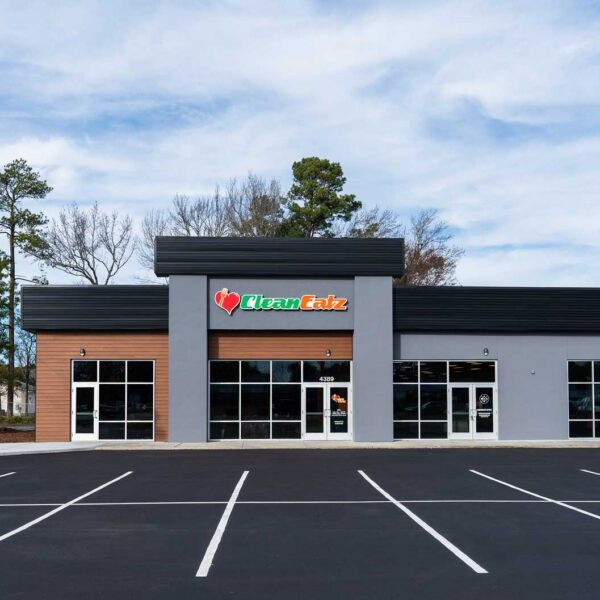
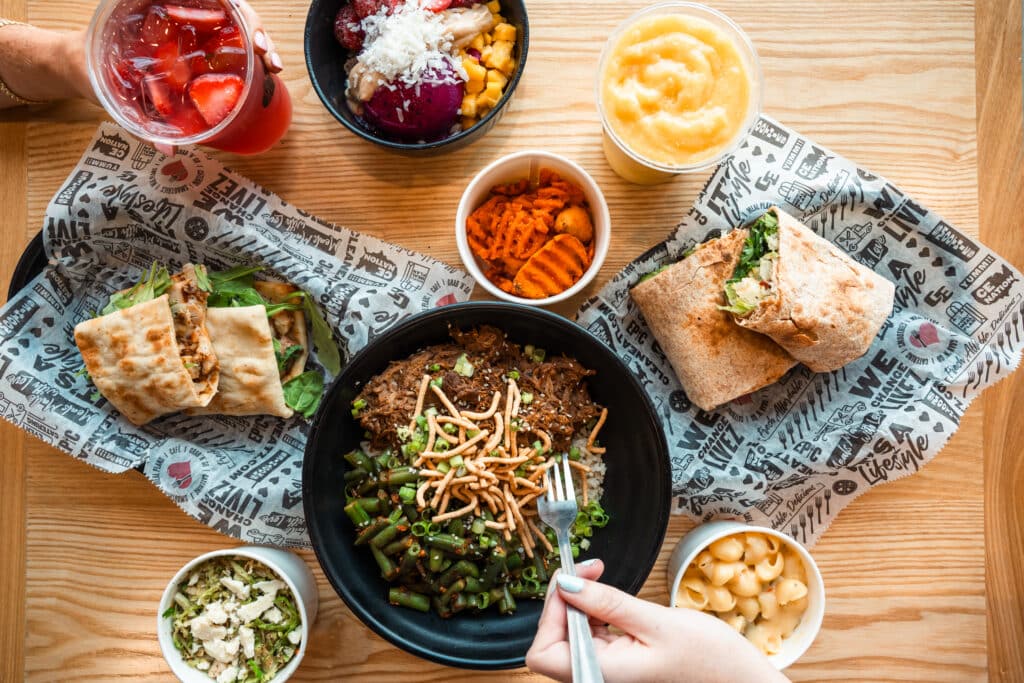
A healthy fast food franchise and a traditional one both sell quick counter food. What separates them for an owner is the shape of the work. One closes in the early evening and runs no fryers. The other is built on fries, fried chicken and a drive-thru that rewards long hours.
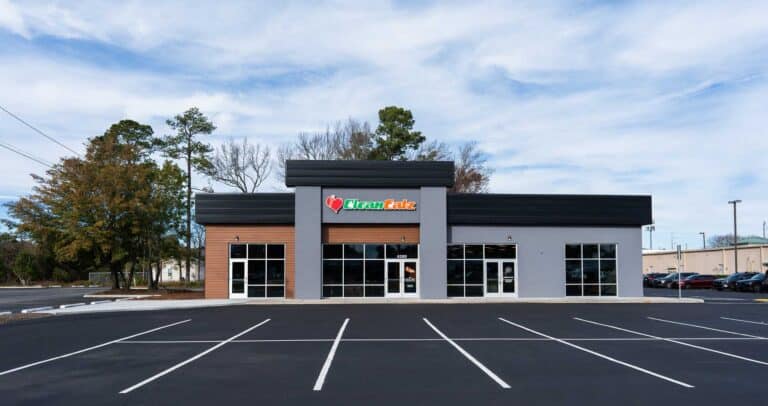
This comparison scores both models on six rounds a buyer can check in a Franchise Disclosure Document (FDD) or a validation call. Clean Eatz, a healthy cafe franchise from Wilmington, North Carolina, that runs roughly 11am to 7pm with no fryers, is the worked example on the healthy side. Traditional fast food stays a category on purpose. Hours and costs differ by brand, and the reliable numbers for any one brand sit in its own FDD.
The short answer
Choose the healthy model if you want shorter days and a simpler kitchen, with sales that do not all pass through the register. Traditional fast food still has the larger, measured demand base, and it wins that round outright.
Healthy fast food franchise verdict
Healthy wins on hours, kitchen & streams
- Roughly 11am to 7pm, so fewer shifts to cover
- No fryers, so a smaller equipment package
- Five revenue streams beyond the counter meal
- Traditional fast food keeps the bigger crowd
Healthy 4 | Traditional 1 | Tie 1
7.3
Healthy score, vs 6.2
Scored from 1 to 10 on six rounds and averaged, the healthy model comes out at 7.3 and traditional fast food at 6.2. Healthy takes four rounds: hours, kitchen, revenue beyond the counter, and crew. Traditional takes menu and demand. Cost is a tie, because format and site move it more than the menu does.
Demand for a healthy fast food franchise is newer and still forming. In a May 2026 analysis, the National Restaurant Association reported that roughly one in eight adults were taking a GLP-1 medication. Users reported buying a restaurant meal, snack or beverage 7.6 times in the week before the survey, against 5.1 for non-users, and the most common ordering changes were smaller portions, higher-protein items and more vegetables. Clean Eatz covers what that shift means for operators in its piece on GLP-1 restaurant trends.
Healthy vs traditional fast food rounds
Six rounds from menu to crew
Healthy fast food here means a counter-service menu built on portioned meals, bowls and smoothies. Traditional means the burger, fried chicken and fries menu most people picture. Where a number exists only for the whole limited-service segment, the round says so instead of splitting it.
If you are weighing a drive thru franchise against a cafe that sells pickups and frozen meals, give the last two rounds extra weight. The fast food franchise cost round is a tie, and its note explains why.
Round 1 | Traditional wins
Menu & guest demand
Healthy 7 | Traditional 8
Traditional fast food has the larger base, and it is measured. In the CDC’s NCHS Data Brief 322 (October 2018, covering 2013 to 2016), 36.6% of adults ate fast food on a given day. In the National Restaurant Association’s 2026 State of the Restaurant Industry, 42% of adults said they order from a drive-thru at least once a week. Healthy food has direction more than volume: two of the top 10 trends in the report’s What’s Hot culinary forecast are “cleaner” recipes with fewer additives and proteins as add-ons. Burgers still win the head count.
Round 2 | Healthy wins
Operating hours
Healthy 8 | Traditional 5
Clean Eatz cafes run roughly 11am to 7pm, with no late nights. A traditional brand sets hours by system and site, so read its operations requirements first. Long days are hard to cover: among understaffed limited-service restaurants in 2025, 39% cut hours on days they were open and 24% closed on days they would normally open (NRA, p. 46).
Round 3 | Healthy wins
Kitchen equipment & fryers
Healthy 8 | Traditional 5
French fries and fried chicken anchor the traditional menu, which puts a fryer line, oil handling and grease cleaning on the daily checklist. Fire risk follows the fryer: in the U.S. Fire Administration’s 2004 restaurant fire report, deep fryers were the equipment involved in 31% of restaurant cooking fires in 2002, an old dataset to read as direction. Clean Eatz states its case for a fast food franchise without fryers in plain terms: no fryers means a smaller, simpler equipment package. Its Item 7 equipment line runs $60,200 to $156,500.
Round 4 | Tie
Fast food franchise cost
Healthy 6 | Traditional 6
No neutral source publishes an average Item 7 for either category, so any gap here would be invented. Format moves cost more than menu. A 2018 RestaurantOwner.com survey of more than 350 independent operators put the median ground-up build at $650,000 before real estate, against $425,500 to convert a non-restaurant space and $275,500 to remodel an existing restaurant. If a traditional brand builds freestanding drive-thru units, ask which of those its Item 7 assumes. Clean Eatz’s Item 7 runs $307,500 to $733,500, including the $49,500 franchise fee and excluding real estate purchase.
Round 5 | Healthy wins
Revenue beyond the counter
Healthy 8 | Traditional 7
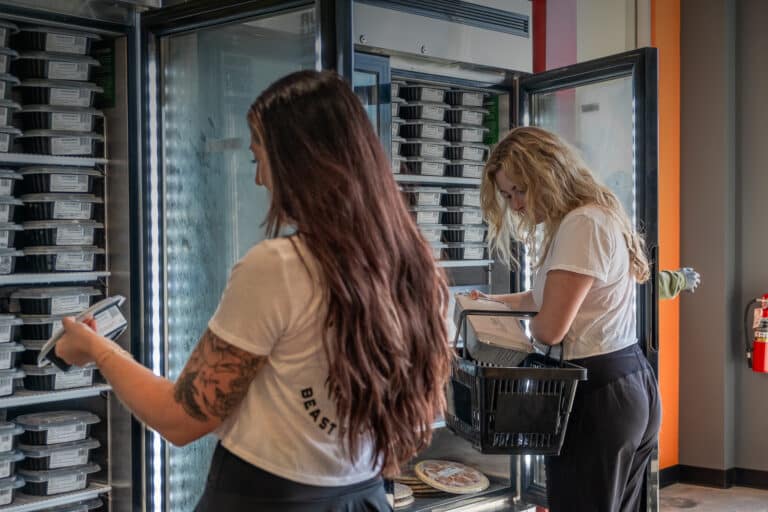
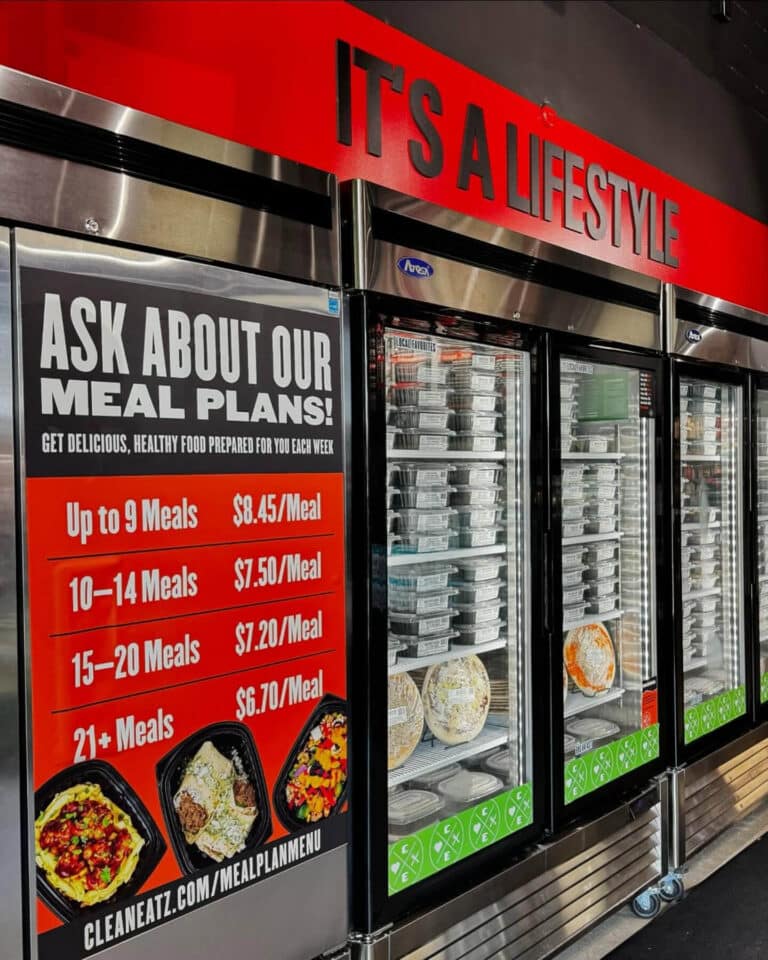
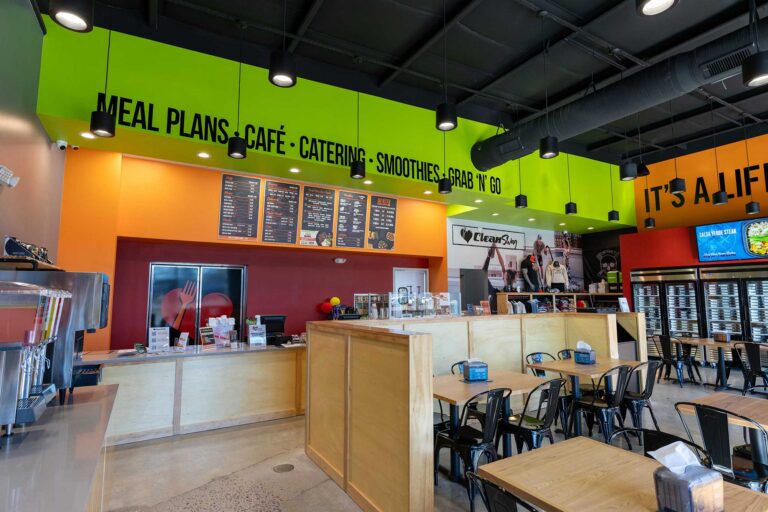
Traditional fast food already sells mostly off the premises, but it sells the same meal through more doors. Technomic data in the NRA’s 2026 report put off-premises at 89.9% of limited-service traffic in 2025: takeout 43.6%, drive-thru 33.9% and delivery 12.4%. A Clean Eatz cafe sells through five revenue streams, Meal Plans, Grab-N-Go Meals, the In-Store Cafe, Retail and Catering. Weekly Meal Plans and catering orders are different purchases from a lunch, made on different days for different reasons. Clean Eatz publishes no sales mix by stream, so ask owners in validation how their sales split.
Round 6 | Healthy wins
Crew & schedules
Healthy 7 | Traditional 6
Food service loses people fast in either model. In BLS JOLTS data, the 2025 average monthly quits rate was 4.2% in accommodation and food services, against 2.2% for all private industry. Schedules are where the models part. Under the Labor Department’s Fact Sheet #2A, 14- and 15-year-olds may work only between 7am and 7pm, extended to 9pm from June 1 through Labor Day, and state rules can be stricter. A store open until 10pm has to cover those late shifts with older staff. Clean Eatz describes a lean labor model and publishes no headcount, so ask owners how many people they schedule.
The scores split along one line. Traditional fast food wins on scale and familiarity, and the healthy model wins wherever the daily work of running the store shows up.
Healthy & traditional fast food franchise differences
Side by side, line by line
A traditional fast food franchise belongs to the largest single category in franchising. FRANdata’s 2026 Franchising Economic Outlook, prepared for the International Franchise Association, projects 280,811 franchised quick service restaurants in 2026, about a third of all franchise establishments, growing 0.5%. FRANdata adds that QSR margins have come under pressure from competition and high input and labor costs.
Fast food as a format is more than a century old. Wikipedia’s summary of Fast-food restaurant history dates the first U.S. fast food restaurant to a White Castle in 1921. It describes a limited menu cooked in bulk and kept hot until ordered, with hamburgers, fried chicken and french fries among the common items. Fast food franchises that add healthier items are working against that core. A healthy cafe starts from the other end.
| Healthy (Clean Eatz) | Traditional fast food | |
|---|---|---|
| Core menu | Burgers, flatbreads, bowls & smoothies | Hamburgers, fried chicken & fries |
| Hours | Roughly 11am to 7pm, no late nights | Set by each brand & site |
| Fryers | None | Central to the menu |
| Ways to sell | Five revenue streams | One menu, sold several ways |
| Off-premises sales | Meal Plans pickups, Grab-N-Go & Catering | Drive-thru, takeout & delivery |
| Weekly repeat buyers | Meal Plans regulars | Depends on repeat visits |
| Footprint | Roughly 1,800 to 2,400 sq ft | Varies by format |
| Item 7 range | $307,500 to $733,500 | In each brand’s FDD, no neutral average |
| Demand base | Growing, less measured | 36.6% of adults on a given day (2013 to 2016) |
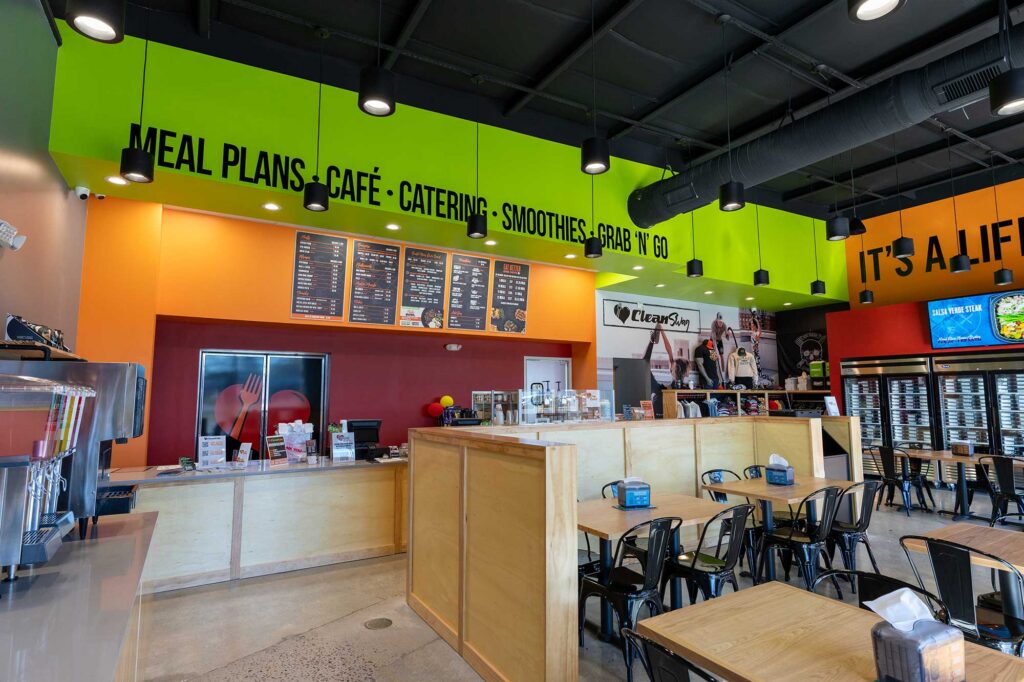
Off-premises is where the two differ most. Drive-thru alone was 33.9% of limited-service traffic in 2025, and a store built for the window needs the lot, the lane and the crew to match. Clean Eatz reaches the guest who will not sit down through pickups, freezers and catering orders.
When to choose a healthy fast food franchise
Pick the day you want to run
Most fast food franchise opportunities are sold on brand recognition and traffic counts. A better test is the shape of the job: the hours you cover, the equipment you maintain and where sales come from on a slow Tuesday.
Convenience is the ground both models fight over. Fast Casual’s August 2026 feature, summarized in the post on Clean Eatz drive-thru & grab-and-go, features co-founder Don Varady on how meal plans, grab-and-go, cafe dining and catering help customers keep healthy habits without hours of cooking. None of the four needs a drive-thru.
A healthy fast food franchise fits
- Days that end near 7pm Roughly 11am to 7pm hours mean no late close to staff.
- A kitchen without fryers No oil changes, grease cleaning or youth fryer limits to manage.
- Weekly regulars Meal Plans customers pick up a week of meals instead of deciding fresh each visit.
- The capital to qualify $1,000,000 net worth and $250,000 liquid for a single Clean Eatz unit.
A traditional fast food franchise fits
- The biggest measured demand A menu nearly every guest already knows.
- A site with room for a lane A drive-thru needs the lot and the stacking room to work.
- Crew for long days You can cover the evening shifts younger workers cannot take during the school year.
- A race on speed & price You would rather compete on minutes and value than on nutrition.
Before you compare the two side by side, fill in this worksheet. Clean Eatz figures come from its FDD dated April 30, 2026. Take the right column from the traditional brand’s FDD and operations requirements.
| Clean Eatz | The brand you are weighing | |
|---|---|---|
| Daily hours | Roughly 11am to 7pm | Operations manual |
| Fryers on the line | None | Count them |
| Revenue streams | Five | List them |
| Item 7 range | $307,500 to $733,500 | Its Item 7 |
| Royalty & brand fund per $100,000 | $6,000 & $2,000 | Its Item 6 |
| Item 19 published | Yes, with quartiles | Yes or no |
Then take these questions into validation calls with owners of both models:
- What hours does the system require, and which hour of your day is the slowest?
- How many people do you schedule on a weekday, and how many of them are under 18?
- What share of sales comes from outside the counter meal, such as pickups, frozen meals or catering?
- Which kitchen equipment needs a service contract, and what did repairs cost you last year?
- If your site has a drive-thru, what share of sales goes through the window?
Fast food franchise pros & cons
What each model asks of you
A quick service restaurant franchise of either kind runs on thin margins. In the National Restaurant Association’s 2026 report, median pretax income for limited-service restaurants was 4% of sales in 2024, so hours and labor matter as much as the menu.
Fast food franchise profit is the question every buyer brings, and the FTC Franchise Rule (16 CFR 436.5(s)) permits a franchisor to answer it in Item 19 without requiring one. Clean Eatz publishes one. Its Clean Eatz investment & earnings page lays out Item 7, Item 6 and Item 19 line by line.
Clean Eatz healthy fast food franchise
Pros
- Roughly 11am to 7pm, with no late nights
- No fryers, a smaller equipment package
- Five revenue streams, including weekly Meal Plans
- Item 19 published, top and bottom quartiles included
Cons
- Item 7 of $307,500 to $733,500 before real estate
- Meal Plans depend on weekly production discipline
- Gives up late-evening sales by design
- Owner-operated, within roughly an hour’s drive of the cafe
Traditional fast food franchise
Pros
- A menu nearly every guest already knows
- Drive-thru traffic, 33.9% of limited-service visits in 2025
- The largest franchise category, about 280,811 units projected for 2026
- Long hours can reach breakfast & late-evening guests
Cons
- Fryers, oil handling & youth-labor limits on the line
- Long hours to staff where quits run 4.2% a month
- Projected unit growth of 0.5% in 2026
- Margins under pressure, per FRANdata’s outlook
For Clean Eatz, the 2025 Item 19 covers 92 franchised cafes open at least 18 months. They reported average gross revenues of $1,030,285 and median gross revenues of $962,325, with the lowest cafe at $389,339 and the highest at $2,053,793. Average EBITDA was $128,312, stated before owner and manager salary and before debt service, depreciation and taxes. These are gross revenues, not owner income, and the spread reflects market, site quality and operator engagement.
*Financial performance representation. These figures are taken from Item 19 of the Clean Eatz Franchise Disclosure Document dated April 30, 2026, and reflect January 1 through December 31, 2025. They represent 92 franchised restaurants open at least eighteen months as of December 31, 2025 and operated by the same franchisee throughout the period. EBITDA is stated before owner and manager salary. These are historical results for existing locations. They are not a projection or guarantee of what you may earn. Your results may differ, and there is no assurance you will do as well. Written substantiation is available upon request. See Item 19 of the FDD for complete information.
Fees on every $100,000 of sales
Clean Eatz charges a 6% royalty, a 2% brand fund and at least 1% for local marketing. That is at least $9,000 on every $100,000 of gross sales, plus a $638 monthly technology fee. Run the same arithmetic from the traditional brand’s Item 6 before you compare.
Sources
- 2026 State of the Restaurant Industry, National Restaurant Association, February 2026 (pp. 19, 35, 37, 46, 54 to 55)
- GLP-1 and restaurants: shifting habits, not shrinking demand, National Restaurant Association, May 20, 2026
- Fast Food Consumption Among Adults in the United States, 2013 to 2016, NCHS Data Brief No. 322, CDC, October 2018
- Fact Sheet #2A: Child Labor Rules for Restaurants, U.S. Department of Labor Wage and Hour Division, revised July 2010
- Restaurant Fires, Topical Fire Research Series Vol. 4 Issue 3, U.S. Fire Administration, October 2004
- Table 22, Annual average quits rates by industry, BLS Job Openings and Labor Turnover Survey, 2025
- 2026 Franchising Economic Outlook, FRANdata for the International Franchise Association, February 2026
- Over 350 independent restaurant owners share their startup costs, RestaurantOwner.com via PR Newswire, November 2018
- 16 CFR 436.5, Disclosure items (FTC Franchise Rule), Legal Information Institute
- Fast-food restaurant, Wikipedia
Healthy fast food restaurants questions
What buyers ask first
Healthy fast food restaurants raise the same questions in almost every first call. Answers below stick to what can be checked, including what the data on healthy fast food franchise opportunities can and cannot show.
Are healthy fast food franchise opportunities growing?
No public dataset counts healthy franchises as their own category, so nobody can give a reliable growth rate. The signals are indirect. Two of the top 10 trends in the National Restaurant Association’s 2026 culinary forecast are cleaner recipes and proteins as add-ons, while FRANdata projects all franchised QSR units growing only 0.5% in 2026. Clean Eatz had 116 outlets open during fiscal year 2025, 114 of them franchised.
Do healthy fast food restaurants need a drive-thru?
No. In Technomic data reported by the National Restaurant Association, drive-thru fell from 36.7% of limited-service traffic in 2019 to 33.9% in 2025, while takeout rose from 32.4% to 43.6%. A healthy model can reach the off-premises guest through pickups, frozen meals and catering. Whether one pays at a given site is a question for owners who run one.
How much does a fast food franchise cost?
It depends on the brand and the format, and the reliable figure is the Item 7 table in that brand’s FDD. In a 2018 survey of independent operators, the median ground-up build cost $650,000 before real estate. A Clean Eatz cafe’s Item 7 runs $307,500 to $733,500, including the $49,500 initial franchise fee, with cafe construction the largest line at $100,000 to $343,000.