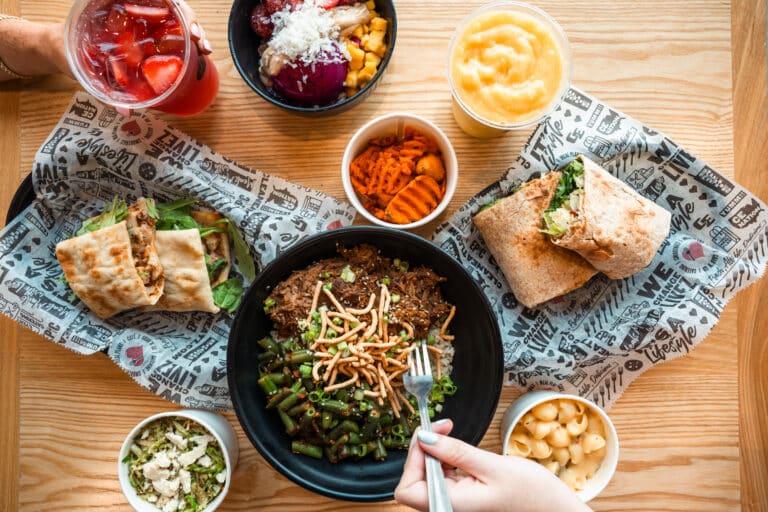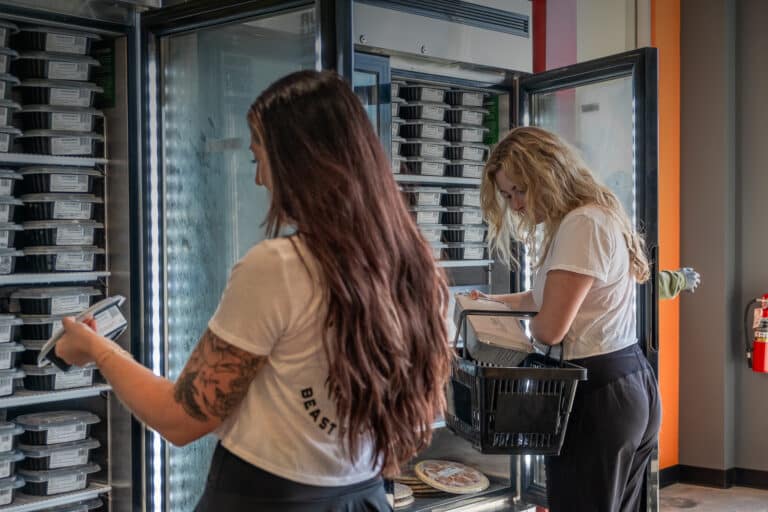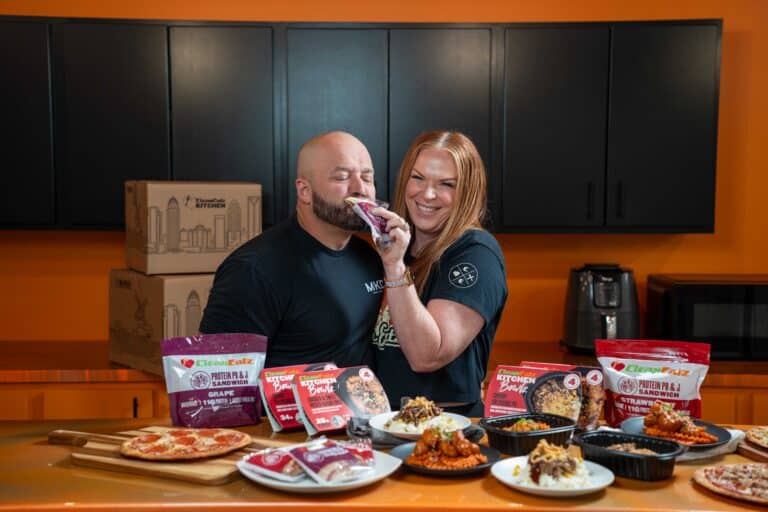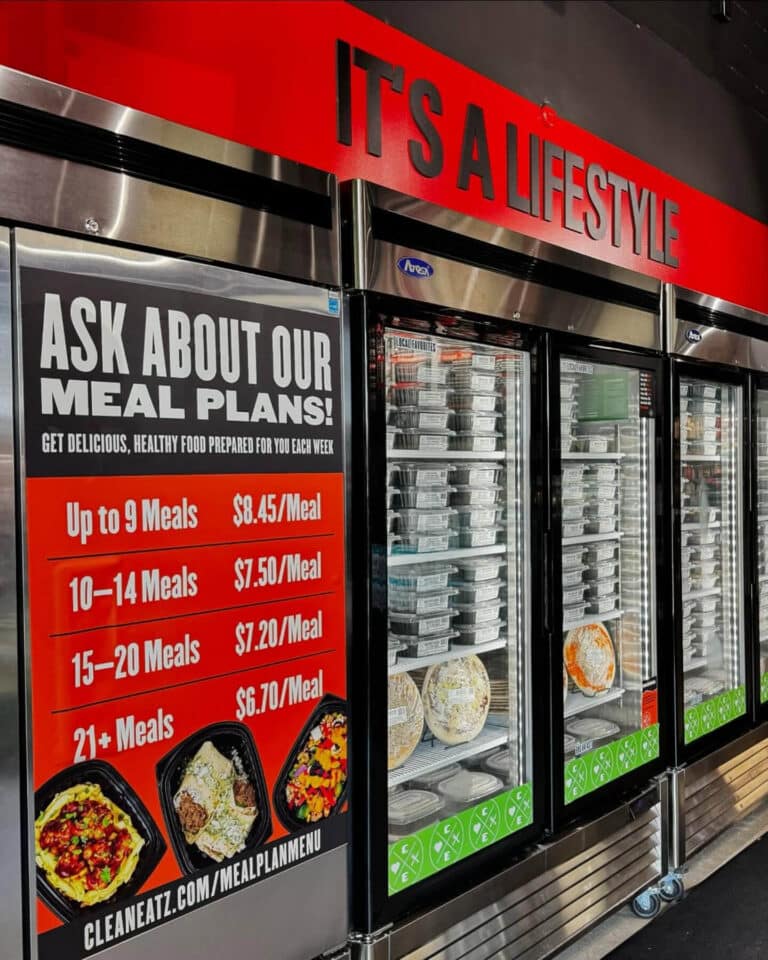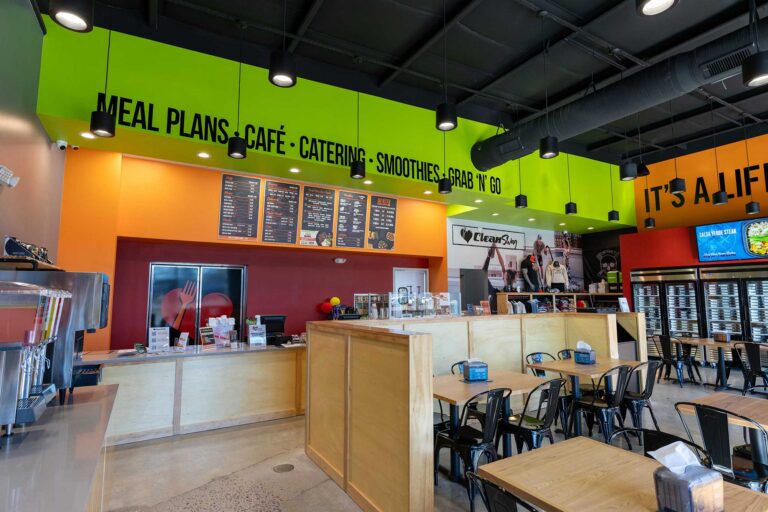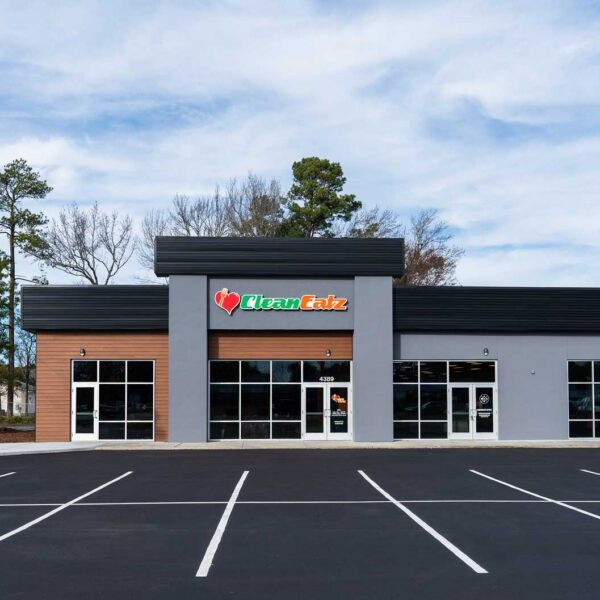
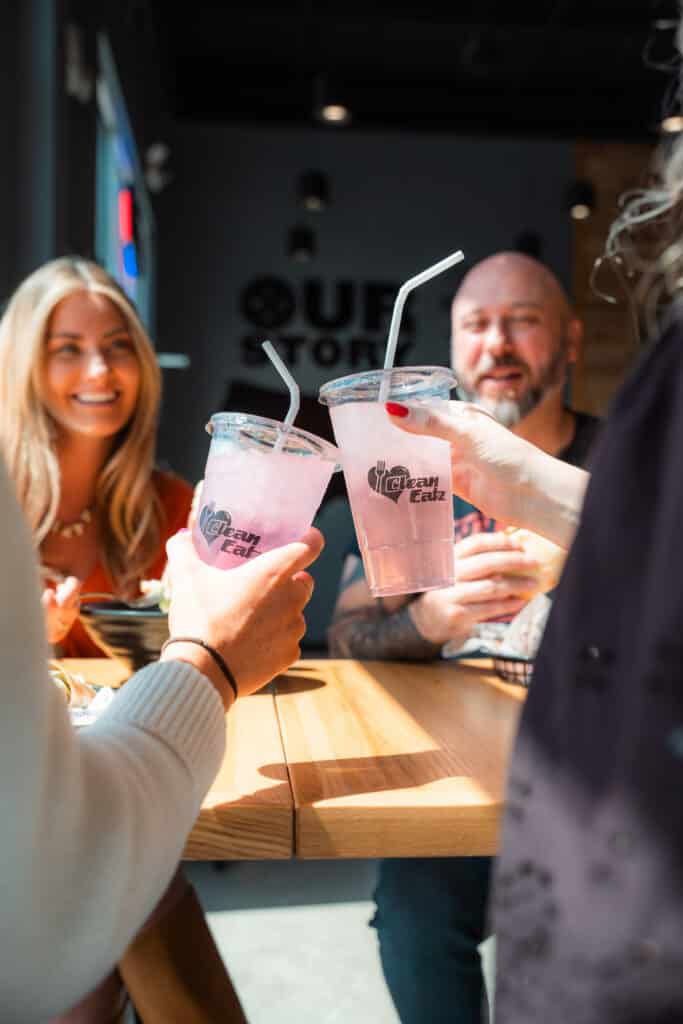
A smoothie and juice bar franchise is built around one thing: a cold drink, made to order in a few minutes, from a small storefront. A healthy food franchise sells meals. In the Clean Eatz version it also sells smoothies from the In-Store Cafe, next to weekly Meal Plans, frozen Grab-N-Go Meals, Retail and Catering. So the honest comparison is a smoothie menu inside a full-meal model against a smoothie-only model.
The two models are scored below on six factors that decide whether a store earns from opening to close. The smoothie and juice bar is cheaper to open and smaller to run. The healthy food cafe gives a customer more reasons to walk in, and fewer of its sales ride on a single kind of purchase.
The short answer
Choose a healthy food franchise if you want several kinds of sales (meals, weekly plans, catering, retail and drinks) carrying the store through the day. Choose a smoothie or juice bar if a smaller, lower-cost store matters more to you than menu breadth, and you have checked with owners how its sales hold up by hour and by month.
Healthy food franchise vs juice bar franchise verdict
The full-meal cafe holds up all day
- Five revenue streams, smoothies among them
- Weekly Meal Plans bring customers back on a schedule
- Catering & retail sell outside the lunch rush
Cafe 5 | Smoothie bar 1 | Tie 0
7.7
Cafe score, vs 5.7
A healthy food cafe and a smoothie and juice bar are scored from 1 to 10 on six factors, and the results averaged. Five rounds go to the cafe. Equipment and space goes to the smoothie and juice bar, the one round where a smaller store is plainly the better answer, and it keeps the weather round close.
A smoothie franchise or juice bar franchise is a legitimate business with a lower price of entry, and some buyers should pick one. The scores measure a narrower question: how well each model fills the hours it is open. That question favors the store with more than one thing to sell. Use the rounds as a frame for your own homework, next to the Clean Eatz list of healthy food franchises to look for, and confirm every number in each brand’s Franchise Disclosure Document (FDD).
Cafe vs smoothie bar rounds
Six rounds, one full day
Each round scores both models on one factor that decides whether a store earns across its hours. A smoothie bar and a healthy cafe can sell the same drink and still run as very different businesses, so the notes explain the gap in the model rather than the menu.
Some rounds depend on data nobody publishes for the whole category, such as the hours and months when smoothie demand peaks. Where that is the case, the note says so and turns the gap into a question for validation. Current owners know their own sales by the hour, which makes them the right people to settle it for any smoothie business you consider.
Round 1 | Cafe wins
Traffic across the day
Cafe 8 | Smoothie bar 5
Clean Eatz cafes run roughly 11am to 7pm, and the sales inside those hours come from cafe lunches, Meal Plans pickups and Grab-N-Go freezers. Drink-led stores sell one kind of occasion. Ask their owners which hours carry the day and how quiet the others are.
Round 2 | Cafe wins
Menu breadth
Cafe 9 | Smoothie bar 5
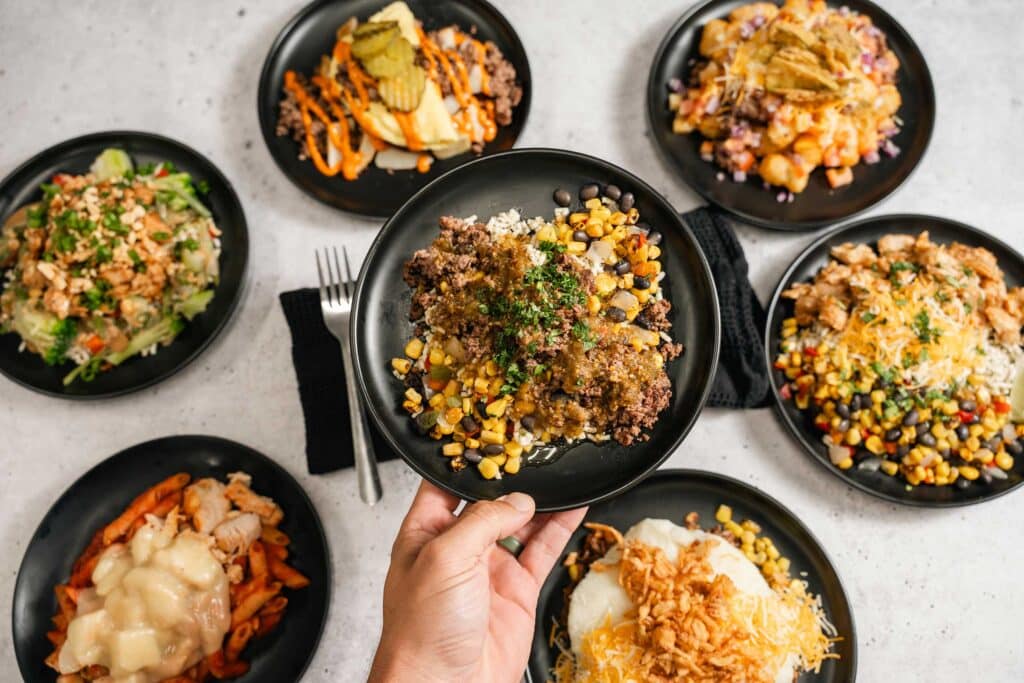
Burgers, flatbreads, bowls and smoothies in the cafe, plus breakfast, lunch and dinner in the Meal Plans. Juice brands are adding food as well: Clean Juice’s 2026 FDD lists acai bowls, toasts, sandwiches and wraps beside its juices and smoothies, which shows where the category sees its own gap.
Round 3 | Cafe wins
Average ticket
Cafe 7 | Smoothie bar 5
A Meal Plans order covers a week of meals and a catering order feeds a room. One smoothie is one item, sometimes with a bowl beside it. Neither side publishes a ticket figure that could be verified for this article, so ask owners in validation what a typical order looks like.
Round 4 | Cafe wins
Weather & seasons
Cafe 7 | Smoothie bar 6
A week of portioned lunches is bought for the same reason in January as in July: the week still needs feeding. How much cold drinks slow in winter depends on the market. Ask owners in a climate like yours for their slowest and busiest months before you assume either way.
Round 5 | Smoothie bar wins
Equipment & space
Cafe 6 | Smoothie bar 8
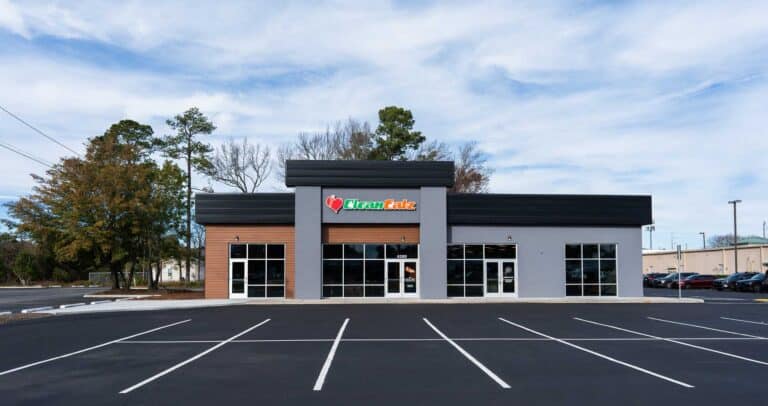
A traditional Clean Juice store typically occupies 600 to 1,000 square feet (FDD issued April 8, 2026), and a standard Main Squeeze store 1,000 to 1,300 (FDD issued June 5, 2026). Clean Eatz cafes run roughly 1,800 to 2,400. No fryers keeps its equipment package smaller than a full restaurant’s, but a blender bar is smaller still.
Round 6 | Cafe wins
Revenue streams
Cafe 9 | Smoothie bar 5
Five at Clean Eatz: Meal Plans, Grab-N-Go Meals, In-Store Cafe, Retail and Catering. Juice brands add products too, such as the cleanses and acai bowls in Main Squeeze’s FDD. Both juice FDDs allow catering or delivery only with the franchisor’s approval or under its standards, while at Clean Eatz, Catering is one of the five named streams.
Read the six rounds together and a pattern shows. Smoothie bars win on the cost of the box, while cafes win on how many ways the box can earn. For the cafe side in more depth, the coverage of the Clean Eatz five revenue stream model shows how the brand describes its mix.
Healthy food & smoothie franchise differences
Feature by feature
Smoothie franchises center on the bar: blenders, a cold line and a counter where each drink is made to order in front of the customer. As Wikipedia on juice & smoothie shops puts it, a juice bar is an establishment that primarily serves prepared juice beverages, and many also sell food such as sandwiches.
That overlap is where the two models meet. Any juice franchise that adds bowls and toasts is moving toward the cafe. Healthy food cafes that sell smoothies are already there, with a kitchen, a freezer program and a weekly production schedule behind the drinks. This table compares the two categories. Where a row cites a smoothie or juice brand, the figure comes from that brand’s FDD and is there to show the range.
The overlap is growing from the restaurant side too. In its State of the Restaurant Industry 2026 report, the National Restaurant Association found that 29% of limited-service operators planned to add new smoothies in 2026, and 14% planned new juices. More counters selling the same drink is something a smoothie-only store has to weigh in its site choice.
| Feature | Healthy food cafe | Smoothie & juice bar |
|---|---|---|
| What it sells | Meals, smoothies, frozen meals, retail & catering | Juices & smoothies, often bowls & snacks |
| Hours | Roughly 11am to 7pm at Clean Eatz | Set by each brand & site |
| Store size | Roughly 1,800 to 2,400 sq ft | 350 to 1,300 sq ft in two 2026 FDDs |
| Item 7 range | $307,500 to $733,500 | $176,500 to $656,500 in two 2026 FDDs |
| Kitchen | No fryers, smaller than a full restaurant | A bar-sized equipment package |
| Built-in repeat sales | Weekly Meal Plans | Depends on repeat walk-in visits |
| Catering | One of five revenue streams | Varies by brand |
| Item 19 | Published, high, low & quartiles | Included in both FDDs cited here |
The two smoothie and juice ranges come from single-store Item 7 tables: Clean Juice’s non-traditional store (kiosks, food courts, campuses) starts at $176,500, and Main Squeeze’s single store tops out at $656,500. For Clean Eatz, the range includes the $49,500 initial franchise fee and excludes buying real estate.
Clean Eatz publishes its Item 19, which matters when you weigh a bigger build. In 2025 the 92 franchised cafes open at least 18 months reported average gross revenues of $1,030,285* and a median of $962,325*. At the two ends, the lowest cafe reported $389,339* and the highest $2,053,793*. These are gross revenues, not owner income, and the spread between the two ends reflects market, site and how engaged the operator is.
*Financial performance representation. These figures are taken from Item 19 of the Clean Eatz Franchise Disclosure Document dated April 30, 2026, and reflect January 1 through December 31, 2025. They represent 92 franchised restaurants open at least eighteen months as of December 31, 2025 and operated by the same franchisee throughout the period. EBITDA is stated before owner and manager salary. These are historical results for existing locations. They are not a projection or guarantee of what you may earn. Your results may differ, and there is no assurance you will do as well. Written substantiation is available upon request. See Item 19 of the FDD for complete information.
Ask for the Item 19
Ask every smoothie and juice franchisor whether its FDD includes an Item 19, what it measures and how many stores it covers. According to the FTC’s consumer guide, any claims a franchisor makes about sales, income or profits must be in Item 19.
When to choose each model
Pick by the day you want to run
The right model depends on what you want the store doing between lunch and close, and how much you want to spend opening it. A smoothie bar franchise fits a buyer who values a small footprint and a short menu. A healthy food franchise fits a buyer who wants several kinds of sales under one roof and is ready to run a kitchen with a weekly production rhythm.
If you are still reading up on how to open a juice bar, start with the customer rather than the blender. The brand’s portrait of the Clean Eatz regular describes someone solving a weekday logistics problem, five days a week. That is a different job from selling a single drink, and it shapes everything from staffing to the freezer.
A healthy food franchise fits
- You want sales across the day from cafe lunches, Meal Plans pickups and Grab-N-Go freezers, roughly 11am to 7pm.
- You like recurring customers who return weekly for a plan instead of deciding fresh each visit.
- You can fund a bigger build, with Item 7 at $307,500 to $733,500 for a Clean Eatz cafe.
- You want smoothies without betting on them, since the In-Store Cafe sells them beside the meals.
A smoothie bar franchise fits
- You want a smaller store, often 600 to 1,300 square feet in the two FDDs cited here.
- You want a short menu and a simpler line to train new hires on.
- You have a site built for drinks, such as a gym, a campus or a busy commuter corner.
- You have checked the slow months with owners who operate in a climate like yours.
Whichever way you lean, the same handful of questions will settle more than any comparison table. Take these into validation calls with owners of both models:
- Which three hours carry your day, and what does the quietest hour look like?
- What were your slowest and busiest months last year, and by how much did they differ?
- What does a typical order include, and how often does a regular come back in a week?
- How many people do you schedule on a slow weekday, and on your busiest one?
- What share of your sales comes from drinks, and what share from food?
Juice bar & healthy cafe pros & cons
Where each one falls short
Nearly every juice bar trade-off traces back to one fact: a small store with a short menu is cheaper to open and has fewer ways to make a slow hour pay. A healthy food cafe trades the other way, with more to sell and more to build.
Cafe figures below come from Clean Eatz’s FDD dated April 30, 2026, laid out line by line on the Clean Eatz investment & earnings page.
Healthy food cafe
Pros
- Five revenue streams, smoothies included
- Weekly Meal Plans build repeat visits into the model
- Roughly 11am to 7pm, with no late nights
- No fryers, a simpler kitchen than a full restaurant
Cons
- Item 7 of $307,500 to $733,500, with construction the largest line at $100,000 to $343,000
- A 1,800 to 2,400 square foot store to lease and staff
- Meal Plans demand weekly production discipline
- Owners must live within roughly an hour’s drive of the cafe
Smoothie & juice bar
Pros
- Lower entry costs in the two FDDs cited here, from $176,500 for a small-format Clean Juice store
- Footprints as small as 350 square feet
- A shorter menu to train new hires on
- Fits food courts, campuses and gyms
Cons
- One core purchase carries most of the day
- Demand by hour and by month needs checking market by market
- Adding food pushes the build toward a cafe anyway
- Fewer ways to sell to the same customer in a week
Price the fees per $100,000
At Clean Eatz, the 6% royalty is $6,000 on every $100,000 of gross sales. Add $2,000 for the brand fund and at least $1,000 for local marketing, so at least $9,000, plus the $638 monthly technology fee. Run the same line for any smoothie brand from its Item 6 before you compare the two.
Sources
- Clean Juice Franchise Disclosure Document, CJ Fresh Holdings FC, LLC, issued April 8, 2026
- Main Squeeze Juice Co. Franchise Disclosure Document, Main Squeeze Juice Franchising, LLC, issued June 5, 2026
- A Consumer’s Guide to Buying a Franchise, Federal Trade Commission
- State of the Restaurant Industry 2026, National Restaurant Association, 2026 (pp. 56 to 57)
- Juice bar, Wikipedia
Smoothie franchise cost questions
Costs, menus & seasons
These are the questions buyers ask most when they compare healthy food franchises with smoothie concepts. Any smoothie franchise cost answer comes from Item 7 of the brand’s FDD, and the juice bar franchise cost figures below come from two 2026 FDDs.
How much does a juice bar franchise cost?
It depends on the format. Clean Juice’s FDD, issued April 8, 2026, puts a traditional store at $241,000 to $417,500 and a non-traditional store, such as a kiosk or food court unit, at $176,500 to $315,000. Main Squeeze Juice Co.’s FDD (June 2026) puts a single store at $427,050 to $656,500.
For comparison, a Clean Eatz cafe’s Item 7 runs $307,500 to $733,500, including the $49,500 franchise fee. Check the current FDD of any brand you consider, because these ranges change each year.
Do healthy food franchises sell smoothies?
Many do. Clean Eatz sells smoothies in its In-Store Cafe next to burgers, flatbreads and bowls, so the drink is one item on a full-meal menu. Ask any healthy food brand how much of its sales comes from drinks, then check the answer with owners in validation.
Is a smoothie business seasonal?
It can be. Clean Juice’s 2026 FDD lists seasonality, “particularly in colder climate,” among the factors that affect store sales, but neither it nor any public category dataset gives monthly figures that could be verified. Ask current owners for their slowest and busiest months and compare a cold-climate store with a warm one. Per the FTC’s consumer guide, talking to current and former franchisees may be the most reliable way to verify a franchisor’s claims.
Is a smoothie bar cheaper to run than a healthy food cafe?
It is usually cheaper to open, because the store and the equipment package are smaller and the Item 7 ranges in the two juice FDDs cited here start lower. Running costs depend on rent, labor and fees in your market, so compare each brand’s Item 6 fees per $100,000 of sales and ask owners about their staffing on slow days.