

Read a franchise disclosure document in the order the risk sits. Start the legal waiting period, then check who you are dealing with (Items 1 to 4), what it costs (Items 5 to 8), what existing units report (Item 19), how many units open and close (Item 20) and whether the franchisor can pay its own bills (Item 21). Last, match the Item 22 contract to the summaries with a franchise attorney and an accountant before you sign or pay anything.
Clean Eatz’s FDD is the worked example below. This is a reading method, not legal advice.
The short answer
Get the FDD at least 14 calendar days before you sign or pay. Read Items 1 to 4 for the people and their legal history, Items 5 to 8 for the money, Item 19 for reported results, Item 20 for openings and closures and Item 21 for the franchisor’s audited books. Then check the Item 22 contract against all of it with a franchise attorney.
What is an FDD?
One rulebook, 23 Items, every brand
A franchise disclosure document, or FDD, is the document a franchisor must hand a prospective buyer before any franchise sale covered by the Federal Trade Commission’s Franchise Rule. That rule sets 23 required Items, each under its own heading, and asks for plain English in a single document you can store, download or print.
If you searched “what is an FDD,” the practical answer is that it is where a franchisor’s claims have to sit still long enough to be checked. The FTC’s buyer’s guide puts it plainly: “Any claims the franchisor makes about sales, income or profits must be in Item 19.”
One exemption covers buyers whose initial investment is at least $1,469,600, not counting unimproved land or franchisor financing, and who sign an acknowledgment saying so. A single cafe topping out at $733,500, as Clean Eatz does, gets the full document.
| What they cover | Read them for | |
|---|---|---|
| Items 1 to 4 | The franchisor, its leaders, litigation, bankruptcy | Who you are signing with (step 2) |
| Items 5 to 8 | Initial fees, other fees, the Item 7 investment table, required suppliers | The cash you need (step 3) |
| Item 19 | Financial performance representations, if any | Reported unit results (step 4) |
| Item 20 | Outlet counts, transfers, closures, franchisee contact lists | System health and validation calls (step 5) |
| Item 21 | Audited financial statements | The franchisor’s own finances (step 6) |
| Items 9 to 18 | Your obligations, training, territory, renewal, termination, transfer | The rules you live under (step 7) |
| Items 22 & 23 | The contracts you sign and the receipt page | What binds you (steps 1 and 7) |
Clean Eatz publishes its Item 7 table and an Item 19 summary on its own site, and its Clean Eatz FDD research resources page is where you request the full document. A published table is a preview. What you receive, with its footnotes and exhibits, is the version that counts. Every FDD uses the same Item order, so the map works for any brand you compare.
Get the FDD & mark the waiting period
Start the 14-day clock in writing
Under the FTC Franchise Rule, a franchisor must furnish its current disclosure document at least 14 calendar days before you sign a binding agreement with, or make any payment to, the franchisor or an affiliate. Section 436.2 is short and worth reading in full: Federal disclosure rule, 16 CFR 436.
Item 23, the last pages, is a two-copy receipt. Sign and date the copy the franchisor asks for, keep the other and mark the date on your calendar.
A second clock covers the contract itself. If the franchisor materially changes the franchise agreement or a related agreement on its own, you must get the revised version at least 7 calendar days before you sign it. Changes from negotiations you started do not trigger it.
- The issuance date. A franchisor must prepare a revised FDD within 120 days after its fiscal year closes, with quarterly revisions attached for material changes.
- Every exhibit. Item 22 must attach the franchise agreement and any lease, option and purchase agreements.
- State pages. Franchisors must register with state franchise administrators in 15 states, NASAA said in 2025, and the FDD should describe any state law that applies to you.
- Your receipt copy, signed and dated, in your file.
In the Clean Eatz process, receiving the FDD is step 4 of 8, “Review the FDD,” and the instruction is to “take the time to review it with your attorney and accountant.” The Clean Eatz steps to own page also says introductory calls, discovery, reviewing the FDD, validation and Discovery Day cost nothing. Financial commitment comes only when you sign a franchise agreement. Its current FDD is dated April 30, 2026.
Treat 14 days as the floor
Fourteen days is the legal minimum in an FDD franchise sale, not a deadline you owe anyone. If your attorney needs three weeks, take three weeks.
Read the franchisor’s background & litigation
Who sits across the table
Item 1 names the franchisor, its parents, predecessors and affiliates, and describes the business you would run. Item 2 lists the directors, principal officers and anyone with management responsibility for selling or operating franchises, with each person’s positions and employers over the past five years.
Item 3 is the litigation Item. It must disclose pending actions alleging violations of franchise, antitrust or securities law, or fraud and deceptive practices. It also covers material civil actions involving the franchise relationship in the last fiscal year, plus felony convictions and liability findings in the 10 years before the FDD was issued. Item 4 covers bankruptcies over the same 10 years, for the company and the people who run it.
Read the grouped suits too
A franchisor may list its own collection suits under one heading, such as “royalty collection suits.” A few are routine. A long list of claims brought by franchisees is the pattern to question, because, in the FTC’s words, it “may mean the franchisor has not performed according to its agreements.”
These Items are enforced. In March 2026 the FTC announced a settlement with Xponential Fitness that includes a $17 million judgment, which the agency called the largest amount ever to go back to consumers in a franchise case. The FTC alleged that the company failed to disclose litigation involving a former CEO and a former executive’s bankruptcy, and left out franchisees whose studios had closed. The settlement resolves allegations, not a court finding.
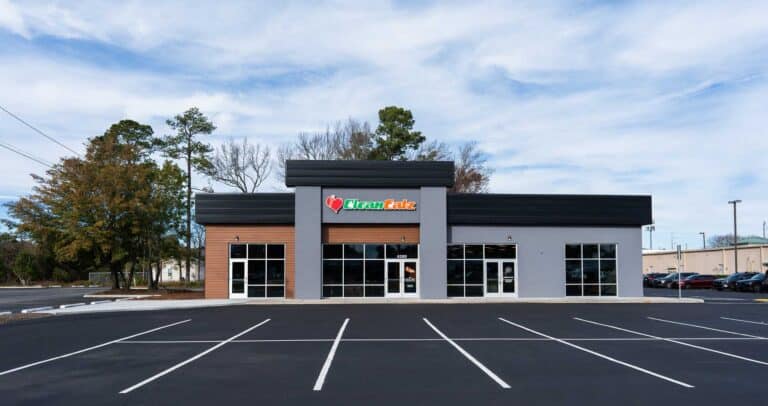
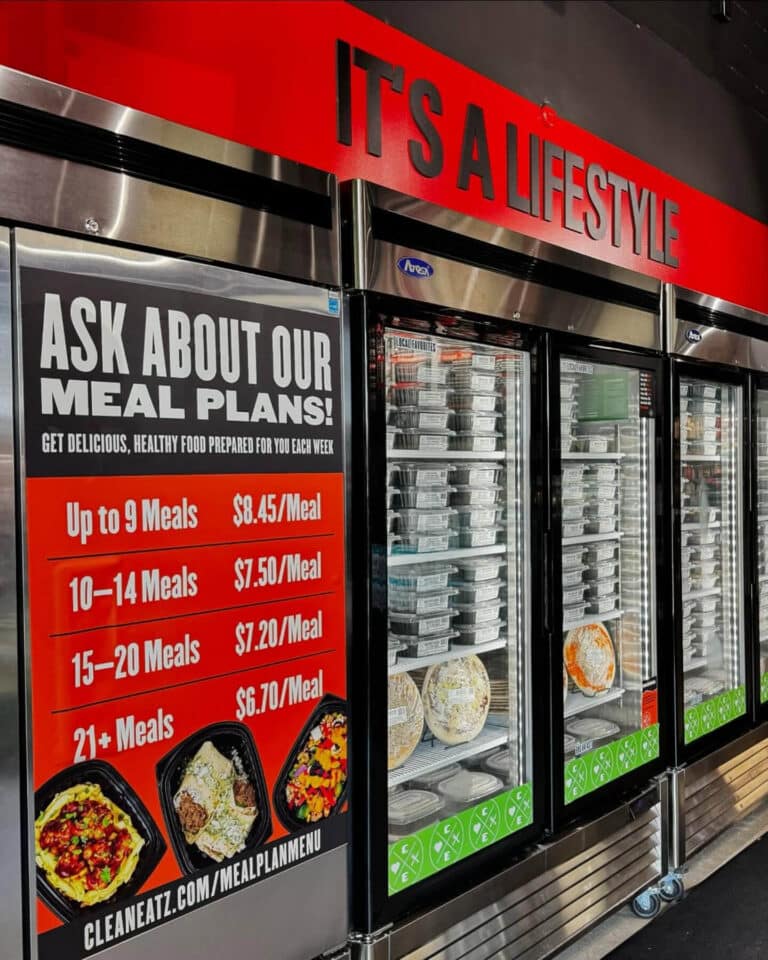
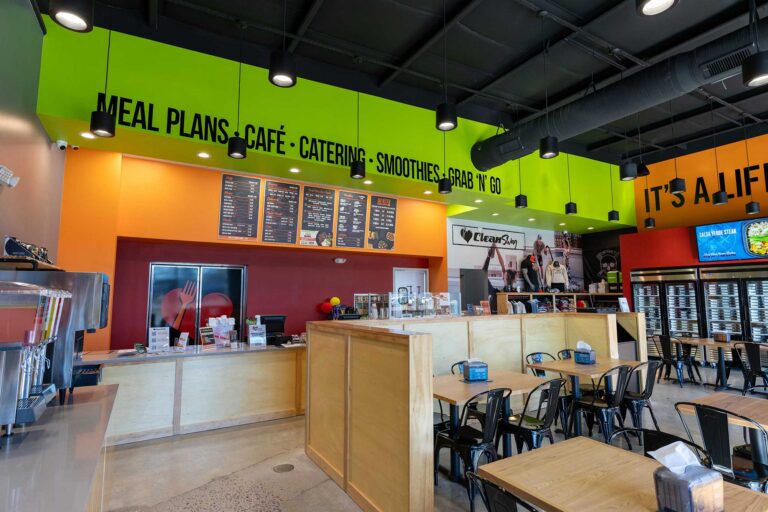
Read Item 1 against the pitch you heard. Clean Eatz, which has franchised since 2015, presents one store with five revenue streams: Meal Plans, Grab-N-Go Meals, the In-Store Cafe, Retail and Catering, open roughly 11am to 7pm with no fryers. Whatever brand you are weighing, the business its FDD describes is the one you are buying.
Add up the initial investment & fees
Price the build, then the weekly fees
FDD Item 7 is the estimated initial investment table. It lists every expense from the franchise fee through the first months of operation, with low and high amounts, when each is due and who gets paid. It must include an “Additional funds” line covering at least three months or a reasonable period for the industry, and its footnotes must say which payments are refundable.
Clean Eatz’s Item 7 runs from $307,500 to $733,500, including the $49,500 initial franchise fee and excluding real estate purchase and ongoing fees. Construction is the largest single line at $100,000 to $343,000, about 33% of the low total and 47% of the high. Add equipment and the pair comes to $160,200 to $499,500. By contrast, the franchise fee everyone asks about first is about 16% of the low total and about 7% of the high.
Items 5 and 6 list the initial and recurring fees. Item 8 shows whether the franchisor earns revenue from purchases you are required to make. In any franchise FDD, price the percentage fees per $100,000 of gross sales and list flat fees on their own, because flat fees do not shrink when sales do. Here is that worksheet with the Clean Eatz Item 6 numbers.
| Item 6 rate | Per $100,000 of gross sales | |
|---|---|---|
| Royalty | 6%, collected weekly by ACH | $6,000 |
| Brand fund | 2% | $2,000 |
| Local marketing | At least 1% | At least $1,000 |
| Percentage fees | At least 9% | At least $9,000 |
| Technology fee | $638 a month by ACH | $7,656 a year at any sales level |
What Item 7 leaves out
Item 7 is an estimate, and it excludes buying real estate. Clean Eatz also asks for $250,000 liquid and $1,000,000 net worth for a single unit.
You will find the full table, with each line’s timing and payee, on the Clean Eatz investment & earnings page. Set your lease quote and loan terms beside it, then ask your accountant whether the $20,000 to $40,000 “Additional funds” line covers your first three months.
Check the financial performance representation
Read Item 19 for its base, not its top
Item 19 is optional. Federal law does not require a franchisor to provide sales or earnings figures, though the FTC notes that most do. A franchisor that makes any financial performance representation must have a reasonable basis and written substantiation, must put it in Item 19, and may not make a different claim in a sales call.
Section 436.5 also tells you what to look for. A historic representation must say whether it covers all outlets or a subset, the dates, how many outlets existed and how many were used. It must also give the number and percent that reached or beat the stated result. That last disclosure turns an average into a distribution.
Clean Eatz’s Item 19 shows each of those parts. It covers calendar 2025 and 92 franchised restaurants open at least 18 months as of December 31, 2025, run by the same franchisee all year. Those cafes reported average gross revenues of $1,030,285 and median gross revenues of $962,325. Forty locations, or 43%, met or beat the average. At the ends, the highest reported $2,053,793 and the lowest $389,339.
Average EBITDA was $128,312, before owner and manager salary, debt service, depreciation and taxes. The brand says it directly: “These are gross revenues, not owner income.” The group also leaves out newer cafes and any that changed hands during the year, so read the definition before the dollar figures.
*Financial performance representation. These figures are taken from Item 19 of the Clean Eatz Franchise Disclosure Document dated April 30, 2026, and reflect January 1 through December 31, 2025. They represent 92 franchised restaurants open at least eighteen months as of December 31, 2025 and operated by the same franchisee throughout the period. EBITDA is stated before owner and manager salary. These are historical results for existing locations. They are not a projection or guarantee of what you may earn. Your results may differ, and there is no assurance you will do as well. Written substantiation is available upon request. See Item 19 of the FDD for complete information.
- Which outlets are in the group, and how many were left out?
- Is the headline gross sales, or does it reach a cost or profit line?
- What share of the group met the average, and what did the lowest units report?
- Does any profit figure come before or after owner pay, manager pay and debt service?
- Will the franchisor provide the written substantiation behind the claim on request?
Study unit openings, closings & transfers
Item 20 shows who stayed & who left
All franchise disclosure documents use the same Item 20 tables, which makes it the easiest Item to compare between brands. Its tables cover three fiscal years of outlet counts, transfers, openings, terminations, non-renewals, reacquisitions and closures for other reasons, plus agreements signed but not yet open.
Then come the names: current franchisees with outlet phone numbers, and every franchisee who left in the most recent fiscal year. Item 20 must also say whether franchisees signed confidentiality clauses in the last three years, which explains why some former owners may decline to talk.
- Net change. Outlets at year end minus outlets at the start, for each of the three years.
- Exits. Terminations, non-renewals, reacquisitions and ceased operations added together, then divided by outlets at the start of the year.
- Transfers. A high count can mean healthy resales or owners who wanted out. Former owners can tell you which.
- Pipeline. Compare agreements signed but not open with last year’s openings. A long wait is worth a question.
For scale, the Clean Eatz FDD reports that of the 116 outlets open during fiscal year 2025, 114 were franchised and 2 were company-owned or affiliated.
Call them. The FTC’s guide says talking to current and former franchisees “may be the most reliable way to verify the franchisor’s claims.” Clean Eatz calls this step “Talk to Our Owners,” the most important step in its process, and says “we don’t screen who you speak with.” The Clean Eatz franchisee stories page introduces some of them, and the Item 20 list gives you the rest.
- How close did your opening costs land to the Item 7 range, and which line ran over?
- How long was your ramp-up before the cafe ran on its own systems and staff?
- Where has the franchisor’s support been strong since opening, and where has it fallen short?
- If you could change one clause in your agreement, which one would it be?
- Would you buy this franchise again?
Read the franchisor’s audited financials
Can the franchisor fund its promises?
Item 21 holds the franchisor’s financial statements, prepared under US generally accepted accounting principles and audited by an independent certified public accountant. Expect balance sheets at the last two fiscal year-ends and statements of operations, stockholders’ equity and cash flows for the last three fiscal years. A start-up franchisor may phase audits in, and a franchisor may use an affiliate’s statements if that affiliate unconditionally guarantees its obligations.
You are asking one thing: can this company keep paying for the support your agreement promises, for as long as it runs?
- The auditor’s reportRead it first, with your accountant. Clean Eatz’s site publishes its Item 7 and Item 19 tables, not Item 21, so this step needs the full FDD.
- Where revenue comes fromRoyalties recur. Initial franchise fees arrive once. A franchisor that runs mostly on new-unit fees has to keep selling to stay healthy.
- Cash against obligationsSet cash and current assets beside current liabilities, and look for loans to or from owners and affiliates.
- The brand fundItem 11 must say who administers the fund, whether it is audited and how it was spent last year, by percentage.
Match the FDD to the contract you sign
The agreement is what binds you
The FDD summarizes. Item 22 attaches the actual contracts, and the contract is what you sign. Item 17 is the bridge between them: a table titled “The Franchise Relationship” that cross-references each renewal, termination, transfer and dispute resolution term to its section of the agreement. Use it as an index, then read every referenced section in full.
- Renewal. Item 17 must say what “renewal” means, including whether you may be asked to sign a contract with materially different terms.
- Territory. Item 12 must say whether you get an exclusive territory. If not, it must warn that you may face competition from other franchisees, company outlets or other channels the franchisor controls.
- Fees. Every fee in the agreement and its exhibits should appear in Item 6.
- Suppliers. Purchase requirements in the agreement should match Item 8.
- Your role. Item 15 states whether you must take part personally in running the business.
For Clean Eatz, read the territory in Item 12 and the term, renewal and transfer provisions in Item 17 of the FDD itself, not in any summary, this one included. One expectation is stated up front on the brand’s site: owners live within roughly a one-hour drive of their cafe, and “It isn’t designed as an absentee investment.” Check that the agreement says the same.
Check the final draft
A change you negotiated does not restart the 7-day clock, so have your attorney confirm that every negotiated edit made it into the version you sign.
Hire a franchise attorney for the FDD review
Pay for advice before the fee
The FTC’s guide tells buyers to “choose a lawyer who is experienced in franchise matters” and to have an accountant review the financial statements and any earnings claims. A franchise attorney reads the FDD and the agreement as a set and tells you what you would be bound to, and how you could leave. A franchise lawyer can also tell you what your state adds to the federal rule.
Hire them the week the FDD arrives, so the FDD review fits inside the 14-day window. Bring your notes from steps 2 to 7 so their time goes to your questions, and ask for a written fee estimate before they start.
| Franchise attorney | Accountant | |
|---|---|---|
| Reads | The agreement, Items 12 to 17, state addenda | Items 7, 19 and 21 |
| Answers | What binds you, what it costs to exit | Whether the numbers fit your cash and plan |
| Before signing | Confirms the final agreement matches the FDD | Builds your budget from Item 7 and your lease |
Clean Eatz puts the attorney and accountant review at step 4, ahead of validation, Discovery Day in Wilmington and signing at step 7, so the document, the owners and the visit all come before any money changes hands.
Sources
- 16 CFR Part 436, Disclosure Requirements and Prohibitions Concerning Franchising (FTC Franchise Rule), eCFR, current as of 2026
- A Consumer’s Guide to Buying a Franchise, Federal Trade Commission, 2020
- FTC Secures Settlement Against Xponential Fitness for Franchise Rule Violations, FTC press release, March 18, 2026
- NASAA public comment on the proposed model franchise broker registration act, NASAA, July 28, 2025
Franchise disclosure document questions
Quick answers before you sign
Short answers to what buyers ask most about FDDs from healthy restaurant franchises and other food concepts.
How long do you have to review an FDD?
At least 14 calendar days before any binding agreement or payment, under the FTC Franchise Rule. If the franchisor materially changes the agreement on its own, you get the revised version at least 7 calendar days before you sign. Both are minimums, and you can take longer.
Do healthy restaurant franchises disclose earnings?
Some do and some do not, because Item 19 is optional under federal law. Any earnings claim a franchisor makes must appear in Item 19 with its basis. Clean Eatz includes an Item 19 covering 2025 results for its franchised cafes, published with its full financial performance note on its investment and earnings page.
What does the FTC franchise rule require?
It requires franchisors to deliver a disclosure document with 23 specified Items in plain English, at least 14 calendar days before a sale, and to revise it within 120 days after each fiscal year ends. It also bars financial performance claims that are not in Item 19 and any statement that contradicts the FDD.