
Start with one cafe unless you already run a multi-location business and can clear the higher capital bar. That is the honest answer for most first-time buyers, even though most franchised units in the United States belong to owners with more than one.
FRANdata’s 2026 ownership analysis counted 433,558 franchised units and found 57% operated by multi-unit owners. That number shows where franchising ends up. It says little about where you should start, which comes down to capital, management experience and how much of the business you want to learn with your own hands.
Below, the two paths are scored on six factors, compared line by line and checked against the Clean Eatz franchise disclosure document (FDD): $1,000,000 net worth and $250,000 liquid for one cafe, $2,250,000 and $600,000 for a three-unit development.
The short answer
Open one cafe first if this is your first business. The capital bar is lower, the risk sits on one site and you learn the model hands-on. Choose a multi-unit development if you already lead managers, meet the higher net worth and liquidity bar and want to reserve room in a market.
Single-unit vs multi-unit verdict
Start with one cafe, then earn the second
- A lower bar: $1,000,000 net worth and $250,000 liquid
- One build-out, one lease and one crew to learn on
- No development schedule to meet while you learn
- Multi-unit wins on growth once you have a bench of managers
Single-unit 4 | Multi-unit 1 | Tie 1
6.8
Single-unit score, vs 6.2
Scored from 1 to 10 on six factors and averaged, one cafe comes out ahead on capital, your role, the schedule and staffing. The multi-unit path wins the growth round, and risk is a tie, because each side carries a different kind.
The margin is narrow. A multi unit franchise is the stronger choice for an operator who already manages managers, has the capital in hand and wants to claim a market early. For a first business, franchise expansion works better as a second decision, made after one cafe has taught you how your market buys meal plans.
Geography can settle the question before preference does. As of October 31, 2026, the Clean Eatz market map showed 37 states plus DC as open Clean Eatz markets, 7 states limited and 4 sold out. Check your state first, then ask which development options exist where you live.
Single-unit vs multi-unit rounds
Six factors, scored 1 to 10
Multi unit franchising is how most U.S. restaurant franchise units are owned. In the same FRANdata 2026 analysis, multi-unit owners ran 117,790 of the 142,081 quick-service restaurant units, about 83%.
Most of those owners run small groups. FRANdata put the number of U.S. multi-unit operators at about 42,571 in 2025, and its 2026 multi-unit report counted 34,218 operators with two to five units. That is the realistic picture of a multi unit franchisee: a local operator with a handful of locations, which is the scale each round below assumes.
Round 1 | Single-unit wins
Upfront investment
Single-unit 8 | Multi-unit 5
Clean Eatz asks a single-unit buyer for $1,000,000 in net worth with $250,000 liquid. In markets committed to a three-unit development, that becomes $2,250,000 and $600,000. Item 7 estimates one cafe at $307,500 to $733,500, and the estimate is per cafe: every cafe in a group has its own build-out, lease and opening food order.
Round 2 | Single-unit wins
Your role day to day
Single-unit 8 | Multi-unit 6
With one cafe you are the operator, on the floor through a day that runs roughly 11am to 7pm, close enough to the meal plan line to fix it. With three, your work moves to coaching managers and reading each cafe’s numbers. Clean Eatz looks for owners within roughly a one-hour drive and says the cafe isn’t designed as an absentee investment, so a group still needs you nearby.
Round 3 | Single-unit wins
Development schedule
Single-unit 8 | Multi-unit 5
A single unit has one opening to plan. An area development agreement sets a number of units and a schedule, and state regulators’ Multi-Unit Commentary says Item 17 must describe any cross-default, where terminating one agreement can permit terminating the others. For Clean Eatz, those terms sit in its FDD and development agreement. Read them with your attorney before you plan around a date.
Round 4 | Single-unit wins
Hiring & management layers
Single-unit 7 | Multi-unit 6
One lean crew is a hiring problem you can solve in person. A group adds a manager in every cafe you are not standing in, and later someone to manage those managers. That layer costs money and takes time to build. It also gives good people somewhere to grow.
Round 5 | Multi-unit wins
Growth ceiling
Single-unit 4 | Multi-unit 9
One cafe has one trade area and one kitchen, and its sales stop where they stop. A group can promote people across sites and spread the owner’s overhead over more revenue. The brand’s 2025 post on the College Station owner’s second location plan follows that order: an owner who took over one cafe in July 2025, then planned the next.
Round 6 | Tie
Risk & territory
Single-unit 6 | Multi-unit 6
In 2025, average gross revenues across the 92 Clean Eatz cafes in the Item 19 group came to $1,030,285, and individual cafes ranged from $389,339 to $2,053,793. Clean Eatz says that spread reflects market, site quality and operator engagement. One cafe is a single bet on one site. Three cafes soften a weak site but carry three leases and more debt, and Item 12 describes the territory each agreement grants.
*Financial performance representation. These figures are taken from Item 19 of the Clean Eatz Franchise Disclosure Document dated April 30, 2026, and reflect January 1 through December 31, 2025. They represent 92 franchised restaurants open at least eighteen months as of December 31, 2025 and operated by the same franchisee throughout the period. EBITDA is stated before owner and manager salary. These are historical results for existing locations. They are not a projection or guarantee of what you may earn. Your results may differ, and there is no assurance you will do as well. Written substantiation is available upon request. See Item 19 of the FDD for complete information.
I started as a store manager and worked my way up to owning two locations.
Dylan Richmond, 2 locations, Virginia
Single-unit franchise & multi-unit franchise differences
Side by side, one cafe vs a group
The Franchising on Wikipedia entry sums up the basic arrangement: a company licenses its business model to another, and the franchisee pays fees and accepts obligations set out in a franchise agreement. How many of those agreements you sign is where the two paths split.
A single unit franchise is one franchise agreement for one location. A multi-unit owner usually signs an area development agreement as well. NASAA’s 2014 Multi-Unit Commentary, the state franchise regulators’ disclosure guidance, describes it as the right to open and operate multiple unit franchises, generally within a delineated geographic area, with the number of units and a development schedule specified. Each cafe still gets its own franchise agreement when it opens.
| Single-unit | Multi-unit | |
|---|---|---|
| Agreements | One franchise agreement | A development agreement plus one franchise agreement per cafe |
| Clean Eatz bar | $1,000,000 net worth, $250,000 liquid | $2,250,000 net worth, $600,000 liquid (three units) |
| Item 7 estimate | $307,500 to $733,500 | A separate build-out for each cafe |
| Ongoing fees | 6% royalty, 2% brand fund, 1%+ local marketing, $638 a month tech fee | Item 6 fees on each cafe’s gross sales |
| Schedule | One opening | A number of cafes by set dates |
| Your role | Run the floor and the crew | Lead managers across sites |
| Territory | Item 12 describes it | Item 12 and the development agreement describe it |
| Growth | One trade area | Room to build a group in one market |
Two rows deserve a second look. Item 6 sets the fees, and the math runs cafe by cafe: a 6% royalty is $6,000 on every $100,000 of a cafe’s gross sales. The schedule row is the one that turns a slow opening into a contract problem.
Questions to ask before you sign a development agreement. Bring these to your attorney, then to owners in validation:
- How many cafes, by which dates, and what happens if one opening slips?
- Will each future cafe use the franchise agreement in this FDD, or the then-current form when it opens?
- Who picks and approves future sites and territories, and under which standards?
- Does a default on one agreement reach the others? Item 17 has to describe any cross-default.
- Is anything paid for the development rights themselves, when, and is any of it refundable?
- Which owners on the Item 20 list are area developers, and what do they say about the schedule?
Item 20 counts openings, not promises
NASAA’s commentary bars franchisors from adding to Item 20 the number of outlets area developers have agreed to open, because the figure could mislead. Item 20 shows outlets actually opened and closed, a better read on a system than its development pipeline.
When to choose each healthy franchise path
Pick by your capital & your bench
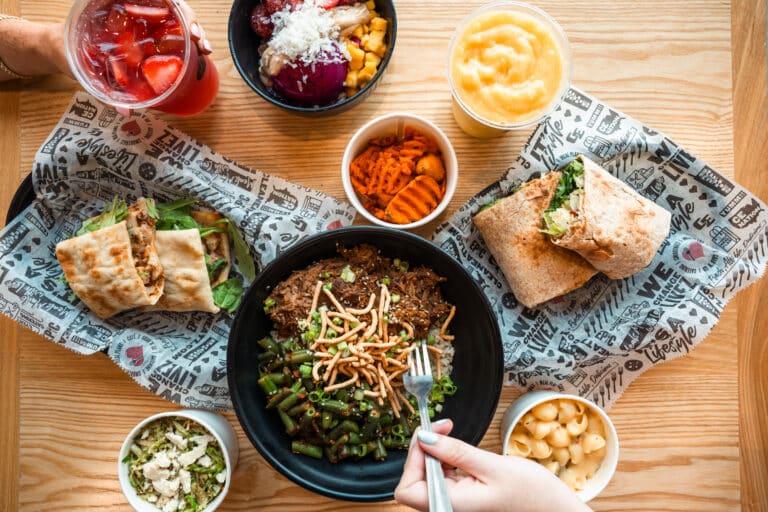
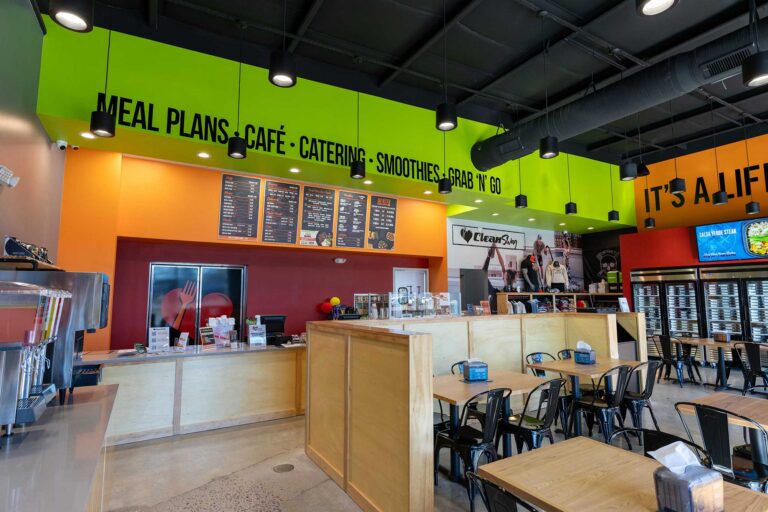
A healthy franchise adds a wrinkle to the usual math. This business runs on weekly regulars and steady production, and an owner who is present builds both. In the Clean Eatz healthy franchise model, Meal Plans, Grab-N-Go Meals, the In-Store Cafe, Retail and Catering all run out of one cafe of roughly 1,800 to 2,400 square feet, so learning one cafe teaches you all five revenue streams.
Most multi unit franchise opportunities ask you to commit to several locations before the first one opens. For an experienced operator that is a fair trade. For a first-time owner it is a bet on skills not yet tested.
A single-unit franchise fits
- This is your first business. You want to learn hiring, meal plan production and local marketing on one site before you sign for more.
- You meet the single-unit bar. $1,000,000 net worth and $250,000 liquid, without draining your reserves.
- You want to run the floor. You would rather know regulars by name than read three P&Ls a week.
- You want a smaller first bet. One lease and one build-out, so a slow start stays contained.
A multi-unit franchisee fits
- You already lead managers. You have run several locations, shifts or teams and know how to manage through people.
- You clear the higher bar. $2,250,000 net worth and $600,000 liquid for a three-unit development.
- You want to reserve a market. Your area is open and you want room to build before another owner claims it.
- You can carry a schedule. Your capital and your bench can open the next cafe on the date you signed for.
Caught between the two cards? Open one cafe, and raise the second when the first has a manager you trust.
Multi-unit franchise owner pros & cons
What each path gives & takes
A multi unit franchise owner trades simplicity for scale. Mike Parker owns five Clean Eatz locations in North Carolina, while Anna and Michael Dey in Ohio and Dylan Richmond in Virginia each own two. Owners like them are the people to ask in validation which column below matched their experience.
Figures behind both columns, from Item 7 to the Item 6 fees, are on the Clean Eatz investment & earnings page.
Single-unit ownership
Pros
- A lower bar of $1,000,000 net worth and $250,000 liquid
- One Item 7 build-out, estimated at $307,500 to $733,500
- You learn every revenue stream firsthand
- No development schedule or cross-default terms to manage
Cons
- Growth stops at one trade area
- Every risk rides on one site and one lease
- You are the backup when a shift comes up short
- A second cafe later depends on what is still open nearby
Multi-unit ownership
Pros
- Room to build a group in one market
- Owner overhead spread across more sales
- A promotion path that helps you keep good managers
- One weak site is not the whole business
Cons
- A higher bar of $2,250,000 net worth and $600,000 liquid
- Several build-outs, several leases and more debt
- A development schedule, and possibly cross-default terms
- Your day moves from the floor to managing managers
This is the first one that felt like joining a family instead of a franchise
Mike Parker, 5 locations, North Carolina
Sources
- MUBG 2026 franchise industry ownership analysis, Ambika Oberoi, FRANdata, published by the International Franchise Association, 2026
- 2025 Multi-Unit 50 lists include new brands, Ambika Oberoi, FRANdata, Multi-Unit Franchisee, 2025
- FRANdata 2026 new multi-unit franchising report, International Franchise Association, 2026
- Multi-Unit Growth by the Numbers, FRANdata, 2019
- Franchise Multi-Unit Commentary, NASAA, adopted September 16, 2014
- 16 CFR 436.5, Disclosure items (FTC Franchise Rule), Legal Information Institute
- Franchising, Wikipedia
Owning multiple franchises questions
Answers before you sign for more
Owning multiple franchises raises contract questions a single-unit buyer never faces. Even the title area developer has no single meaning across the industry, as NASAA’s commentary points out, so read how each FDD defines it.
How many franchises can you own?
There is no federal cap. Any limit comes from the franchisor’s approval, your capital and the agreements you sign. FRANdata’s 2026 report counted 34,218 U.S. operators with two to five units in 2025, and its 2018 count, published in 2019, found 354 running more than 50. At Clean Eatz, Mike Parker owns five locations in North Carolina.
What is an area development agreement?
It is a contract that grants the right to open a set number of franchised units, generally within a defined area, on a development schedule. Each unit still gets its own franchise agreement. At Clean Eatz, a three-unit development requires $2,250,000 net worth and $600,000 liquid, and the schedule and territory terms are in the FDD and the development agreement.
Can you start with one cafe & add more later?
Usually, yes, subject to the franchisor’s approval and what is still available in your area. Under the FTC Franchise Rule, Item 12 must disclose any option, right of first refusal or similar right to acquire additional franchises, so read it before you count on a second site. Dylan Richmond, who owns two Clean Eatz locations in Virginia, says he started as a store manager and worked his way up.
Do Clean Eatz owners need to live near every cafe?
Clean Eatz looks for owners who live within roughly a one-hour drive of their cafe, and it says the business isn’t designed as an absentee investment. Plan any group within that reach, and confirm in discovery how the requirement applies to the cafes you have in mind.
Does the FDD show which owners are area developers?
It should. NASAA’s commentary says area developers must be marked with a footnote in the Item 20 franchisee lists, including those who signed a development agreement but have not opened yet. That list doubles as a validation call sheet for anyone weighing a multi-unit deal.