Item 19 of a Franchise Disclosure Document is the one place a franchisor may tell you what its outlets sold, spent or earned. It is optional, federal rules control it when it appears, and most of what matters sits in the notes: which outlets were counted, which were left out, and whether a figure is sales or closer to profit.
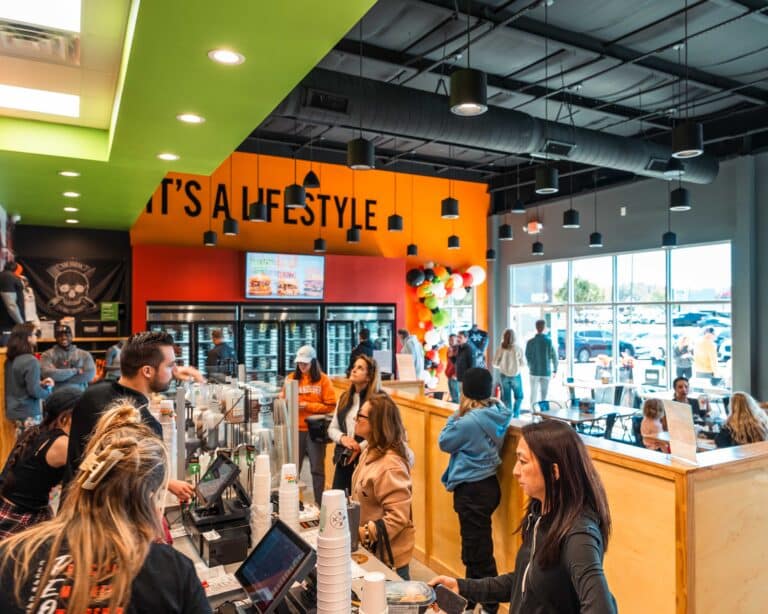
This guide reads one line by line. Clean Eatz, the healthy cafe franchise from Wilmington, North Carolina, publishes its 2025 Item 19 on its website, so its figures serve as the worked example. The legal anchor is the FTC Franchise Rule at 16 CFR 436.5(s), plus the guidance state regulators apply on top of it.
Key stats
- 14 daysminimum time you must hold the FDD before you sign or pay, under 16 CFR 436.2(a)
- 6material bases a historic Item 19 must state, per the FTC Compliance Guide
- 84%of franchisors in Franchise Update Media’s self-selected 2026 survey say they make an FPR
The short answer
Read Item 19 as a record of what existing outlets did, not a forecast for yours. Check who was in the sample, set the average beside the median and quartiles, find where owner pay, loan payments and taxes fall, then take the open questions to the owners listed in Item 20.
What a financial performance representation is
What the rule lets a franchisor say
A financial performance representation, or FPR, is any statement to a prospective franchisee that states or implies “a specific level or range of actual or potential sales, income, gross profits, or net profits.” That is the FTC’s definition in 16 CFR 436.1(e), and it includes “a chart, table, or mathematical calculation that shows possible results.” A pro forma from a sales rep counts.
Under 16 CFR 436.5(s), a franchisor that makes an FPR needs “a reasonable basis and written substantiation” and must state it in Item 19, and section 436.9(c) bars giving one that is not there. Anyone researching Item 19 FDD rules, or reading FDD Item 19 for a specific brand, is really asking one question: what has this franchisor put in writing about money, and on what basis?
If you have never held an FDD, Wikipedia on disclosure documents maps all 23 Items. For a brand you are serious about, Request the full disclosure document and read Item 19 with its notes, not the summary on a sales page.
A historic Item 19 must answer six questions, which the FTC’s Franchise Rule Compliance Guide calls the material bases.
- The group measuredAll outlets, or a subset sharing a trait such as age, location type or region.
- The time periodWhen the results were achieved. Stale data may lack a reasonable basis.
- Outlets in the systemHow many existed in that period, and how many had the stated traits.
- Outlets reportingHow many outlets supplied the data behind each figure.
- Number & percent at the resultHow many of them attained or surpassed it.
- Differences from yoursTraits of the counted outlets that may differ materially from the one you are offered.
Why many franchisors skip it
Optional, & still worth reading
The FTC guide says the rule “permits, but does not require” financial performance disclosure. A franchisor that opts out must say it makes no such representations, and it may not make them in any ad or website aimed at buyers. How many opt out depends on who counts. FranchiseGrade.com’s 2016 analysis of 1,905 franchise systems found 870, or 45%, with no FPR. Franchisors answering Franchise Update Media’s 2026 survey, a self-selected group, put the share that make one at 84%.
Every figure needs written substantiation the day it is made, and an unsupported one is an unfair or deceptive practice under the rule. FranchiseGrade’s report adds legal advice, weak results and strong sales without one as possible reasons. A missing Item 19 proves nothing about the outlets. It moves the whole job onto your owner calls.
Who is counted & who is left out
Read the sample before the figure
The FTC allows a subset of outlets if the franchisor names the shared traits and the system total. State regulators go further. The NASAA Commentary on Financial Performance Representations (2017) says best performers alone are “likely to be misleading,” so a franchisor showing its top 10% must show its bottom 10%, and closed outlets may be dropped from an average only if the FPR says how many closed.
| Material basis | Clean Eatz Item 19, FDD dated April 30, 2026 |
|---|---|
| Time period | January 1 to December 31, 2025 |
| Group measured | Franchised restaurants open at least 18 months as of December 31, 2025, same franchisee all year |
| System total | 116 outlets in fiscal 2025: 114 franchised, 2 company-owned or affiliated |
| Outlets used | 92 franchised restaurants |
| At or above the average | Stated with the gross revenue averages in the next section |
| Left out | Cafes open under 18 months, cafes sold or transferred in 2025, company-owned outlets |
Read that sample the way a lender would. No cafe in its first 18 months is in it, so the figures describe established cafes, not the opening year you will live through first. The site’s summary gives no count of 2025 closures. Look for it in the full Item 19 notes and in the Item 20 outlet tables.
Gross revenue, median & quartiles
The middle cafe, the top & the bottom
Most Item 19s start with average unit volume, or AUV: total sales divided by the outlets in the group. Check what “gross” means first. NASAA says a franchisor reporting gross revenue must disclose what it deducts, such as sales tax and discounts.
Sales alone “don’t really tell about the franchisees’ actual costs or profits,” as the FTC’s consumer guide to buying a franchise puts it. Clean Eatz says it too, “These are gross revenues, not owner income,” beside its Item 19 averages & quartiles.
Average unit volume vs median
One outlier can move an average
An average adds every cafe and divides by the count, so a few very busy locations pull it up. The median is the cafe in the middle of the ranking. NASAA requires the pair: an average must come with the median, “because the existence of outliers may skew an average,” and with the highest and lowest figures.
- $1,030,285average gross revenues, 2025Clean Eatz Item 19, 92 cafes
- $962,325median gross revenues, 2025Clean Eatz Item 19, 92 cafes
- 40 of 92cafes at or above the average, 43%Clean Eatz Item 19
In 2025 the Clean Eatz average sat $67,960 above its median, and only 40 of 92 cafes met or beat it. Most cafes in the group reported less than the AUV a headline would quote.
Reading the top & bottom quartiles
Both ends of the same system
Quartiles split the ranked group into four equal parts, 23 cafes each at Clean Eatz, with the high, low and median published for the top and bottom groups.
Average gross revenues by quartile, 2025
Clean Eatz Item 19, FDD dated April 30, 2026. 23 franchised cafes per quartile, ranked by gross revenues.
| Top quartile | Bottom quartile | |
|---|---|---|
| Average | $1,519,084 | $672,572 |
| Median | $1,455,470 | $685,136 |
| Highest | $2,053,793 | $795,090 |
| Lowest | $1,289,859 | $389,339 |
Read across, not down. The best bottom-quartile cafe reported $795,090 and the weakest top-quartile cafe $1,289,859, a $494,769 gap. The highest cafe reported more than five times the lowest. Clean Eatz says the spread “reflects market, site quality, and operator engagement,” three things you can investigate before you sign and none of which shows up in an average.
Red flags in any Item 19
An average with no median, high or low. A top-performer table with no bottom group. A sample so narrow that most of the system sits outside it. Sales with no definition of gross.
*Financial performance representation. These figures are taken from Item 19 of the Clean Eatz Franchise Disclosure Document dated April 30, 2026, and reflect January 1 through December 31, 2025. They represent 92 franchised restaurants open at least eighteen months as of December 31, 2025 and operated by the same franchisee throughout the period. EBITDA is stated before owner and manager salary. These are historical results for existing locations. They are not a projection or guarantee of what you may earn. Your results may differ, and there is no assurance you will do as well. Written substantiation is available upon request. See Item 19 of the FDD for complete information.
Costs below the top line
From gross sales to what is left
Sales say nothing about franchise profit until the costs come off. The FTC guide draws the line: cost data alone is not an FPR, but costs paired with sales “from which prospective franchisees could readily calculate average net profits” are, and they belong in Item 19.
Fewer franchisors go that far. In Franchise Update Media’s 2024 survey of 120 brands, 94% said their Item 19 includes revenue, 56% shared expenses and 53% disclosed profitability.
Cost of goods, labor & occupancy
Four cost lines, one average cafe
Below gross sales, Clean Eatz reports average cost lines. The right column is each average divided by average gross sales.
| Average, 2025 | Share of average gross sales | |
|---|---|---|
| Gross sales | $1,030,285 | 100% |
| Cost of goods sold | $394,297 | 38.3% |
| Labor | $164,282 | 15.9% |
| Occupancy cost | $77,127 | 7.5% |
| Other operating costs | $266,267 | 25.8% |
| EBITDA before owner and manager salary | $128,312 | 12.5% |
Two cautions. A ratio of averages is not the typical cafe’s ratio: a high-volume cafe spreads rent over more sales, so its occupancy share can run lower. Ask owners for their own percentages. And the site does not break down “other operating costs.” Whether that line already holds royalties and fees decides whether you subtract them again, so find its definition in the FDD.
Restaurant EBITDA before owner salary
What EBITDA leaves out
Restaurant EBITDA is earnings before interest, taxes, depreciation and amortization. Clean Eatz reports it before owner and manager salary too: $128,312 on average across the 92 cafes in 2025. That is not what an owner took home. It is what remained before four costs every owner still carries.
- Owner and manager salary. Clean Eatz says compensation “varies widely by market and operator preference.” Price a manager for your market even if you plan to run the floor.
- Debt service. Interest sits below EBITDA, and loan principal is not an expense at all, yet both leave your account monthly.
- Depreciation & amortization. Build-out and equipment wear out. In Clean Eatz’s Item 7, construction runs $100,000 to $343,000.
- Income taxes. These depend on your entity and return, which is your CPA’s call.
NASAA defines net profit as gross profit minus “all ordinary and recurring operating expenses, interest, income taxes, depreciation and amortization.” An EBITDA line tells you more than sales alone. The last four lines of the model are still yours.
*Financial performance representation. These figures are taken from Item 19 of the Clean Eatz Franchise Disclosure Document dated April 30, 2026, and reflect January 1 through December 31, 2025. They represent 92 franchised restaurants open at least eighteen months as of December 31, 2025 and operated by the same franchisee throughout the period. EBITDA is stated before owner and manager salary. These are historical results for existing locations. They are not a projection or guarantee of what you may earn. Your results may differ, and there is no assurance you will do as well. Written substantiation is available upon request. See Item 19 of the FDD for complete information.
Turning franchise revenue data into your own model
Their data, your market, your math
Your model describes one cafe, on one site, run by you. Item 19 describes a group. Since a calculation of possible results is itself an FPR, a franchise seller can give you one only through Item 19 or a written supplement to it. The arithmetic for your site is yours, done with your accountant.
Start with franchise revenue. Set cautious, middle and strong sales cases for your site and test each against the published range and what owners in similar markets report.
| Where the number comes from | What to check | |
|---|---|---|
| Gross sales, three cases | Your site, trade area and owner calls | Where each case falls against the Item 19 median and quartiles |
| Food, labor, occupancy, other | Item 19 as a reference, then owner P&Ls and your lease quote | Whether your rent and wages run above or below the system |
| Royalty, brand fund, local marketing | Item 6: 6%, 2% and at least 1% of gross sales | At least $9,000 on every $100,000 of gross sales |
| Technology fee | Item 6: $638 a month by ACH | $7,656 a year, flat |
| Owner & manager pay | Local wages and the role you will play | Whether Item 19 labor already includes a manager |
| Debt service | Your lender’s term sheet | Monthly principal and interest |
| Opening reserve | Item 7, additional funds | $20,000 to $40,000 for the first 3 months |
The fee rows are where models double-count or miss. A 6% royalty is $6,000 on every $100,000 of gross sales, drafted weekly, before you have paid yourself.
Two kinds of franchise earnings numbers stay out of the spreadsheet: any figure from a sales conversation that is not in Item 19, and headlines. Trade coverage such as the Q1 results reported in QSR can prompt questions about recent quarters, but a news story does not carry the sample, period and notes that make an Item 19 figure usable in a model.
Stress test
Rerun your middle case with sales at the bottom-quartile level and rent at the top of your lease quote. If that version cannot cover debt service and a manager, you have learned it before signing anything.
Questions to ask franchisees about the numbers
Ten questions for your owner calls
What the group did is in Item 19. Owners tell you why. Under 16 CFR 436.5(t), Item 20 lists current franchisees with outlet phone numbers (the whole system, or at least 100 outlets starting with your state), plus every franchisee who left in the last fiscal year, so you choose whom to call. The FTC’s consumer guide calls those talks possibly “the most reliable way to verify the franchisor’s claims.”
The brand describes validation as “direct, unscripted conversations with current Clean Eatz owners” and says “we don’t screen who you speak with.” Start with the Validation calls with current owners page, then work the FDD list. In a healthy franchise with five revenue streams, ask which streams carry each cafe, because the mix shapes food cost and labor.
- Was your cafe in the Item 19 group for 2025, and if not, why not?
- Roughly which quartile is your cafe in, and what puts it there?
- How long did it take to reach sales you were comfortable with?
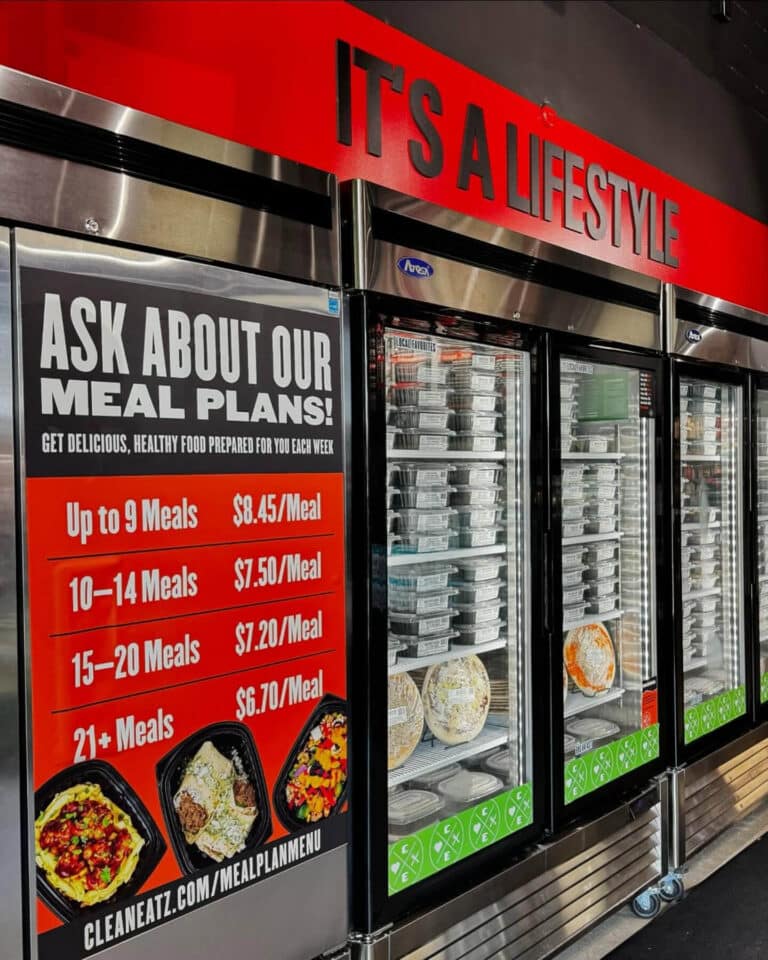
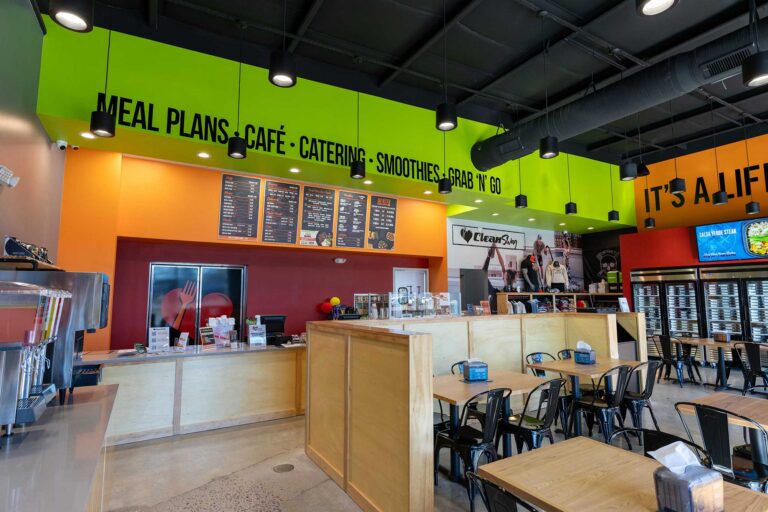
- How do Meal Plans, Grab-N-Go Meals, the In-Store Cafe, Retail and Catering split your sales?
- How do your food, labor and occupancy percentages compare with the Item 19 averages?
- What sits in “other operating costs” on your P&L, and are royalties and fees in it?
- Do you pay a general manager, and does that pay sit in labor or below EBITDA?
- When did you first take a regular paycheck from the business?
- What would you change about your site, lease or opening budget if you started again?
- For former owners: why did you leave, and did the numbers play a part?
Lay your call notes beside the Item 19 table. If bottom-half owners describe the same problem, a weak site or a slow first year, price that risk into your model.
Exploring costs nothing at Clean Eatz: introductory calls, the FDD review, validation and Discovery Day carry no charge, and the financial commitment comes only when you sign a franchise agreement. You get the FDD at least 14 calendar days before you sign or pay. Read Item 19 with your attorney and accountant, make the calls, then bring your questions to Wilmington.
Own a Clean Eatz Cafe
From $307,500 all-in
See Item 7
Sources
- 16 CFR 436.1(e), definition of financial performance representation
- 16 CFR 436.2(a), 14-day disclosure rule
- 16 CFR 436.5(s) Item 19 and 436.5(t) Item 20, FTC Franchise Rule
- 16 CFR 436.9(c), FPRs outside Item 19
- Franchise Rule Compliance Guide, Federal Trade Commission, May 2008
- A Consumer’s Guide to Buying a Franchise, Federal Trade Commission, September 2020
- NASAA Franchise Commentary on Financial Performance Representations, NASAA, adopted May 8, 2017
- Financial Transparency Delivers, FranchiseGrade.com, 2016
- Looking at what is in a franchise’s FDD (2026 AFDR), Franchise Update Media, July 14, 2026
- 2024 AFDR data: what franchises include in Item 19, Franchise Update Media, October 2, 2024
- Investment & earnings, Clean Eatz Franchising, FDD dated April 30, 2026
Common questions about earnings claims
Quick answers on Item 19
Is the earnings section required in every FDD?
The section is, the numbers are not. A franchisor that makes no financial performance representation says so in Item 19. Apart from the records of an existing outlet you are buying, it may not share earnings figures anywhere else in its sales process.
Is AUV the same as profit?
No. Average unit volume is average sales per outlet, before food, labor, rent, fees and every other cost. Even EBITDA sits above owner pay, debt service, depreciation and taxes. Treat AUV as a measure of demand.
Can a franchisor share numbers outside the FDD?
Only in narrow cases: the actual records of an existing outlet you are considering buying, or a written supplement that explains how it departs from Item 19 and meets the same standards. Owners you call in validation can describe their own results.
How old can Item 19 data be?
Any reasonable period is allowed, but the FTC guide warns that old data may no longer give a reasonable basis. Check the period against the FDD’s date. Clean Eatz’s FDD dated April 30, 2026 reports calendar 2025.
Can I see the data behind an Item 19?
Yes. Item 19 must say written substantiation is available on reasonable request, meaning the franchisor gets time and a convenient place to produce it. Ask in writing, early.