
To evaluate a healthy franchise, run the same six checks on every brand you are considering: local demand, unit economics in the franchise disclosure document, support, owner validation, the hours and crew, and your capital against the full investment. Score each check from 1 to 5, weight the scores, and compare totals. A brand that wins on the menu but fails on capital or owner calls should lose.
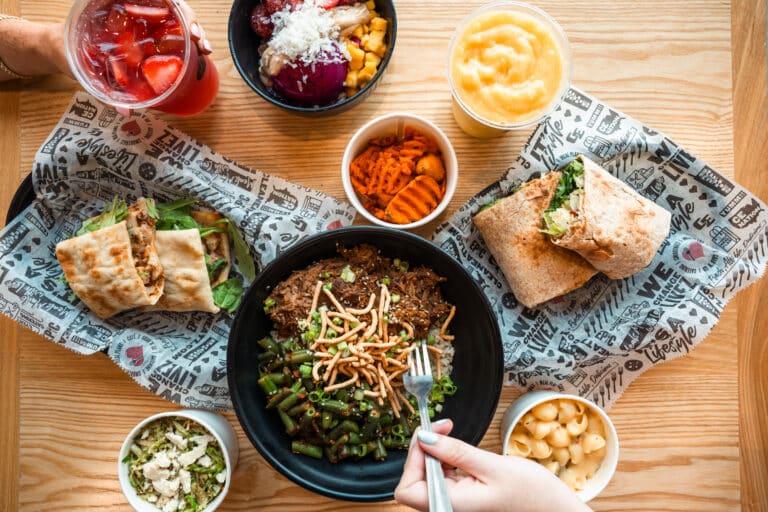
Most buyers judge one brand at a time, against the last sales call. Scoring every concept on the same evidence turns a feeling into a comparison you can defend to a lender or a spouse. Clean Eatz, a healthy cafe franchise with five revenue streams, roughly 11am to 7pm hours and no fryers, is the worked example. This is a research method, not legal, tax or investment advice.
The short answer
Collect the same evidence for every brand: demand in your market, Item 19 and Item 7 from the FDD, the Item 11 support, calls with owners you pick from Item 20, and your own cash. Score six areas from 1 to 5, weight them, and walk away from any brand that scores a 1 on owner calls or capital.
Your franchise due diligence plan
Same evidence, every brand
Franchise due diligence is a comparison exercise before it is a reading exercise. The SBA guide to buying a business sums up the whole task as “do your due diligence,” warns that the contract “usually benefits the franchisor more than the franchisee,” and tells buyers to “Consider hiring an attorney and an accountant.” Hire both before you shortlist, so their review is not the step that runs late.
How to research a franchise, in practice, comes down to where each fact lives. Demand lives in your market. Fees, costs and results live in the FDD. Support and culture live in owners’ answers. Gather each fact once and score it once.
| What you collect | Where it comes from | |
|---|---|---|
| 1. Demand | Buyers, competitors and the territory on offer | Your market, Census data, Item 12 |
| 2. Unit economics | Sales spread, cost lines, every fee | Items 5, 6, 7 and 19 |
| 3. Support | Training, opening help, field support | Items 8 and 11, owner calls |
| 4. Validation | Owners’ experience, in their words | Item 20 lists, current and former owners |
| 5. Hours & crew | Your role, schedule and staffing | Item 15, a cafe visit |
| 6. Capital | Cash after equity, gaps and reserves | Item 7, your lender, your accountant |
| 7. Scorecard | One weighted total per brand | Steps 1 to 6 |
Federal and state rules frame the timetable. Under the FTC Franchise Rule, the FTC’s consumer guide says “you must receive the document at least 14 days before you are asked to sign any contract or pay any money.” And according to NASAA, the association of state and provincial securities regulators, franchisors must register with state franchise administrators in 15 states. To learn how your own state regulates franchise sales, the FTC suggests checking with “your state Attorney General’s office, office of consumer affairs or state securities division.”
Knowing how to evaluate a franchise also means knowing what a good concept looks like before you score one. Clean Eatz’s earlier post on wellness franchises: what to look for covers the traits. This plan is how you test them.
Check demand for healthy food in your market
Score the market, then the brand
Lists of the best healthy franchises rank brands, not towns. Your cafe sells to people within a short drive, so healthy franchise opportunities have to be judged one market at a time. Two questions from the FTC’s guide come first: “Is there a demand for the franchisor’s products or services in your community?” and “will you have to create a market for the franchise?”
National spending is a backdrop, not proof. USDA Economic Research Service figures put food away from home at $1.41 trillion in 2025, out of $2.51 trillion in total U.S. food spending. Prepared food is also a competitor. FMI’s Power of Foodservice at Retail 2025 found the share of consumers choosing deli-prepared foods in place of restaurant meals rose from 12% in 2017 to 28% in 2025, so the grocery deli counts as competition for a healthy grab-and-go case.
- Count the competition. The Census Bureau’s County Business Patterns counts establishments by industry below the national level. Add the grocery delis and smoothie shops on your map.
- Name the weekly buyer. Weekly meal plans need people who plan a week ahead. Where do they live, work and train in your area?
- Check the menu trend. In the National Restaurant Association’s 2026 State of the Restaurant Industry report, 29% of limited-service operators planned to add new smoothies in 2026. Ask what a healthy brand sells that a burger chain cannot.
- Read the territory. Item 12 of the FDD describes what territory, if any, comes with the franchise. If there is no exclusive territory, the rule requires the document to say so.
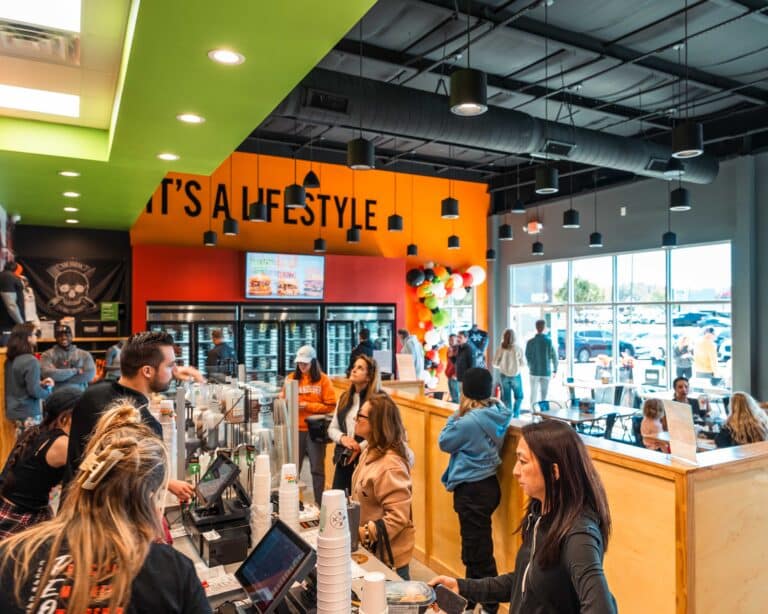
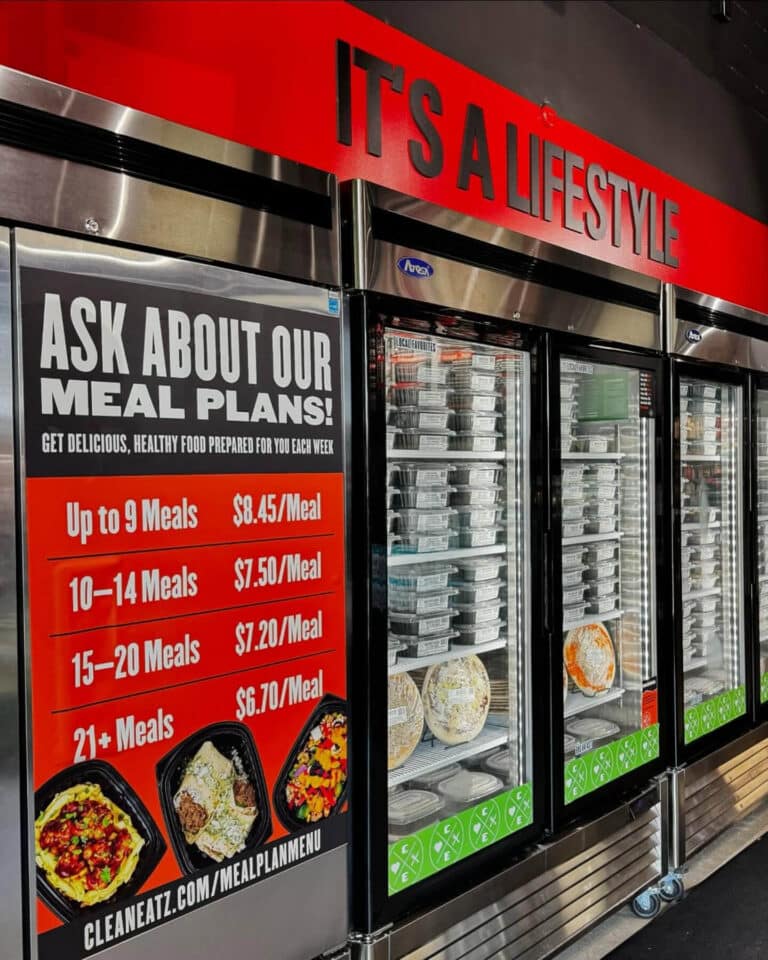
At Clean Eatz, five revenue streams give you five demand tests: Meal Plans, Grab-N-Go Meals, the In-Store Cafe, Retail and Catering. As of October 31, 2026, its market map shows 37 states and DC open, seven limited (AL, GA, KY, NC, OH, SC and TN) and four sold out (CA, MD, OR and WA). Its case on demand is in its post on the GLP-1 tailwind for Clean Eatz franchisees. Read it, then check whether your town looks like the customers it describes.
Score it
A 5 means you can name the weekly buyers, the nearest competitors and the territory on offer. A 1 means the case rests on a national trend headline.
Read the unit economics in the FDD
Read the spread, not the average
Franchise research gets concrete in Item 19, the financial performance representation. It is optional, and it is the only place earnings claims belong. Under 16 CFR 436.5, a franchisor that makes one must have “a reasonable basis and written substantiation” for it. If a brand has no Item 19, its document must say so, and you will need owner calls to fill the gap.
When there is one, read four things in order: who is in the sample, the median next to the average, both ends of the range, and the cost lines under gross sales. Spend the most time on the bottom of the range. In the NRA’s 2026 report, 42% of operators said their restaurants were not profitable in 2025.
Clean Eatz shows how a full Item 19 reads. Its 2025 figures cover 92 franchised cafes open at least 18 months as of December 31, 2025. They reported average gross revenues of $1,030,285 and a median of $962,325, with a high of $2,053,793 and a low of $389,339. Forty locations (43%) met or beat the average. The bottom quartile averaged $672,572 and the top quartile $1,519,084. Average EBITDA was $128,312, before owner and manager salary and before debt service, depreciation and taxes. In the brand’s own words, “These are gross revenues, not owner income.”
*Financial performance representation. These figures are taken from Item 19 of the Clean Eatz Franchise Disclosure Document dated April 30, 2026, and reflect January 1 through December 31, 2025. They represent 92 franchised restaurants open at least eighteen months as of December 31, 2025 and operated by the same franchisee throughout the period. EBITDA is stated before owner and manager salary. These are historical results for existing locations. They are not a projection or guarantee of what you may earn. Your results may differ, and there is no assurance you will do as well. Written substantiation is available upon request. See Item 19 of the FDD for complete information.
Then price the fees. Item 6 at Clean Eatz lists a 6% royalty collected weekly by ACH, a 2% brand fund and at least 1% for local marketing. On every $100,000 of gross sales that is $6,000, $2,000 and at least $1,000, or at least $9,000 in all. The technology fee is a flat $638 a month, $7,656 a year at any sales level. Put every brand’s fees in that per $100,000 form.
Numbers outside Item 19
In the FTC’s words, “No other spoken or written financial performance claim may be made if it doesn’t appear in Item 19.” If a sales call offers a figure that is not in the document, ask for the written substantiation and leave it off your scorecard.
Measure the support behind each unit
Training on paper, help in practice
Every franchisor promises support. Item 11 is where it becomes measurable. It must include a training table with each subject, its hours of classroom and on-the-job training, and where it happens, plus “the typical length of time” from signing or first payment to opening and the factors that change it. Item 8 adds the suppliers you must buy from. Your fees are paying for this help, so tie each promise to a line in the document.
Then put a number on it. How many cafes does each field support person cover, and how often do they visit? Ask the franchisor, then ask owners.
- Before openingClean Eatz runs 10 Days at HQ in Wilmington, “covering operations, food, and the Clean Eatz system end to end.” It is delivered one-on-one, not as a group class.
- Every dayOn Demand Training holds “Operating standards, recipes and daily checklists in one place.”
- Opening weekGrand Opening Support provides “On-site help through your opening week so day one runs like day one hundred.”
- After launchAn Ops & Marketing Team offers “campaigns, tools and coaching,” and owners meet at an annual franchisee conference, called “In Your Corner” in 2025.
One more question from the FTC is for you alone: “Will you need the franchisor’s ongoing training, advertising or other help to remain in business?” A first-time owner usually will, so weight support higher if this is your first business.
Talk to owners for franchise validation
Call the owners you choose
Franchise validation means calling the people already running the business, and scoring what they say. Item 20 gives you the names: current franchisees with each outlet’s address and phone number (a system with more than 100 franchised outlets may list only those in your state and the nearest states, at least 100 in all), and every franchisee who left the system in the last fiscal year.
Call both lists. The FTC notes that “Some current franchisees may be reluctant to talk to you if they’re having problems,” and that it is “worth tracking down former franchisees.” Ask former owners why they left. Ask current owners these, mostly drawn from the FTC’s own list:
- What was your total investment, and which Item 7 lines ran over?
- Did you open in a reasonable time, and what held it up?
- Were you satisfied with the training, opening help and advertising?
- Does the franchisor deliver the support it promised, and what problems have you had with it?
- Are you satisfied with the cost, delivery and quality of what you must buy from approved suppliers?
- Would you invest in another outlet?
Clean Eatz calls this step “Talk to Our Owners,” describes it as “the most important step in the process,” and says “we don’t screen who you speak with.” Start with the profiles of franchise validation from Clean Eatz owners, then add names from the Item 20 list that nobody suggested to you.
This is the first one that felt like joining a family instead of a franchise
Mike Parker, 5 locations, North Carolina
Five cafes is one owner’s answer to the last question. Weigh it against owners with one, and owners who left.
Test the hours & crew against your life
The schedule you will actually keep
Decide how many hours a week you can give the business for years, not months, then read Item 15. It states whether you must take part personally in running the business and, if on-site supervision is not required, whether the franchisor recommends it. If you need a business that runs without you, this Item can end the evaluation early.
Then match the operating day to the labor market. In the NRA’s 2026 report, 43% of limited-service operators had job openings that were difficult to fill, and across the industry the tightest roles were in the kitchen and management. Every open hour needs a crew.
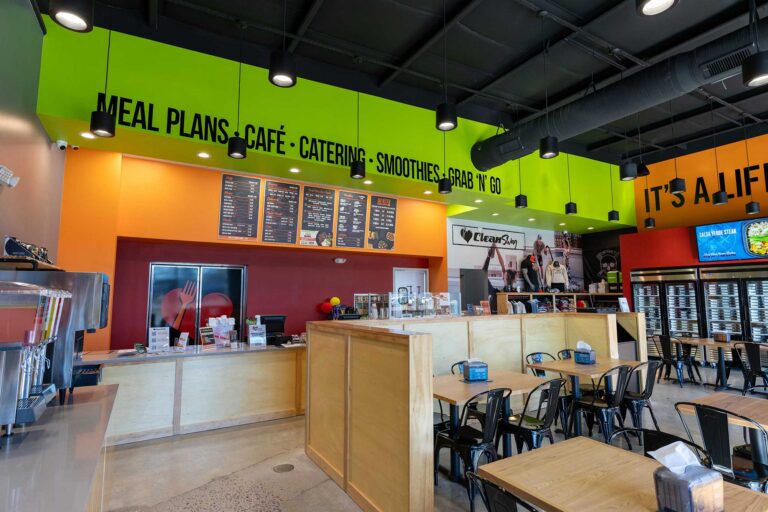
At Clean Eatz the cafe runs roughly 11am to 7pm in about 1,800 to 2,400 square feet, with no fryers, which the brand says means “a smaller, simpler equipment package,” and a lean labor model. No late nights also means no late-night sales. The brand looks for owners who live within roughly a one-hour drive of their cafe, and says “It isn’t designed as an absentee investment.”
- Spend a full shift in a cafe of the brand, opening to close, and note where the owner stood.
- Ask owners how many hours a week they worked in year one and how many they work now.
- List who covers when your manager quits, and how long training a replacement takes.
Compare total investment with your liquid capital
Cash left after the build
Liquid capital and total investment are different numbers, and buyers get hurt in the gap between them. Clean Eatz asks for $250,000 in liquid capital and $1,000,000 in net worth for a single cafe. Its Item 7 estimated initial investment is $307,500 to $733,500, including the $49,500 franchise fee and excluding a real estate purchase and ongoing fees. Whatever your cash does not cover has to be financed.
Lenders set their own floor. Under SBA SOP 50 10 8.1, effective October 1, 2026, “All 7(a) loans made to a Start-Up Business require a 10% equity injection based on the project cost.” Applied to Item 7 alone, 10% is $30,750 at the low end and $73,350 at the high end. If a brand meets the FTC definition of a franchise, it must be on the SBA Franchise Directory for its franchisees to get SBA financing. Clean Eatz is listed, but a listing is not loan approval. Clean Eatz does not lend, and the lender alone sets terms and approval.
| How to fill it in | |
|---|---|
| Liquid cash today | Cash and assets you can sell within weeks |
| Less equity injection | Your lender’s figure, at least 10% for an SBA 7(a) start-up |
| Less unfinanced Item 7 lines | What the loan will not cover, from your own quotes |
| Less your reserve | Household costs until the business can pay you |
| Cash left | Near zero at the high end of Item 7 scores a 1 |
Reserves are the line buyers cut first. In the SBA’s startup cost guide, the advice is to “count at least one year of monthly expenses, but counting five years is ideal.” Clean Eatz budgets $20,000 to $40,000 in additional funds for the first three months, so a year of reserves has to come from you.
Every Item 7 line, with its payee and timing, is on the Clean Eatz investment & earnings page. Have your accountant rebuild it with your lease quote and loan terms.
Build a franchise evaluation scorecard
One weighted total per brand
How to choose a franchise comes down to comparing brands on the same scale. Score each of the six checks from 1 to 5, multiply by its weight, and add the results for a total out of 5. These weights favor unit economics and owner calls, the two hardest to fix after you sign. Adjust them to your situation, then keep them fixed for every brand.
| Scores a 5 when | Scores a 1 when | |
|---|---|---|
| Local demand, 15% | You can name the buyers, competitors and territory | The case rests on a trend headline |
| Unit economics, 25% | Item 19 shows the median, both ends and costs | No Item 19, or an average with no spread |
| Support, 15% | Item 11 and owner accounts match | Training is vague, owners describe less |
| Owner validation, 20% | Owners you picked would sign again | Calls are screened or former owners warn you off |
| Hours & crew, 10% | The schedule fits the years you will give it | You need it to run without you |
| Capital, 15% | Cash remains after equity, gaps and a year of reserves | You need the high end with nothing left |
A worked example of the arithmetic, for a made-up brand: scores of 4, 3, 4, 5, 3 and 2 give 0.60 + 0.75 + 0.60 + 1.00 + 0.30 + 0.30, a weighted total of 3.55 out of 5. It means something only next to the other brands on your list.
Two scores end the evaluation
A 1 on owner validation or capital stops the deal at any total. A high score elsewhere cannot make up for owners who would not sign again, or for a build that leaves you no cash.
Before you score, run this franchise checklist so every brand is scored on the same documents:
- The current FDD, with the date you received it on the Item 23 receipt
- Item 7 rebuilt with your own lease and contractor quotes
- Notes from at least five owner calls, including at least one former owner
- A lender’s written terms, if you are borrowing
- Your attorney’s and accountant’s written comments
A franchise evaluation done this way also sharpens your questions for Discovery Day, at Clean Eatz a visit to Wilmington, North Carolina. Like every step before signing, it costs nothing: “Financial commitment comes only when you sign a franchise agreement.” The Clean Eatz steps to own page lists all eight steps.
Sources
- A Consumer’s Guide to Buying a Franchise, Federal Trade Commission, September 2020
- 16 CFR Part 436, Disclosure Requirements and Prohibitions Concerning Franchising (FTC Franchise Rule), eCFR, 2026
- Buy an existing business or franchise, US Small Business Administration
- Calculate your startup costs, US Small Business Administration
- SOP 50 10 8.1, Lender and Development Company Loan Programs, US Small Business Administration, effective October 1, 2026
- SBA Franchise Directory, US Small Business Administration, October 28, 2026
- NASAA public comment on the proposed model franchise broker registration act, NASAA, July 28, 2025
- Food Prices and Spending, Ag and Food Statistics: Charting the Essentials, USDA Economic Research Service, updated June 1, 2026
- The Power of Foodservice at Retail 2025, FMI release, October 7, 2025
- 2026 State of the Restaurant Industry, National Restaurant Association, February 2026
- County Business Patterns, US Census Bureau
Questions to ask before buying a franchise
Short answers for the scorecard
The questions to ask before buying a franchise start with whether franchising suits you at all, and whether a franchise is a good investment for you in particular.
Is a franchise a good investment?
It can be for a buyer whose capital, time and market fit one specific brand, but no franchise is a good investment in general. The FTC tells buyers to start with “How much money can you afford to lose?” Judge each brand on its own FDD and owner calls, and have your attorney and accountant review your own case.
What sets the best healthy franchises apart?
Evidence you can check. Look for an Item 19 with the median and both ends of the range, more than one way to earn, demand that existed before the latest diet trend, and owners who will talk without a script. Clean Eatz, for example, publishes its bottom quartile and says it does not screen who you speak with in validation.
How long should franchise research take?
At least 14 calendar days from the day you receive the FDD, because the FTC Franchise Rule bars signing or paying the franchisor before then. In practice, owner calls, a headquarters visit and your attorney’s review take longer. Clean Eatz says its discovery process “typically runs over a focused span of weeks.”