Eight trends worth watching going into 2027 are already in the data. GLP-1 users are ordering smaller, higher-protein meals, and prepared-food buying peaks between noon and 5 p.m. Most adults say they would likely use a meal subscription. Formats are shrinking, crews are leaner, federal nutrition rules are reaching the family table and more owners are adding a second unit. Each entry rests on a report or rule published from 2024 to 2026 that you can open yourself.
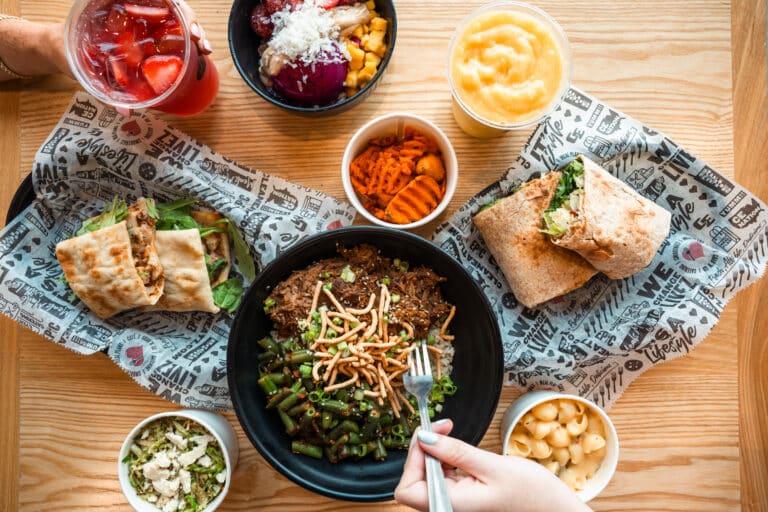
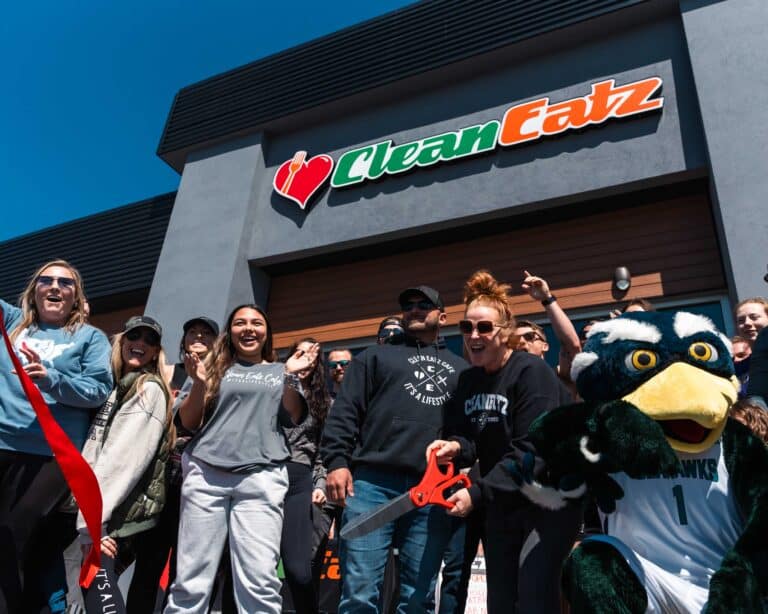
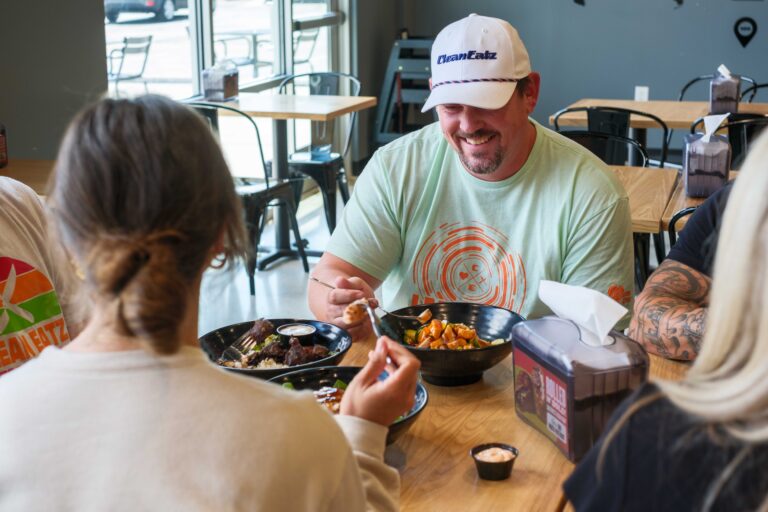
None of it is a forecast. A trend can help a franchise model or quietly work against it, and you find out which by checking it against the Franchise Disclosure Document and the owners who run the cafes. Clean Eatz, a healthy cafe franchise with five revenue streams, roughly 11am to 7pm hours and no fryers, is the worked example throughout.
The short answer
Watch GLP-1 friendly portions, grab-and-go sales after lunch, meal subscriptions, ordering technology, smaller formats with shorter hours, family nutrition rules, lean crews and multi-unit owners. Each rests on recent data or rules. None is a forecast, so test every one against the FDD and the owners you call.
Franchise industry trends behind the list
Slow growth, uneven by segment
Most lists of franchise trends are forecasts with no source attached. This one starts from published numbers. The IFA Franchising Economic Outlook for 2026, prepared by FRANdata, projects U.S. franchise establishments to grow 1.5%, from an estimated 832,521 in 2025 to 845,009, with output up 1.6% to $921.4 billion. Quick service restaurant establishments are projected to grow only about 0.5%.
Restaurant trends look much the same. In its 2026 State of the Restaurant Industry report, the National Restaurant Association projects $1.55 trillion in restaurant and foodservice sales for 2026 but real growth of just 1.3%. Its survey found 42% of operators said their restaurant was not profitable in 2025.
No 2027 outlook had been published as of November 2026, so any franchise industry trends claim about 2027 is still a projection. Each trend below already shows up in data or rules published from 2024 to 2026, and each ends with what a healthy franchise buyer should check. At a glance:
| Trend | Signal to watch | Source & year |
|---|---|---|
| GLP-1 friendly foods | Smaller portions, more protein in restaurant orders | NRA & PwC, 2026 |
| Grab-and-go after lunch | Prepared-food buying peaks from noon to 5 p.m. | FMI, 2025 |
| Meal plans | 64% of adults say they would likely use a meal subscription | NRA, 2026 |
| Restaurant technology | Spending on ordering, payment & productivity | NRA, 2026 |
| Smaller footprints | New concepts & QSR formats shrinking to cut rent | IFA / FRANdata, 2026 |
| Family wellness | School added-sugar limits due by July 1, 2027 | USDA rule, 2024 |
| Lean crews | Quits at nearly twice the private-sector rate | BLS JOLTS, 2025 |
| Second cafes | Multi-unit owners hold 58.8% of franchised locations | IFA / FRANdata, 2026 |
GLP-1 friendly foods move onto menus
Smaller portions, more protein
About one in eight U.S. adults was taking a GLP-1 medication when the National Restaurant Association surveyed consumers for its May 2026 GLP-1 analysis. Those users bought a meal, snack or drink from a restaurant 7.6 times in the week before the survey, against 5.1 times for non-users. Nearly half said they eat out less since starting the drug, and one in four said they eat out more.
What changes most is the order. Users most often reported choosing smaller portions, high-protein items and more vegetables. PwC’s 2026 GLP-1 consumer research put current users in 21% of U.S. households in May 2026, up from 9% in January 2025, and found quick-service spending per GLP-1 household fell 8.7% six to eight months after a user started. In PwC’s May 2026 survey, 35% of users asked for smaller portions at proportionally lower prices.
So on a menu, GLP-1 friendly foods come down to a portion that can shrink without the price feeling wrong, protein that is easy to find and a label that says what is in the meal. In the NRA survey, 89% of GLP-1 users said restaurants could do a better job of pointing those choices out.
The Clean Eatz answer
- Product A GLP-1 Meal Plan Bundle of macro-friendly, portion-controlled meals.
- Why it fits Weekly pre-portioned Meal Plans are one of the five revenue streams, so portion control is part of the product, not a menu add-on.
- Read more The GLP-1 effect on restaurant trends, on the brand’s blog.
Watch the sample
PwC says its survey was built to compare GLP-1 user groups, not to represent all consumers. Ask owners whether portion-controlled items actually sell in their market.
Grab-and-go sales grow past lunch
Noon to 5 p.m. is the window
A grab and go meal is a finished meal bought now and eaten later, and Clean Eatz sells its version as Grab-N-Go Meals. FMI’s Power of Foodservice at Retail 2025 report found 28% of shoppers chose deli-prepared food in place of a restaurant meal in 2025, up from 12% in 2017. Retail foodservice sales rose 1.6% to $52.1 billion over 12 months.
Timing is what a cafe owner should notice. Shoppers buy these meals most often between noon and 5 p.m., FMI said, which carries demand into the afternoon, when most dining rooms are quiet.
Restaurants feel the same pull. In the NRA’s 2026 report, 67% of adults said they would likely buy packaged food items, such as sauces or frozen items, from a restaurant’s menu. Off-premises orders made up 89.9% of limited-service traffic in 2025, up from 74.1% in 2019, according to Technomic data in the same report.
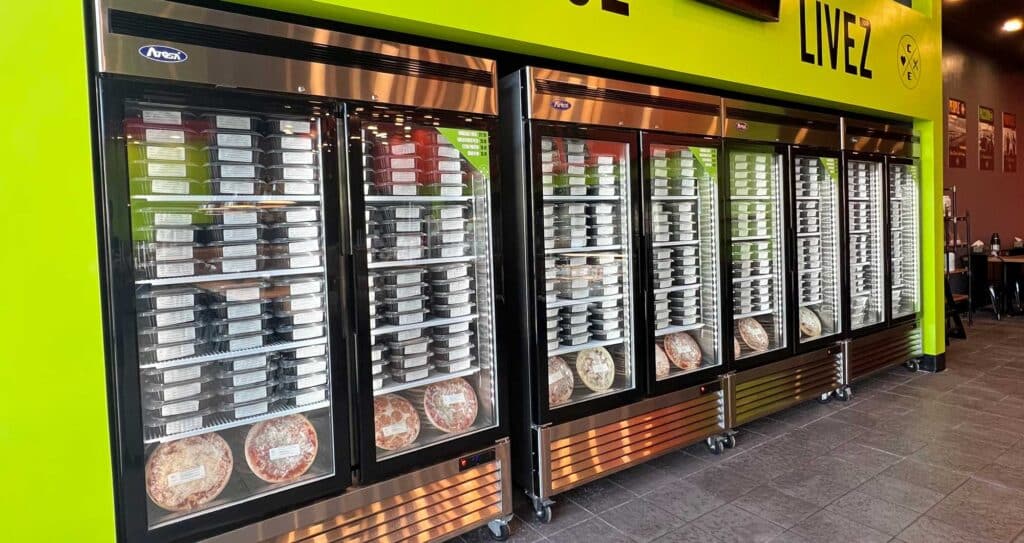
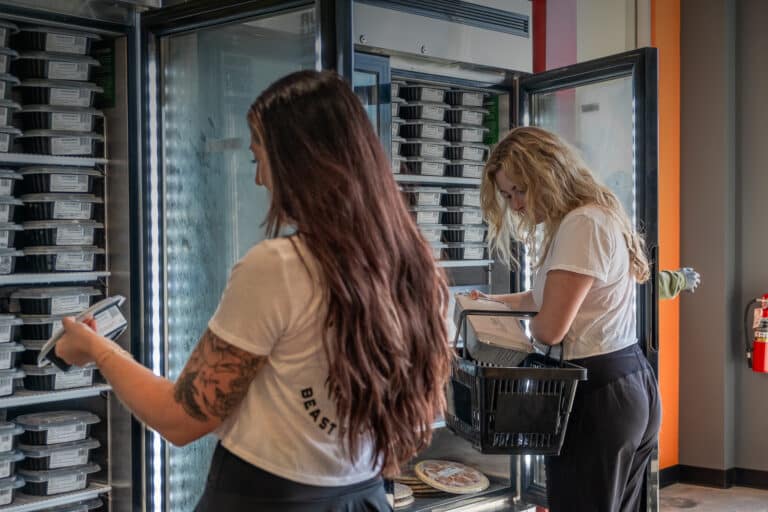
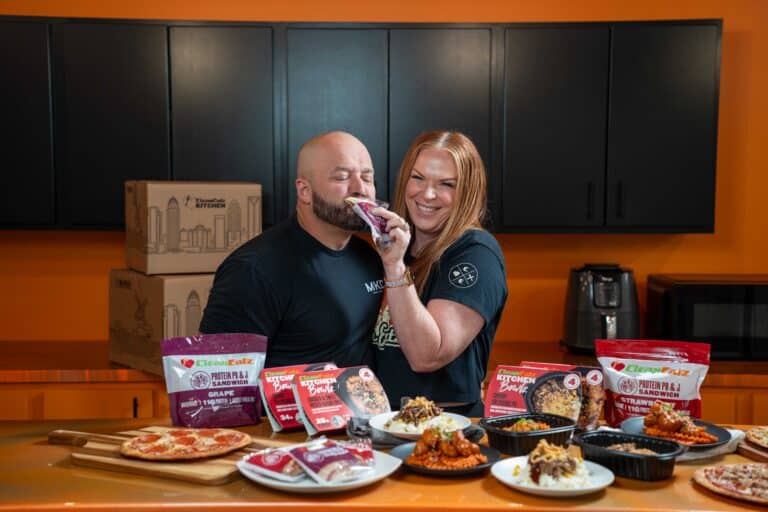
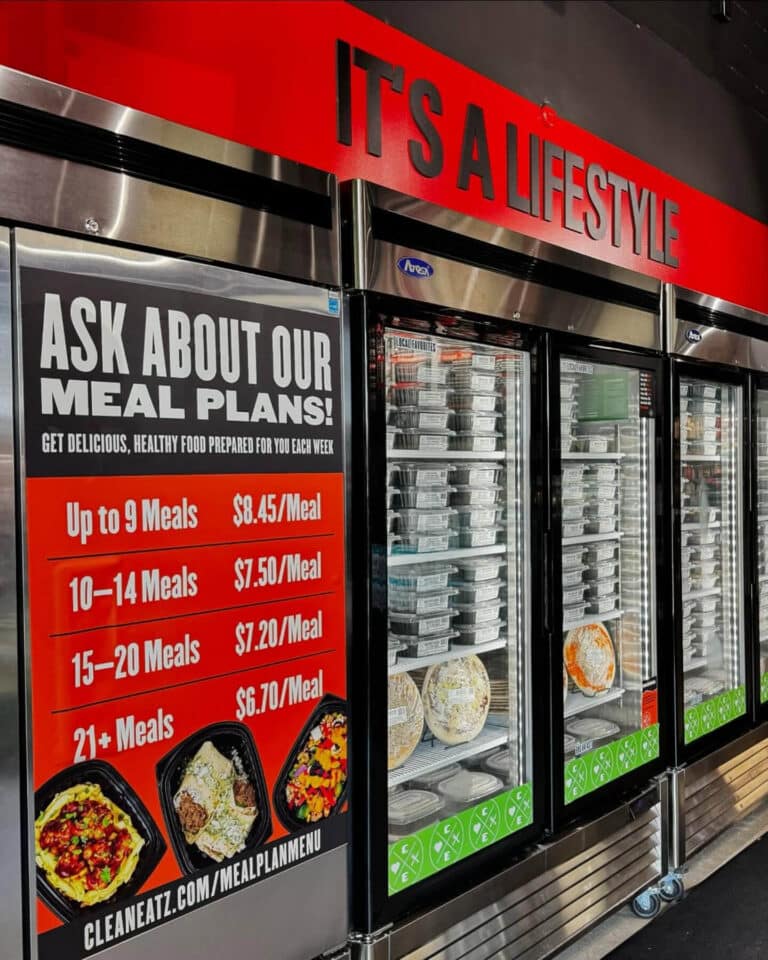
At Clean Eatz, Grab-N-Go Meals are frozen, pre-packaged, ready-to-eat meals sold from freezers in the cafe, so a 3 p.m. sale needs no one cooking. Inventory is the trade-off. Freezer stock has to be produced, labeled and rotated, and pars set too high become waste. For how the brand talks about convenience, see its Drive-thru & convenience coverage.
Meal plans as subscription revenue
Repeat orders, weekly deadlines
In its 2026 report, the NRA asked about a meal subscription program: a set number of fully prepared meals a month, picked up or delivered on chosen days at a discount from menu prices. Of all adults, 64% said they would likely use one, including 78% of Gen Z adults, against 48% of baby boomers.
Likely use is not a weekly payment. What matters to an owner is retention, meaning how many subscribers still order after three months, and no public dataset reports it for restaurants. That makes it a validation question.
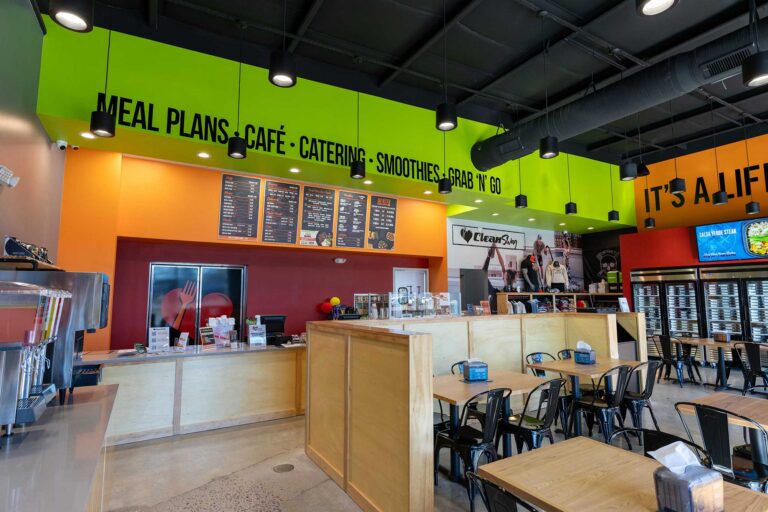
Meal Plans at Clean Eatz are weekly pre-portioned meals for breakfast, lunch and dinner, customizable for dietary needs. Repeat orders show a cafe part of its demand before the week starts, which helps with ordering and scheduling. They also set a production deadline every week, and a meal that is not ready at pickup is a fast way to lose a subscriber. For the consumer side, read Is Sunday meal prep dying?
- How many active Meal Plan customers do you have, and how has that moved over a year?
- What share of new subscribers still orders three months later?
- When is the weekly order cutoff, and how long does production take?
Restaurant technology trends owners can use
Ordering, payment & the monthly fee
Restaurant technology trends read more clearly in operator surveys than in vendor pitches. In the NRA’s 2026 report, 67% of limited-service operators said technology had a significant impact on on-premises ordering and payment over the past two to three years. For 2026, 60% of operators planned to invest in technology for the customer experience and 54% in front-of-house productivity.
AI is early. Only 26% of operators said they use tools that incorporate AI, most often for marketing, and just 6% said technology investments had permanently eliminated jobs.
For a franchisee, technology is a line in the FDD before it is a feature. Clean Eatz lists a technology package of $8,700 to $12,000 in Item 7 and a $638 monthly technology fee in Item 6, charged by ACH on the 1st, or $7,656 a year. In July 2024, FTC staff guidance said franchisors cannot lawfully impose and collect fees that were not previously disclosed, after franchisees complained about rising technology and payment-processing fees.
- Ordering & paymentWhich point-of-sale and online ordering systems are required, and who supports them.
- The feeWhat the monthly technology fee covers under Item 6, and what costs extra.
Smaller footprints & shorter hours
Smaller rooms, earlier closes
Rent and build-out costs are pushing formats smaller. According to the IFA outlook, 67.1% of new franchise concepts needed less than $500,000 to open a unit, and newer brands are moving toward smaller, more flexible formats and co-locating with other brands. For quick service restaurants, it expects more smaller-footprint formats in 2026 as operators respond to high real estate costs.
Dining rooms matter less when most orders leave the building. In the past few years, 40% of limited-service operators changed their inside space or parking lots to handle off-premises orders, the NRA reported. Hours are moving too. Understaffed operators in 2025 listed reducing hours and closing on days they would normally be open among their responses.
The Clean Eatz answer
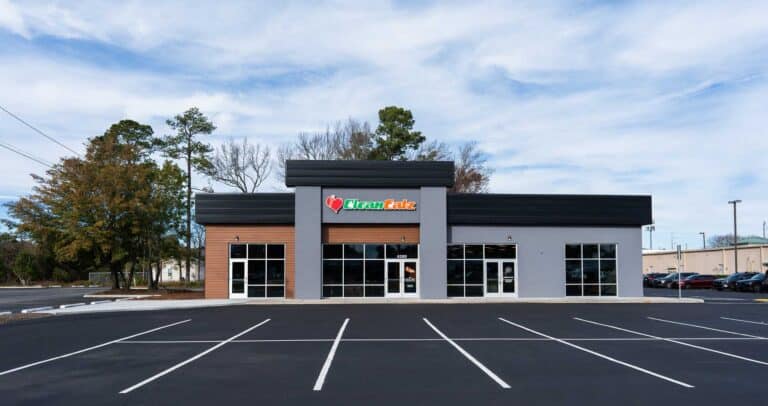
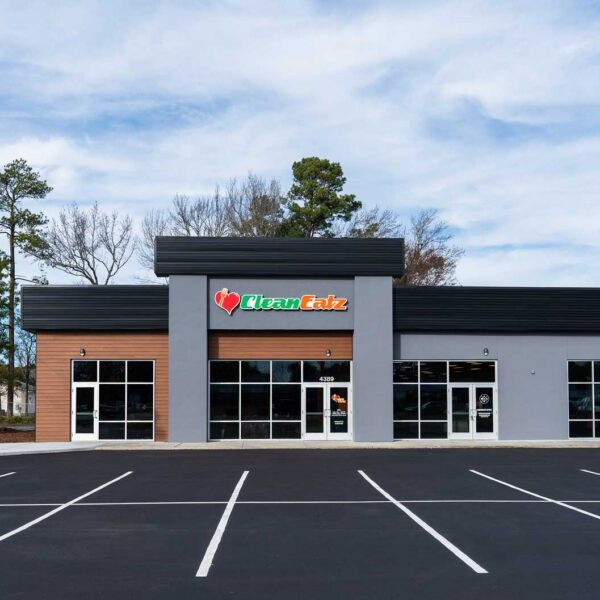
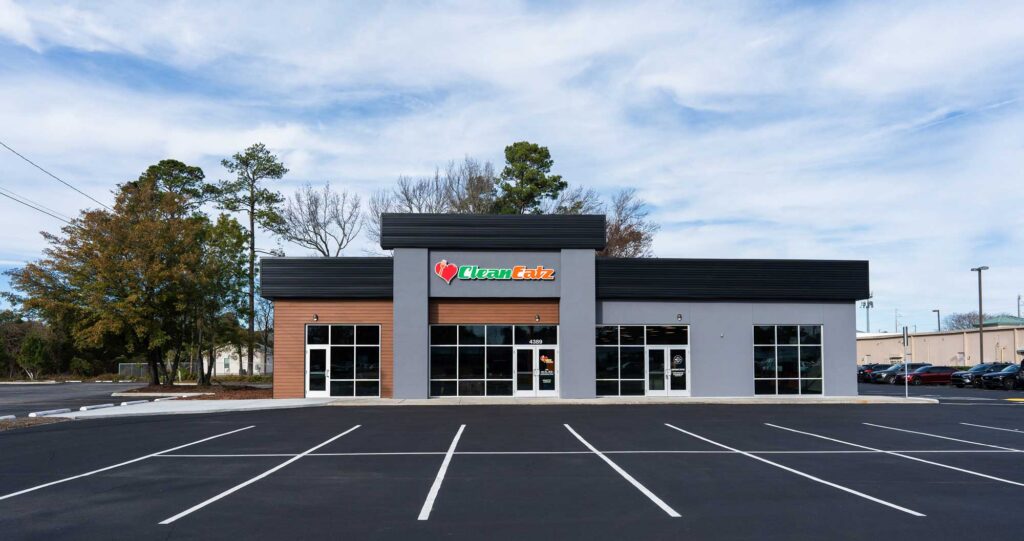
- Footprint Roughly 1,800 to 2,400 square feet, which the brand says helps keep occupancy costs manageable.
- Hours A condensed daypart of roughly 11am to 7pm, with no late nights.
- Kitchen No fryers, which means a smaller, simpler equipment package.
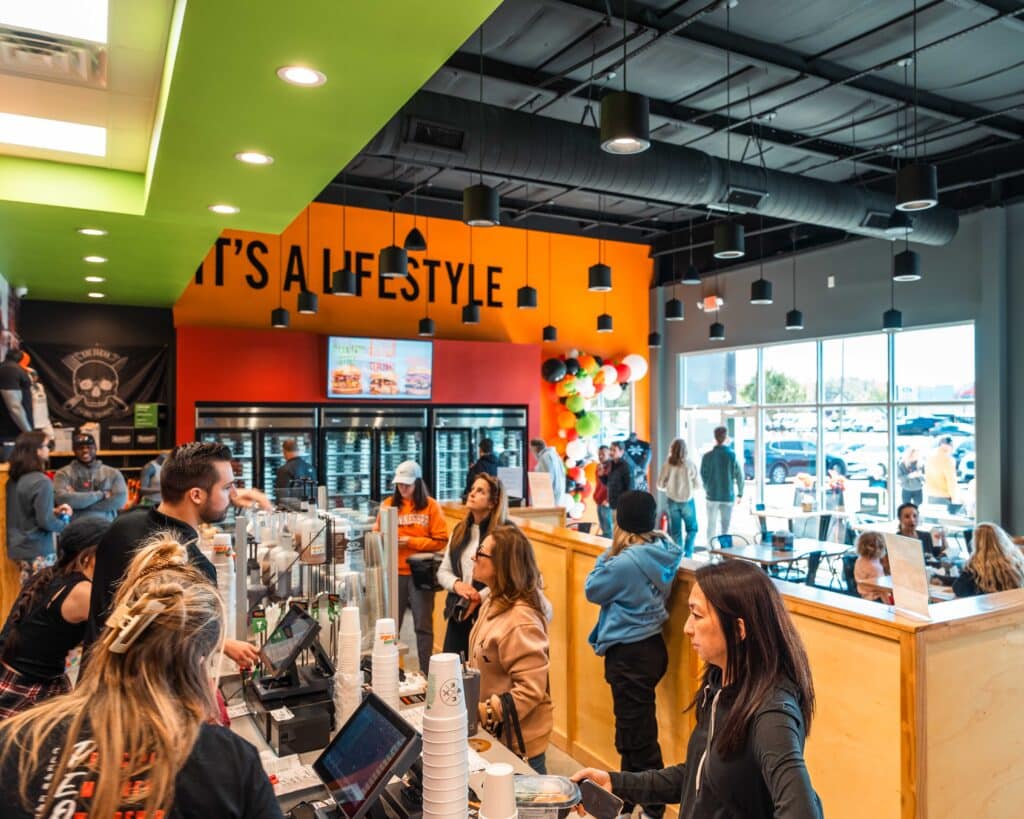
A cafe that closes at 7 gives up dinner and late-night sales. That leaves Meal Plans, Grab-N-Go and catering to carry demand a bigger restaurant would chase after dark, so ask owners how their sales spread across the day.
Wellness trends reach the family table
Federal rules now shape what kids eat
Some wellness trends now come with federal paperwork. The 2025-2030 Dietary Guidelines for Americans call on people to avoid highly processed food, which the official USDA and HHS guidelines site calls a first for U.S. guidance, and set a protein target of 1.2 to 1.6 grams per kilogram of body weight a day.
School meals tighten next. Under USDA’s April 2024 school nutrition rule, schools must hold added sugars under 10% of weekly calories in lunch and breakfast by July 1, 2027, the same deadline as a new sodium reduction. Any brand that sells to parents should watch that date.
Menus are moving the same way. The NRA’s 2026 What’s Hot forecast put cleaner recipes with fewer additives and dyes, clear menu labeling and allergen-friendly menus on its top 10 list. PwC noted that household food decisions are increasingly shaped by one family member’s health goals.
For Clean Eatz, the family angle runs through its mission, “We Change Livez,” and Meal Plans that can be customized for dietary needs. Its blog covers the parent side in Raising healthy eaters on CBS17. Ask owners which questions parents bring most often, about portions, allergens or ingredients, and whether the brand supplies the nutrition data to answer them.
Lean crews in a tight labor market
Fewer roles to fill on every shift
Hiring is easier than it was. At the end of 2025, 47% of operators had job openings that were difficult to fill, including 43% of limited-service operators, down from 59% in 2024 and a 2022 peak of 79%, the NRA reported. Only 22% said they lacked enough staff to meet demand.
Turnover has not eased as much. Data from the BLS Job Openings and Labor Turnover Survey show accommodation and food services workers quit at an average monthly rate of 4.2% in 2025, nearly twice the 2.2% for all private industries. Average hourly earnings at food services and drinking places reached $22.17 in August 2026, a preliminary figure, up from $21.25 a year earlier in BLS payroll data.
Operators are answering with fewer, simpler roles. Three in four told the NRA their restaurants run more efficiently than before the pandemic, and 35% said 2025 staffing was lower than in 2024. A lean crew works only when the menu and the hours allow it.
Clean Eatz describes a lean labor model supported by systemized prep and integrated technology, in a condensed day with no fryers. It does not publish a headcount per cafe, so take these to validation:
- How many people do you schedule on a typical weekday?
- How long does a new hire take to become productive?
- Who runs the cafe on the days you are not there?
More owners adding a second cafe
Growth comes from owners who already operate
More franchise growth now comes from people who already own a unit. FRANdata research in the IFA outlook found that in 2025, 19.3% of franchisees operated more than one unit and together controlled 58.8% of franchised locations. Successful single-unit owners are reinvesting in more locations, the report says, and franchisors are offering them incentives to do it.
A second unit is a different job. You stop running shifts and start running managers, and any weak habit in the first cafe shows up in both.
I started as a store manager and worked my way up to owning two locations.
Dylan Richmond, 2 locations, Virginia
Two qualification levels are published: $1,000,000 net worth and $250,000 liquid for one Clean Eatz cafe, and $2,250,000 net worth and $600,000 liquid for a three-unit development. Owners live within roughly a one-hour drive of their cafe, and the brand says the model isn’t designed as an absentee investment, so ask in validation how owners staff and oversee a second cafe. Item 12 describes the territory.
Healthy food trends to verify in an FDD
Send every trend to a page you can read
Healthy food trends are easy to cite on a sales call. Lists of food trends 2027 will keep arriving through the winter, so treat each one as a question for the FDD first and an owner second.
| Trend | Where to look in the FDD | Ask owners |
|---|---|---|
| GLP-1 friendly foods | Item 16 (what you may sell) & Item 8 (required suppliers) | Do portion-controlled items sell here? |
| Grab-and-go | Item 7 equipment & initial inventory lines | What are your freezer pars and weekly waste? |
| Meal plans | Item 19, if sales are broken out by stream | How many subscribers stay past three months? |
| Technology | Item 6 fees & Item 11 computer systems | What does the technology fee cover? |
| Footprint & hours | Item 7 construction & rent lines | How did your build-out compare with Item 7? |
| Family wellness | Item 11 training & Item 16 | What nutrition data does the brand supply? |
| Lean crews | Item 19 labor line & Item 15 (owner participation) | How many people work a weekday shift? |
| Second cafe | Item 12 territory & Item 20 outlet tables | How did your second opening differ from the first? |
Here is what one year of the Clean Eatz model looks like in Item 19. Across 92 franchised cafes open at least 18 months, average gross revenues were $1,030,285 in 2025 and the median was $962,325. The highest cafe reported $2,053,793 and the lowest $389,339. Average labor was $164,282, or 15.9% of average gross sales, and average EBITDA before owner and manager salary, and before debt service, depreciation and taxes, was $128,312, or 12.5%. These are gross revenues, not owner income.
*Financial performance representation. These figures are taken from Item 19 of the Clean Eatz Franchise Disclosure Document dated April 30, 2026, and reflect January 1 through December 31, 2025. They represent 92 franchised restaurants open at least eighteen months as of December 31, 2025 and operated by the same franchisee throughout the period. EBITDA is stated before owner and manager salary. These are historical results for existing locations. They are not a projection or guarantee of what you may earn. Your results may differ, and there is no assurance you will do as well. Written substantiation is available upon request. See Item 19 of the FDD for complete information.
Item 19 will not tell you which trend drove which cafe’s sales. In Item 20, read the state tables for openings and closures, not only the totals. Of the 116 outlets open during fiscal year 2025, 114 were franchised and 2 were company-owned or affiliated.
Validation fills the gap. Clean Eatz calls that step Talk to Our Owners and says it doesn’t screen who you speak with. Exploring costs nothing until you sign a franchise agreement, so review the FDD with your attorney and accountant first.
Own a Clean Eatz Cafe
From $307,500 all-in
See Item 7
Sources
- 2026 Franchising Economic Outlook, International Franchise Association and FRANdata, February 2026
- 2026 Franchising Economic Outlook (full report PDF), IFA and FRANdata, 2026
- 2026 State of the Restaurant Industry, National Restaurant Association, February 2026
- GLP-1 and restaurants: shifting habits, not shrinking demand, National Restaurant Association, May 20, 2026
- GLP-1 consumer trends 2026, PwC, June 22, 2026
- New FMI report shows consumers seek foodservice options for lunch and late afternoon, FMI, October 7, 2025
- Dietary Guidelines for Americans, 2025-2030, USDA and HHS (RealFood.gov)
- Child Nutrition Programs: meal patterns consistent with the 2020-2025 Dietary Guidelines, USDA final rule, Federal Register, April 25, 2024
- Quits rate, accommodation and food services (JTU720000000000000QUR), BLS JOLTS, 2025
- Quits rate, total private (JTU100000000000000QUR), BLS JOLTS, 2025
- Average hourly earnings, food services and drinking places (CES7072200003), BLS, 2025 to 2026
- FTC takes action to ensure franchisees’ complaints are heard and protect against illegal fees, FTC, July 12, 2024
- Investment & earnings (Item 6, Item 7 and Item 19 of the FDD dated April 30, 2026), Clean Eatz Franchising
- Why Clean Eatz, Clean Eatz Franchising
- Our franchisees, Clean Eatz Franchising
- Steps to own, Clean Eatz Franchising
Common questions about franchising trends
Short answers, with sources
These answers use the same 2025 and 2026 sources as the list. Franchising trends for 2027 will be easier to judge once the IFA publishes its next outlook.
Is franchising still growing?
Yes, slowly. IFA and FRANdata projected U.S. franchise establishments to grow 1.5% in 2026, to about 845,000, with output up 1.6% to $921.4 billion. Quick service restaurant establishments were projected to grow about 0.5%.
Which food trends last past one year?
Those tied to habits and policy rather than a single dish. Off-premises orders rose from 74.1% to 89.9% of limited-service traffic between 2019 and 2025, and school limits on added sugars take effect by July 1, 2027. A dish that trends on social media can fade in a season, so look for several years of data first.
How do trends show up in a franchise’s numbers?
Mostly in Item 19 and Item 20 of the FDD. A trend that helps a model should show up over time in gross sales, cost lines and units opening rather than closing. The FDD will not say why, so ask owners which revenue streams grew over the last two years.