Paying for a franchise restaurant usually takes more than one source of money. A typical stack is personal cash for the down payment and reserves, an SBA 7(a) loan for the build-out and working capital, and sometimes equipment financing or retirement funds moved through a ROBS. Each answers to someone different: your lender, the SBA rulebook, the IRS or an equipment lessor.
Our worked example is Item 7 of the Clean Eatz Franchise Disclosure Document dated April 30, 2026, which estimates the cost of opening a cafe at $307,500 to $733,500, franchise fee included and real estate purchase excluded. SBA rules come from SOP 50 10 8.1, in force for loans numbered on or after October 1, 2026. Clean Eatz does not lend, and none of this is legal or tax advice, so take your structure to a CPA and an attorney before you sign.
Key stats
- 10%minimum start-up equity in an SBA 7(a) project, per SOP 50 10 8.1
- $5 millionmaximum 7(a) loan amount, per SBA
- 42%of small employer firms that applied got the full amount they sought, Fed 2025 survey
The short answer
Bring real cash. SBA requires a start-up borrower to put in at least 10% of total project cost, and a franchisor can set a higher bar, as Clean Eatz does with $250,000 in liquid assets for one cafe. An SBA 7(a) loan can carry most of the rest, with equipment financing or a ROBS as supporting pieces.
How much capital a franchise lender wants to see
The cash you bring sets everything else
Every form of franchise financing starts with your own money. A lender wants equity in the deal and enough personal cushion that a slow first year does not become a default. A franchisor runs its own test before it will sign you. Among healthy restaurant franchises, Clean Eatz states its version as a minimum net worth and a minimum of liquid assets.
Clean Eatz answers the common money questions on its Startup costs & franchise financing FAQ, and its research page has a Financial readiness self-assessment worth taking before your first call.
Net worth & liquidity thresholds
Two numbers that do different jobs
Net worth shows what you could fall back on. Liquidity shows what you can spend this month. Clean Eatz asks for a minimum $1,000,000 net worth with at least $250,000 in liquid assets for a single cafe, and $2,250,000 net worth with $600,000 liquid in markets committed to a three-unit development.
SBA sets no net worth minimum. Under SOP 50 10 8.1 the lender instead certifies that you cannot get the money on reasonable terms without SBA help, weighing the liquidity of every owner of 20% or more. Reasonable retirement, medical and education savings are left out of that test.
- Equity you can documentAt least 10% of total project cost, verified before any loan money is disbursed.
- Projections that cover the debtA start-up on a standard 7(a) loan must project debt service coverage of at least 1.15 within two years.
- Management depthYour experience in the industry or a related one, and who runs the business day to day.
- Credit of every ownerEach owner and guarantor, judged by the lender’s own policy.
Where the startup cost range fits
Item 7, read the way a lender reads it
Item 7 is the budget a lender underwrites. For Clean Eatz it runs from $307,500 to $733,500. Construction is the largest line at $100,000 to $343,000, and with equipment at $60,200 to $156,500 the two lines account for $160,200 to $499,500. Every figure is an estimate, the FDD says, varying by market, site, construction and lease terms.
| Low end of Item 7 | High end of Item 7 | |
|---|---|---|
| Estimated initial investment | $307,500 | $733,500 |
| SBA minimum start-up equity (10%) | $30,750 | $73,350 |
| Left to finance at the minimum | $276,750 | $660,150 |
| Clean Eatz liquid assets minimum, one cafe | $250,000 | $250,000 |
Two separate tests sit in that table. At the low end, the franchisor’s bar is about eight times SBA’s.
Money beyond the injection becomes your reserve, on top of the $20,000 to $40,000 Item 7 already sets aside as additional funds for the first three months.
Franchise loans backed by the SBA
A bank loan with a federal guaranty
SBA does not lend to franchise buyers. It guarantees part of a loan a bank or other lender makes, so the lender can finance a start-up it might otherwise decline. Your franchise loan is still the lender’s: you apply through it, it underwrites you, and you typically repay it monthly.
Search for an SBA 7a loan and you will find dozens of summaries. A primary source is shorter: SBA 7(a) program details list the eligible uses, from working capital to equipment, furniture and fixtures, and cap a single loan at $5 million.
How the SBA program works for franchises
The brand gets checked before you do
Franchise loans carry one extra step. If a brand meets the FTC definition of a franchise, it must be on the SBA Franchise Directory for the loan to get SBA financing, and SOP 50 10 8.1 notes that a listing is not an endorsement. In the SBA Franchise Directory file dated October 28, 2026, Clean Eatz appears under code S2089. Ask your lender to confirm it when you apply.
| Standard 7(a) | 7(a) Small | SBA Express | |
|---|---|---|---|
| Loan size | $350,001 to $5 million | Up to $350,000 | Up to $500,000 |
| SBA guaranty | 75% | 85% to $150,000, then 75% | 50% |
| Credit decision | PLP lender or SBA | PLP lender or SBA | Lender |
| SBA turnaround | 5 to 10 business days | 2 to 10 business days | Not listed |
Those figures are from SBA’s 7(a) loan types page.
A Preferred Lender Program (PLP) lender approves under its own authority, while a non-delegated loan goes to SBA for the final decision. Terms follow the use: working capital and equipment generally cap at 10 years, leasehold improvements at 10 plus up to 12 months to build, and real estate at 25.
Down payment, collateral & personal guarantees
What you sign besides the note
The down payment is the equity injection: at least 10% of all costs required to become operational, for any business open one year or less. Unborrowed cash counts, gifts included, and so does debt on full standby. Your lender verifies it before disbursing, with the wire record and at least 30 days of statements, and a gift letter alone does not do it.
A standard 7(a) loan must be secured by the business’s available fixed assets, with new equipment counted at no more than 75% of its price. When that falls short, the lender must take available equity in the personal real estate of each 20% owner, your home included, unless that equity is under 25% of market value. A loan cannot be declined for thin collateral alone. On top of the collateral, every person owning 20% or more signs an unlimited personal guaranty, a practice common outside SBA lending too: in the Federal Reserve’s 2026 Report on Employer Firms, 59% of small employer firms with debt had used a personal guarantee to secure it.
If the loan is not fully secured and the business depends on one owner, life insurance for the shortfall is required too. Clean Eatz says its model is not designed as an absentee investment, so expect that question.
Who the guaranty protects
SBA’s guaranty protects the lender, not you. Since March 1, 2026, every owner must also be a U.S. citizen or national living in the United States, per SBA Policy Notice 5000-876441.
Rollover for business startups
Retirement savings as the down payment
A rollover for business startups, which the IRS calls a rollover as business start-up or ROBS, lets you invest retirement savings in your own company without paying tax on a distribution. There is no lender and no monthly payment. Your money is fully at risk, and the IRS opened a ROBS compliance project in 2009.
How ROBS moves retirement funds into a business
Four moves, in this order
- Form a C corporation. This new company will own and run the cafe.
- Sponsor a new plan. It adopts a qualified retirement plan, usually a 401(k).
- Roll over existing funds. Your old balance moves into the new plan tax-free.
- Buy company stock. Your new plan buys the corporation’s stock, which gives the company cash for the franchise fee and build-out.
Providers often get an IRS favorable determination letter on the plan design, but the IRS says the letter gives no protection if you run the plan incorrectly. Guidant Financial, one provider among several, lists setup from $5,495 and plan administration from $155 a month.
A ROBS can supply the equity injection for an SBA loan. SOP 50 10 8.1 then requires the plan sponsor’s unconditional guaranty whatever their ownership share, plus the determination letter and the corporate and plan documents, and loan proceeds cannot pay to form the plan.
Compliance steps the IRS watches
Where these plans go wrong
The IRS project found that most ROBS businesses either failed or were on the road to failure, and some owners lost their retirement savings and the business. Its findings and the IRS ROBS guidelines memo of 2008 point to five habits.
- File Form 5500 every year. A one-participant exception does not apply, because the plan owns the business.
- File Form 1120 for the corporation, and confirm the rollover was reported on Form 1099-R.
- Keep the plan open to employees. Amending it later to shut them out can break the nondiscrimination and coverage rules.
- Value the stock honestly. A prohibited transaction is taxed at 15%, and 100% if not corrected.
- Read the fee schedule. Large recurring promoter fees played a part in some failures.
A cafe hires hourly staff, so the participation rules matter from the first payroll. Have an ERISA attorney and a CPA review the plan before money moves.
Restaurant equipment financing & leases
Pay for the kitchen over its working life
Equipment can be financed on its own, apart from the rest of Item 7. Restaurant equipment financing takes three shapes: an equipment loan, where you own the asset and it backs the debt, a lease, where the lessor owns it, and the equipment share of an SBA loan.
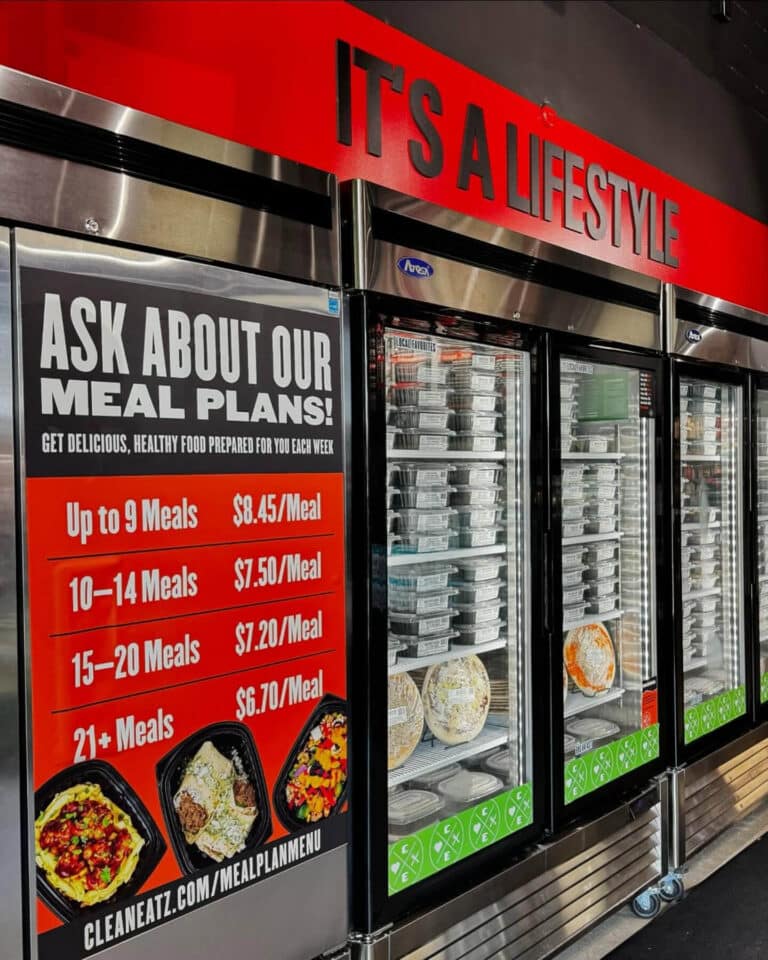
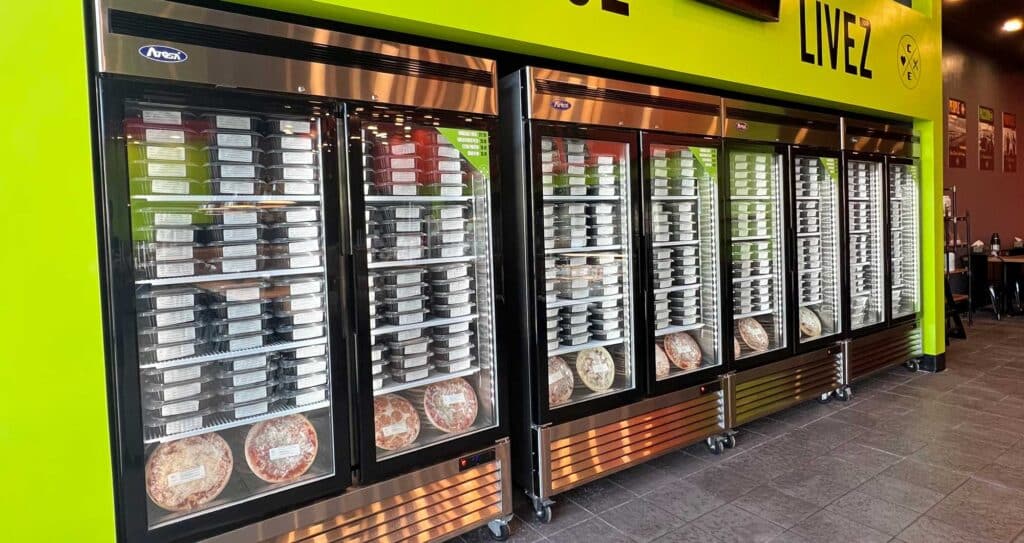
In the Clean Eatz Item 7, equipment runs $60,200 to $156,500 and the technology package $8,700 to $12,000. Clean Eatz puts its kitchen choice plainly: “No fryers means a smaller, simpler equipment package.” The operating side of that choice is covered in a restaurant franchise built to close by 7.
| Equipment loan | Equipment lease | SBA 7(a) loan | |
|---|---|---|---|
| Who owns the asset | You, with a lien | The lessor, until any buyout | You, with a lien |
| What it pays for | The equipment | The equipment | Equipment, build-out, fees & working capital |
| Term | Set by the lender | Set by the lease | Generally up to 10 years |
| Tax treatment | Depreciation or Section 179 | Depends on the lease terms | Same as any purchase |
Equipment financing has one trap for an SBA borrower. SBA bars “piggyback” structures, where a second loan approved within 90 days for a similar purpose takes the senior lien and leaves the SBA loan junior. Clear any equipment deal with your SBA lender first, and ask whether leased equipment still counts in the project total behind the 10% injection.
Shop the rate too. In the Federal Reserve’s 2025 survey, 60% of firms that borrowed from online lenders said costs ran higher than expected, against 37% at small banks and 32% at large banks.
For tax years beginning in 2026, IRS Rev. Proc. 2025-32 sets the Section 179 expensing limit at $2,560,000. Whether a lease counts as a purchase for tax purposes is a CPA question.
SBA’s 504 loan program finances major fixed assets at a fixed rate, but its equipment needs 10 years of remaining useful life and it cannot fund working capital or inventory. It suits a building purchase, which Item 7 excludes.
Questions to ask before you sign an equipment lease.
- At the end of the term, is it a fair market value buyout, a fixed buyout or a return?
- Who pays for maintenance and repairs?
- Is there a penalty for paying it off early?
- Does it need a personal guaranty, and can it transfer if you sell the cafe?
Combining sources into one funding plan
One budget, several sources
A finished franchise funding plan names a source for every Item 7 line and keeps a reserve that none of them touches. Restaurant financing seldom comes from a single check, and lenders want the whole stack, because every other obligation changes whether the cafe can cover its debt.
Before you settle on a mix, read How current owners got started, then ask owners in validation how they funded their cafes. Clean Eatz calls validation the most important step, and it does not screen who you speak with.
Cash, loans & retirement funds together
Match each source to what it can pay for
| Item 7 line | Clean Eatz range | Sources that can cover it |
|---|---|---|
| Initial franchise fee | $49,500 | Cash, ROBS, SBA 7(a) |
| Cafe construction | $100,000 to $343,000 | Cash, ROBS, SBA 7(a) as leasehold improvements |
| Equipment | $60,200 to $156,500 | Cash, ROBS, SBA 7(a), equipment loan or lease |
| Initial inventory & opening food order | $30,100 to $46,500 | Cash, ROBS, SBA 7(a), not 504 |
| Additional funds, first 3 months | $20,000 to $40,000 | Cash, ROBS, SBA 7(a) working capital |
The ranges are Clean Eatz Item 7 lines, and the sources reflect what each program allows. Three structures come out of the map. Savings cover the injection and the reserve while a 7(a) loan covers the rest. A ROBS supplies the injection and savings stay in the bank. Or an equipment loan or lease trims the 7(a) balance, if the SBA lender accepts the lien position.
Keep the reserve outside every mix, in cash you have not pledged, borrowed or already spent on the injection.
How to finance a franchise step by step
From first call to closing
Here is how to finance a franchise in the order franchisors and lenders work. Financing a franchise runs alongside the franchisor’s own process, so line up money during discovery, not after you sign. Clean Eatz lays out The eight-step path to signing, and exploring costs nothing until you sign the franchise agreement.
- Total your resources. Cash, net worth, retirement balances and credit, against the franchisor’s minimums.
- Read Items 5, 6, 7 and 10 of the FDD. Item 10 must disclose any financing the franchisor, its agent or its affiliates offer, directly or indirectly, including leases.
- Confirm SBA eligibility. Check the Franchise Directory and the citizenship rule for every owner.
- Interview two or three lenders. Ask about PLP authority, franchise loans closed and the equity and collateral they will require. In the Fed’s 2025 survey, small-bank applicants were the most likely to be fully approved, at 57%.
- Decide on ROBS early. Lenders want the plan documents with the application.
- Build projections with your accountant, using Item 7, the Item 6 fees and what owners tell you, and test them against the 1.15 coverage a start-up 7(a) loan needs.
- Sign, then finish underwriting. An SBA lender needs the executed franchise agreement, and the budget depends on the site, so expect closing after the lease and construction bids.
Service members
Clean Eatz says service members at E-5 rank or above qualify for reduced franchise fees and favorable financing terms. Amounts are not published, so ask the franchise development team.
Sources
- SBA, 7(a) loans, accessed November 2, 2026
- SBA, Types of 7(a) loans, accessed November 2, 2026
- SBA, 504 loans, accessed November 2, 2026
- SBA, SOP 50 10 8.1, effective October 1, 2026
- SBA, Information Notice 5000-880695, August 14, 2026
- SBA, SBA Franchise Directory, file dated October 28, 2026
- SBA, Policy Notice 5000-876441, February 2, 2026
- SBA, Procedural Notice 5000-876777, February 20, 2026
- IRS, Rollovers as Business Start-Ups Compliance Project, reviewed November 16, 2025
- IRS, Guidelines regarding rollovers as business start-ups, October 1, 2008
- IRS, Revenue Procedure 2025-32, 2026 inflation adjustments
- Federal Reserve Banks, 2026 Report on Employer Firms, March 3, 2026
- FTC Franchise Rule, 16 CFR 436.5
- Guidant Financial, Pricing, accessed November 2, 2026
Common questions about franchise financing
Quick answers before you apply
Does the franchisor lend money directly?
Some do, and Item 10 of the FDD is where you find out, including indirect deals such as an arrangement with a lender. Clean Eatz does not lend. It is SBA-friendly and can point you to lenders experienced with franchise loans, but loan terms and approval are set only by the lender.
Can you use retirement savings to buy a franchise?
Yes, through a ROBS, which moves eligible retirement funds into a new C corporation’s plan without tax on the rollover. Your savings then ride on one business, and the plan must follow IRS rules and file Form 5500 every year. Have a CPA and an ERISA attorney review it first.
What credit score do franchise lenders look for?
There is no single number. SBA sets no minimum score for 7(a) loans and stopped using the FICO SBSS score for 7(a) Small loans on March 1, 2026. SBA says lenders may weigh credit history alongside cash flow, equity and collateral, so ask each lender for its floor.
How much down payment does an SBA franchise loan need?
At least 10% of total project cost for a start-up, and your lender can ask for more. On the Clean Eatz Item 7 range that floor is $30,750 to $73,350.