Most of the money in a franchise purchase is decided by a few words in a document you receive before you sign. Royalty, territory, initial fee and financial performance representation each point to a numbered Item in the Franchise Disclosure Document.
This list defines 12 of them in plain English, quotes the FTC Franchise Rule (16 CFR Part 436) where it can, and adds the Clean Eatz figure wherever one is published, such as its $49,500 initial franchise fee.
The short answer
A franchisor licenses its brand and system, a franchisee buys that license, and the Franchise Disclosure Document spells out every fee, the territory and any earnings data before you sign. Find each term in the FDD, then in the agreement.
Why franchise vocabulary matters before you sign
Each term points to a page in the FDD
Franchise terms tell you where to look. A buyer who knows that “royalty” lives in Item 6 and “territory” in Item 12 can find the binding answer in minutes instead of trusting a sales call.
A healthy franchise buyer has one extra reason to care. Many healthy concepts also sell through meal plans, retail or catering, so fee and territory rules about other sales channels matter more.
Use this table as a map for any FDD, in the order of the list:
| Term | Where it lives | What to check first |
|---|---|---|
| Franchisor vs franchisee | Item 1, Item 21 | Who exactly signs, and whose financial statements are attached |
| Franchise disclosure document | Whole document, Items 1 to 23 | The issuance date on the receipt page |
| Franchise agreement | Item 22 (attached), Item 17 (summary) | Term, renewal, transfer and termination rows |
| Initial fee | Item 5 | Whether any of it is refundable |
| Royalty fee | Item 6 | The base it is charged on and how often |
| Brand fund | Item 6, Item 11 | How the fund was spent last year |
| Protected territory | Item 12 | Whether the word “exclusive” appears |
| Discovery day | Not in the FDD | What it costs you and what you will see |
| Validation calls | Item 20 | Former owners as well as current ones |
| Financial performance representation | Item 19 | Which outlets are included and which are left out |
| Area developer | Item 12, development agreement | The opening schedule you commit to |
| Master franchise | Item 1, Item 21 | Who supports you after opening |
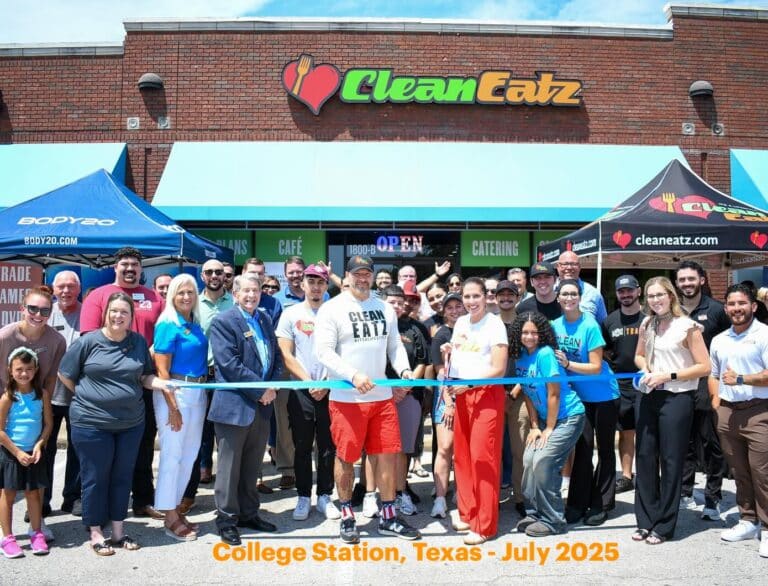
For a working example, Clean Eatz gathers its guides, an FDD request and independent industry research on its Buyer research & resources page, so you can start before a first call.
Franchisor vs franchisee
One owns the system, one licenses it
Federal rules are blunt about both words. A franchisee is “any person who is granted a franchise.” A franchisor is “any person who grants a franchise and participates in the franchise relationship.” So franchisor vs franchisee comes down to who grants the license and who pays for it.
What makes the relationship a franchise at all is a three-part test at 16 CFR 436.1(h):
- The franchisee gets the right to operate a business identified with the franchisor’s trademark.
- The franchisor exerts, or has authority to exert, significant control over the method of operation, or provides significant assistance.
- The franchisee makes, or commits to make, a required payment to the franchisor or an affiliate.
Meet all three and the disclosure rules apply, whatever the contract calls itself. For history and business formats, the Wikipedia overview of franchising is a fair starting point.
Franchisors can also run units themselves. The Clean Eatz FDD reports that of the 116 outlets open during fiscal year 2025, 114 were franchised and 2 were company-owned or affiliated. Item 20 of any FDD gives three years of these counts.
Franchise disclosure document
Fourteen days with it before you sign
The Franchise Disclosure Document, or FDD, is the franchisor’s required disclosure in 23 Items, from litigation history and fees to outlet counts and audited financial statements. Under 16 CFR 436.2, you must receive it at least 14 calendar days before you sign a binding agreement or pay the franchisor or an affiliate anything.
A second clock applies if the franchisor unilaterally and materially changes the attached agreement: you get the revised version at least 7 calendar days before you sign. Changes you negotiated do not trigger it.
The Clean Eatz answer
- FDD date The current Clean Eatz FDD is dated April 30, 2026.
- When you see it Step 4 of the 8 steps to own, after the application and discovery calls.
- How to read it The brand’s own instruction is to “take the time to review it with your attorney and accountant.”
Franchise agreement
The FDD summarizes, the agreement binds
This is the contract you actually sign, attached to the FDD as Item 22 along with any lease, options and purchase agreements. Item 17 summarizes how the relationship ends: term, renewal, termination, transfer and dispute resolution.
Read Item 17 as an index, not a substitute. It must say what “renewal” means in the system, including whether you may be asked to sign a contract with materially different terms. The FTC’s buyer guide puts it in four words: “Renewals are not automatic.”
Make the review count
Mark every Item 17 row you do not understand and have your franchise attorney walk you through that section of the agreement.
Initial fee
The price of the license, not the cafe
Item 5 defines “initial fees” broadly: all fees and payments, or commitments to pay, for goods or services from the franchisor or an affiliate before the business opens, in a lump sum or installments. It must also say when, if ever, they are refundable. The fee is usually a modest share of the total. Item 7, the estimated initial investment, tells you what you need to fund.
- $49,500Clean Eatz initial franchise fee, due at signingItem 7, FDD dated April 30, 2026
- $307,500 to $733,500Total estimated initial investment, fee includedItem 7
- 16% to 7%Fee as a share of the low and high totalsArithmetic on Item 7
Item 7 also lists $5,000 in initial marketing funds paid to Clean Eatz before opening and through the first 2 months, so read Items 5 and 7 together to see every dollar paid to the franchisor around opening. Service members at E-5 rank or above qualify for a reduced franchise fee. The amount is not published, so ask for it in writing.
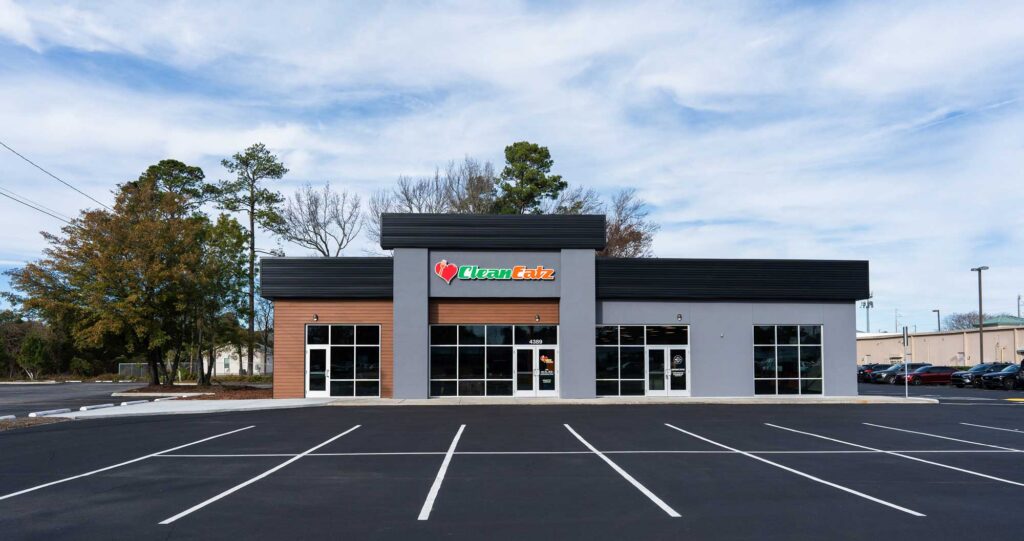
Own a Clean Eatz CafeFrom $307,500 all-in
Royalty fee
Paid on sales, whether or not you profit
A royalty fee is the ongoing charge for using the brand and system, usually a percentage of gross sales. It appears in the Item 6 “Other Fees” table, which must list each fee, its amount, its due date and any formula behind it.
Because the royalty is charged on sales, not profit, it is owed in a slow month too. The FTC’s 2020 buyer guide says so: “Typically, you must pay royalties for the right to use the franchisor’s name, even if you are losing money.”
For a benchmark, FRANdata’s 2018 study of 2,425 brands found food franchises averaged a 5.2% royalty, against 6.3% for non-food brands. Treat that dated figure as a rough range.
Price any royalty per $100,000 of gross sales. Here are the Clean Eatz Item 6 fees on that basis:
| Fee | Per $100,000 of gross sales | How it is charged |
|---|---|---|
| Royalty | $6,000 | 6% of gross sales, processed weekly by automatic ACH |
| Brand fund | $2,000 | 2% of gross sales |
| Local marketing | At least $1,000 | Minimum 1% of gross sales |
| Subtotal | At least $9,000 | Scales with every dollar of sales |
| Technology fee | $638 a month | $7,656 a year, flat, by ACH on the 1st |
Run the same math on every brand you compare. A flat fee weighs more on a slow cafe. See the Clean Eatz Fees & earnings on one page, next to its Item 7 table.
Brand fund
Your money, the franchisor’s marketing plan
A brand fund, or advertising fund, pools a share of every franchisee’s sales for system-wide marketing that the franchisor usually directs. The FTC guide warns that part of it may go to national advertising or to attracting new franchise owners rather than promoting your location.
Item 11 of the FDD has to answer these questions about the fund. A line that names a topic without answering it is a gap:
- Who contributes, and whether some franchisees pay a different rate
- Whether company-owned outlets contribute on the same basis
- Who administers the fund, and whether it is audited
- Whether you can review the fund’s financial statements
- How last year’s money split between production, media and administration
- What happens to money not spent in the year it was collected
- What percentage, if any, goes mainly to selling new franchises
At Clean Eatz the brand fund is 2% of gross sales, and the minimum 1% local marketing requirement is a separate line. Keep the two apart when a brand quotes a single “marketing” figure.
Protected territory
Read Item 12 for the exact promise
A protected territory is an area where the franchisor agrees to limit competition from its own system. The rule does not require one. It requires honesty about whether you get one, and if not, Item 12 must carry this sentence word for word:
The sentence to look for
“You will not receive an exclusive territory. You may face competition from other franchisees, from outlets that we own, or from other channels of distribution or competitive brands that we control.”
Even an exclusive territory can carry conditions. Item 12 must say whether it depends on hitting a sales volume or other target, and whether the franchisor keeps the right to sell inside your area through the internet or other channels. For a concept that sells meal plans and packaged meals as well as dine-in, read that channel language slowly.
On its website, Clean Eatz gives no territory details. Item 12 of its FDD describes the territory, so quote that.
Discovery day
A visit to headquarters before any commitment
Discovery day is industry vocabulary, not a legal term. In most systems it is a headquarters visit to meet the people who would support you and ask what the FDD left open. You are being interviewed too.
At Clean Eatz it is step 6 of 8, after the FDD review and validation: “Come to Wilmington, meet the departments behind the brand, and see the operation for yourself.” Like every step before signing, it costs nothing. See where it sits in Discovery day in the ownership steps.
Validation calls
The owners on the Item 20 list
Validation means calling current and former franchisees to check what the franchisor told you. Item 20 must list current franchisees with their outlet addresses and phone numbers, plus every franchisee who left the system in the last fiscal year or has not communicated with the franchisor within 10 weeks of the FDD issuance date. If franchisees signed confidentiality clauses in the last three fiscal years, Item 20 must warn you that some may not be able to speak openly.
The FTC guide suggests calling several owners open just over a year and several open about five years. Former owners matter too. In March 2026 the FTC announced a settlement with Xponential Fitness with a $17 million judgment to be returned to franchisees. Among the FTC’s allegations was that the company left out franchisees whose studios had closed.
Questions that get past the pleasantries:
- How long did it take from signing to opening, and what caused the delays?
- What did your first 3 months really cost beyond the Item 7 estimate?
- Which support do you still use a year in, and which did you stop using?
- What would you do differently with site selection?
- Would you buy another unit, and why or why not?
Clean Eatz names this step “Talk to Our Owners,” and the brand describes it as “the most important step in the process” and says “we don’t screen who you speak with.” Read the Owner testimonials & validation page, then work from the full Item 20 list.
Financial performance representation
The only legal home for earnings claims
The rule defines a financial performance representation as “any representation, including any oral, written, or visual representation, to a prospective franchisee, including a representation in the general media, that states, expressly or by implication, a specific level or range of actual or potential sales, income, gross profits, or net profits.”
Any such claim must sit in Item 19 with a reasonable basis and written substantiation. Item 19 is optional, but a franchisor that skips it may not make earnings claims elsewhere, with narrow exceptions such as the records of an outlet you are buying. Check which outlets are included and whether the figures are sales or something closer to profit.
As a worked example, Clean Eatz publishes one. In 2025, 92 franchised cafes open at least 18 months reported average gross revenues of $1,030,285 and median gross revenues of $962,325. The highest reported $2,053,793 and the lowest $389,339, and 40 locations (43%) met or beat the average. Average EBITDA was $128,312, stated before owner and manager salary and before debt service, depreciation and taxes. These are gross revenues, not owner income.
Average gross revenues by quartile, 2025
Item 19, Clean Eatz FDD dated April 30, 2026. 23 cafes per quartile.
*Financial performance representation. These figures are taken from Item 19 of the Clean Eatz Franchise Disclosure Document dated April 30, 2026, and reflect January 1 through December 31, 2025. They represent 92 franchised restaurants open at least eighteen months as of December 31, 2025 and operated by the same franchisee throughout the period. EBITDA is stated before owner and manager salary. These are historical results for existing locations. They are not a projection or guarantee of what you may earn. Your results may differ, and there is no assurance you will do as well. Written substantiation is available upon request. See Item 19 of the FDD for complete information.
Area developer
Several units, one schedule
An area developer buys the right to open and operate several units in a defined area on a set schedule. The state regulators’ NASAA Multi-Unit Commentary (2014) describes the usual structure: a development agreement sets the number of units and the schedule, each unit gets its own franchise agreement, and the area developer cannot sell franchises to anyone else.
Labels here are loose. NASAA lists area franchisee, multi-unit developer and regional developer as other names, and treats the area representative, who recruits or supports other franchisees for a share of their fees, as a separate structure. Ask which one an FDD means.
For development deals, Clean Eatz publishes higher entry thresholds:
| Single unit | Three-unit development | |
|---|---|---|
| Net worth | $1,000,000 | $2,250,000 |
| Liquid assets | $250,000 | $600,000 |
Before you sign for more than one unit, ask what the agreement says happens if you miss the development schedule.
Master franchise
A middle layer between you & the brand
A master franchise gives one company the right to sell and support franchises for the brand in a region. NASAA calls that party a subfranchisor. It signs the unit agreements with local owners, is typically obligated to support them, and usually shares the fees with the franchisor.
Under the FTC rule a subfranchisor counts as a franchisor, and the FDD must include separate financial statements for both. Read both, because your support may come from the regional company, not the brand you came for.
Sources
- 16 CFR Part 436, Disclosure Requirements and Prohibitions Concerning Franchising, FTC, eCFR current text
- A Consumer’s Guide to Buying a Franchise, Federal Trade Commission, September 2020
- Multi-Unit Commentary, North American Securities Administrators Association, adopted September 16, 2014
- A Look at Franchise Royalty Fees, 2012 to 2018, FRANdata, 2018
- FTC Secures Settlement Against Xponential Fitness for Franchise Rule Violations, FTC, March 18, 2026
- Franchising, Wikipedia
- Investment & earnings (Item 7, Item 6 and Item 19 summaries), Clean Eatz Franchising
- Steps to own, Clean Eatz Franchising
Common questions about franchise terms
Short answers to common questions
What is a franchisee?
If you are asking what is a franchisee, it is the owner who signs the franchise agreement and runs the location under another company’s brand and system, in exchange for required payments. Federal rules define it as “any person who is granted a franchise.”
What is a franchisor?
A franchisor is the company that grants franchises and stays involved, usually by setting standards and providing training and support. As for what is a franchisor under federal rules, the definition also covers regional subfranchisors.
What is a conversion franchise?
A conversion franchise is an existing independent business that joins a franchise system and takes on its brand, standards and fees. Some systems adjust fees or build-out terms for conversions, so check Items 5 and 7.
How long do you get to review an FDD?
At least 14 calendar days before you sign a binding agreement or pay the franchisor or an affiliate. You can take longer, and you should if your attorney or accountant needs it.