Owning a franchise means owning a calendar. A franchisor supplies the menu and the training, but the week is yours to run: who opens, who places the food order, who packs the meal plans and who reads the numbers when sales dip on a Tuesday.
This guide walks through that week using Clean Eatz, the healthy cafe franchise from Wilmington, North Carolina, as the worked example. Its cafes close around 7pm, run no fryers and sell through five revenue streams, so the week has a different shape from a dinner-driven restaurant. Where the brand publishes nothing, you get the question to ask owners in validation.
Key stats
- 11am to 7pmroughly, the condensed daypart Clean Eatz cafes keep
- 5revenue streams, from weekly Meal Plans to Catering
- 1 hourroughly the farthest Clean Eatz wants an owner to live from the cafe
- 10 daysof one-on-one training at HQ in Wilmington
The short answer
A healthy franchise owner’s week has two clocks: a daily one that runs from prep to close-down, and a weekly meal plan cycle that runs from orders to pickups. At Clean Eatz the owner is expected to be local and present, within roughly an hour’s drive of the cafe, so plan your life around the cafe’s week rather than the reverse.
Day in the life of a franchise owner
One day, from prep to lights out
A day in the life of a franchise owner at a healthy cafe runs longer than the hours on the door, as any restaurant owner knows. Prep starts before the first customer, and the kitchen and the books close after the last one.
Clean Eatz does not publish a typical owner’s schedule. What it does publish shapes the day: hours of roughly 11am to 7pm, no fryers, a lean labor model and On Demand Training with “operating standards, recipes and daily checklists in one place.” The FTC’s consumer guide to buying a franchise puts the personal question bluntly: “How many hours can you work? How many are you willing to work?”
Mornings: prep, orders & the team huddle
The work before the doors open
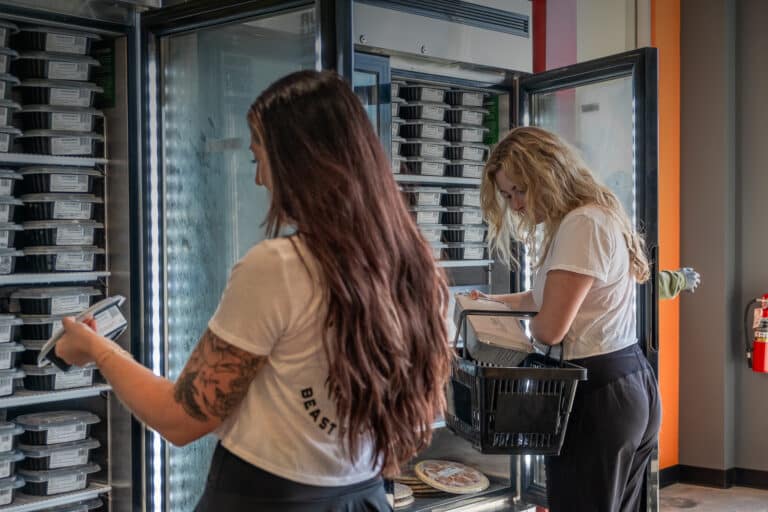
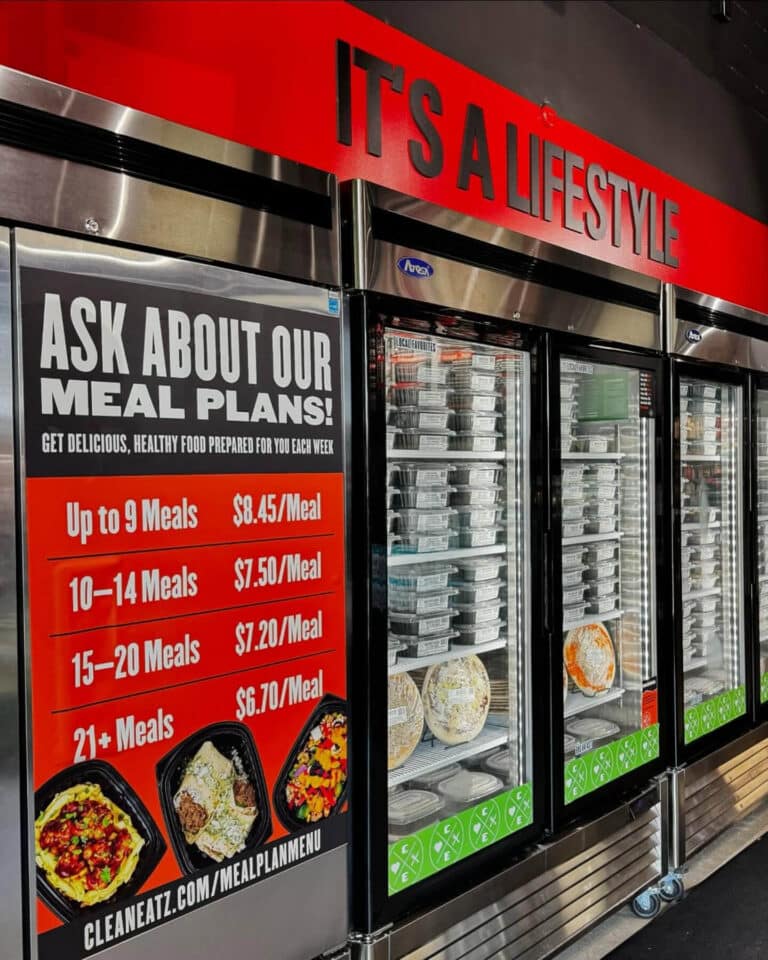
Mornings are production. Cafe prep, restocking the Grab-N-Go freezers and, on meal plan days, the week’s pre-portioned orders all happen before service starts. With no fryers, there is no oil to filter and no fry station to staff.
Receiving and ordering sit here too. Item 8 of every FDD lists the restrictions on where you buy, and Clean Eatz’s Item 7 budgets $10,000 to $18,000 of initial inventory from approved suppliers. Checking each delivery against the order is quiet work, and food cost is made or lost in it.
Then a short huddle. In a lean crew one absence changes everyone’s station, so it gets settled before the first ticket.
Midday: service in a condensed daypart
Lunch, pickups & the long afternoon
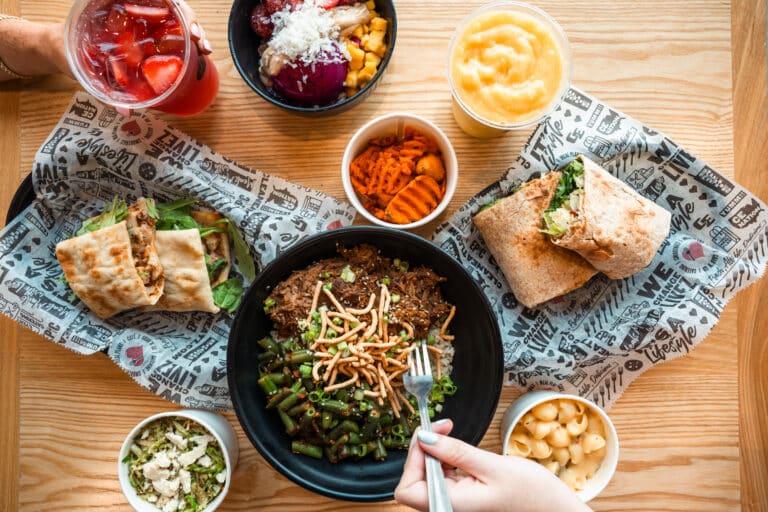
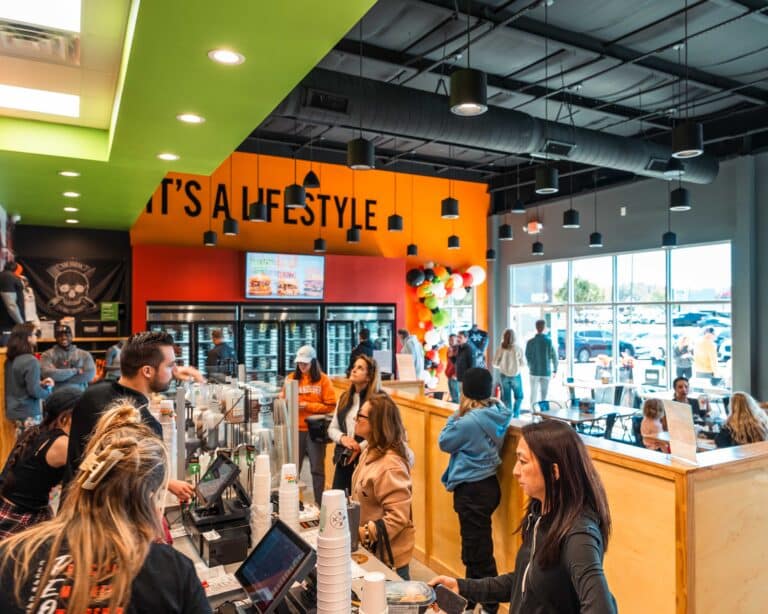
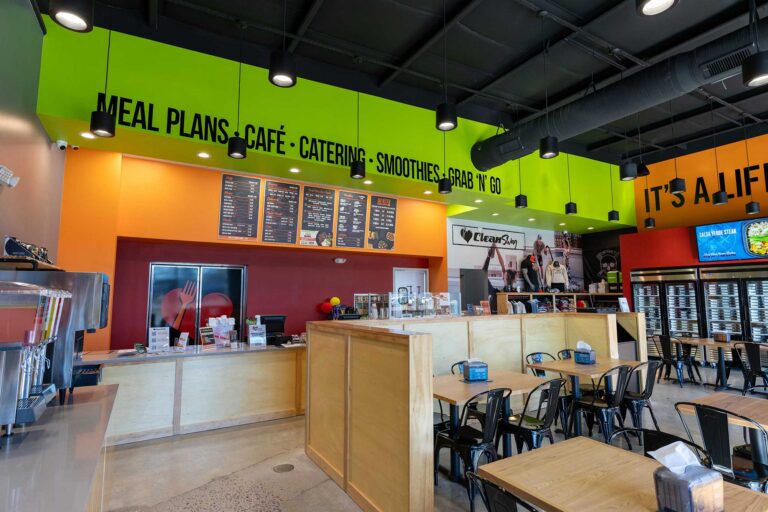
Service opens around 11am and carries the lunch rush into the afternoon. In-Store Cafe orders for burgers, flatbreads, bowls and smoothies, Grab-N-Go Meals pulled from the freezers and meal plan pickups can land in the same hour. On a short-staffed day you run a station yourself. On a full one, you watch ticket times and out-of-stocks.
Afternoons are where a condensed daypart earns its keep. A dinner-driven restaurant usually staffs a lunch rush and a dinner rush, often with split shifts between them. A cafe that closes around 7pm has one continuous window, and the slower afternoon goes to prep and catering calls.
Evenings: an early close
Closed by seven, home soon after
Closing around 7pm changes when the evening work happens more than how much of it there is. Cleaning, counts and the cash reconciliation still get done, while most of your town is eating dinner, and with no fryer the close skips oil handling.
Clean Eatz’s own post, No fryers, closed by seven, argues that the last two hours of a late-close restaurant are often among its least profitable. Yet a cafe closed at 8pm sells nothing at 8pm, so daytime traffic and pre-ordered meals carry the week.
An early close matters for more than margin. In “Why Restaurants Fail” (Parsa and colleagues, 2005), a study of restaurant ownership turnover in Columbus, Ohio, the successful owners interviewed were either good at balancing family and work or not married. Five owners who closed said they quit once they were no longer willing to make those family sacrifices. Old interviews from one city, and a cost no spreadsheet carries.
The weekly rhythm of meal plans
The cycle that sets the week
A healthy franchise built on meal plans runs on two clocks: daily service, and a weekly meal plan cycle in which customers order ahead, the kitchen produces and packs, and customers collect a week of food at once. Clean Eatz describes its Meal Plans as “weekly pre-portioned, healthy meals for breakfast, lunch and dinner, customizable for dietary needs.”
That recurring cycle is a large part of the brand’s case to owners. What sets this healthy franchise apart sets Clean Eatz beside a traditional quick service or fast casual brand and puts the difference in one row: “One transaction at a time” against “Recurring: weekly meal plans build in repeat revenue.”
Weekly meal plan packaging
Production with a deadline
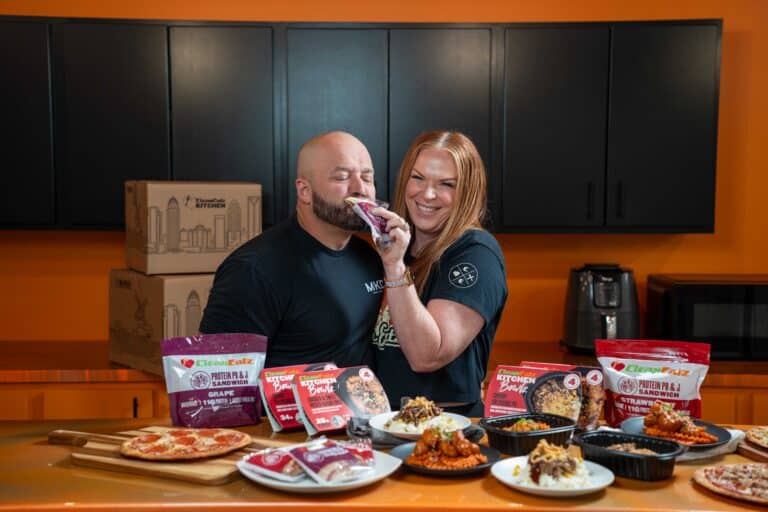
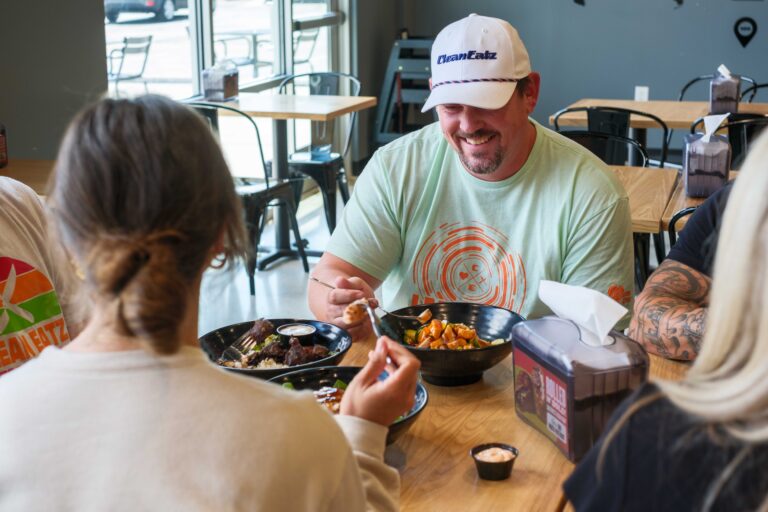
Meal plan packaging is a production run with a pickup deadline. Every order is portioned, packed and staged for pickup. Dietary customization and bundles such as the GLP-1 Meal Plan Bundle of “macro-friendly, portion-controlled meals” add steps to each run.
A meal plan is sold before it is made. That gives the owner a known volume to schedule labor and order food against. It also demands discipline: every week, complete and on time, whether two people called out or not.
Use this worksheet to map an owner’s week. Fee rows come from the Clean Eatz FDD. Order windows and pickup days are not published for franchise buyers, so confirm the rest on validation calls.
| Cadence | What happens | Ask owners in validation |
|---|---|---|
| Daily | Prep, receiving, team huddle, service, close-down | What time do you arrive and leave, in year one and now? |
| Weekly | Meal plan order cutoff, production, packaging and pickups | Which day does your order window close, and who runs the packing? |
| Weekly | Royalty of 6% of gross sales, processed by automatic ACH | How do you check weekly sales against that draft? |
| Weekly | Labor schedule and food orders | Who writes the schedule, you or a manager? |
| Monthly | Technology fee of $638 by ACH on the 1st | Which systems does it cover in daily use? |
| Ongoing | Local marketing of at least 1% of gross sales, catering outreach | Which events and accounts bring in catering? |
| Monthly | P&L review with your accountant | Which cost line moves first when sales dip? |
Catering & community events
Orders that come from the community
Catering is the fifth stream, offered as “a fresh alternative to traditional event menus.” Catering orders are booked ahead, so they slot into the week the way meal plans do. Selling them to offices, gyms, schools and teams usually falls to the owner.
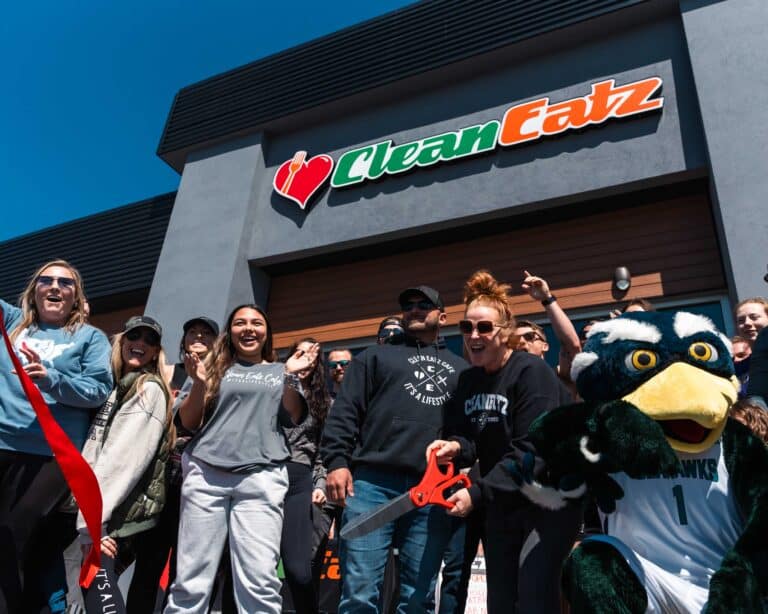
Community work is how a local owner earns catering and meal plan customers, and the FDD puts money behind it. Item 6 requires local marketing of at least 1% of gross sales, which is $1,000 on every $100,000. Item 7 adds $5,000 of initial marketing funds paid to Clean Eatz across the pre-opening period and the first two months. After launch, the Ops & Marketing Team supplies “campaigns, tools and coaching.” Showing up is still the owner’s job.
Franchise owner responsibilities vs the manager’s
Who owns which job
Franchise owner responsibilities come in two kinds. Some can go to a trained manager: the schedule, the line, the daily checklists. Others stay with the franchise owner no matter who runs the floor, because the franchise agreement, the lease and the loan carry the owner’s signature.
No manager can take the second kind off your plate. An SBA guide to running a business sorts it into bookkeeping, hiring and managing employees under state and federal labor law, meeting federal, state and local tax obligations, and staying legally compliant. A franchise adds brand standards on top.
| Owner | General manager, if you hire one | |
|---|---|---|
| Franchise agreement & brand standards | Signs it and answers for it | Applies the standards every shift |
| Lease, loans & insurance | Signs, pays and renews | No role |
| Taxes & payroll compliance | Owns it, with a CPA | Collects hours and paperwork |
| Hiring & firing | Final call, sets pay | Recruits, interviews, recommends |
| Weekly schedule | Sets the labor budget | Writes the schedule inside it |
| Meal plan production | Watches accuracy and waste | Runs the packing |
| Catering & local marketing | Sells, shows up, spends the 1% | Fills the orders |
| P&L & weekly fees | Reviews every week | Reports the numbers |
Treat the table as a starting split, not the brand’s rule. Item 15 of the FDD, titled “Obligation to Participate in the Actual Operation of the Franchise Business,” must say if you have to take part personally and whether the franchisor recommends it, under 16 CFR 436.5(o). Item 11 covers the training. Read both before you decide what to hand off.
Before you budget a manager
Write down the decisions you will never delegate. If the schedule and the food order are on that list, you are describing an owner-operator week, and your model should say so.
Owner operator franchise or a managed cafe
Run the floor or run the manager
An owner operator franchise expects the owner in the business, and Clean Eatz says so plainly. It looks for owners who live within roughly a one-hour drive of their cafe, and its steps-to-own page says the model “isn’t designed as an absentee investment.” That rules out being a franchise owner from a distance.
Inside that rule there are two ways to run the week, and the FTC guide asks you to pick one early: “Do you intend to operate the business yourself or hire a manager?” One owner works the floor as the cafe’s manager. Another hires a general manager and spends the hours on people, catering sales and the numbers. What differs is who stands in the kitchen at 10am and who gets paid for it.
| You run the floor | You hire a general manager | |
|---|---|---|
| Your hours in the cafe | Most of the service day | Fewer on the line, more on sales and numbers |
| Payroll | No manager salary to fund | A manager salary to fund |
| If you are out sick | The cafe leans on your shift leads | The manager covers |
Item 19 shows why the choice matters. In 2025, the 92 franchised Clean Eatz cafes open at least 18 months reported average EBITDA of $128,312 before owner and manager salary. Your pay and a general manager’s pay both sit below that line, along with debt service, depreciation and taxes, so the choice decides who that line has to cover. Read the Item 19 figures with their notes before you model either path.
*Financial performance representation. These figures are taken from Item 19 of the Clean Eatz Franchise Disclosure Document dated April 30, 2026, and reflect January 1 through December 31, 2025. They represent 92 franchised restaurants open at least eighteen months as of December 31, 2025 and operated by the same franchisee throughout the period. EBITDA is stated before owner and manager salary. These are historical results for existing locations. They are not a projection or guarantee of what you may earn. Your results may differ, and there is no assurance you will do as well. Written substantiation is available upon request. See Item 19 of the FDD for complete information.
Price a manager for your own market. The median annual wage for food service managers was $69,390 in May 2025, according to the BLS Occupational Outlook Handbook, an all-industry figure that varies by city. Finding one is its own job. In the National Restaurant Association’s 2026 State of the Restaurant Industry report, 65% of limited-service operators said manager positions drew fewer applicants than average in 2025.
Managing a cafe can also be a path into ownership.
I started as a store manager and worked my way up to owning two locations.
Dylan Richmond, 2 locations, Virginia
Benefits of owning a franchise & the hard parts
What you get & what it costs
The benefits of owning a franchise are mostly borrowed years: a menu, approved suppliers, training and a brand someone else spent a decade building. You pay for them in fees, rules and less control over what you sell. An honest list of the pros and cons of owning a franchise prices both, as the table below does with Clean Eatz FDD figures.
Owning a franchise does not remove restaurant risk. Parsa’s study found three-year ownership turnover of 57.2% for chain units against 61.4% for independents in Columbus from 1996 to 1999, and the authors called the gap marginal. Turnover there counts any change of owner, including a sale, so it overstates closures.
| The benefit | The hard part | |
|---|---|---|
| Training | 10 Days at HQ, one-on-one, plus On Demand Training | Ten days teaches the system. Your first months teach the job. |
| Opening | Grand Opening Support on site through opening week | An estimated initial investment of $307,500 to $733,500 in Item 7 |
| Hours | A condensed daypart, roughly 11am to 7pm | No late-evening sales to fall back on |
| Kitchen | No fryers and a smaller equipment package | A menu you follow rather than write |
| Revenue | Five revenue streams, including recurring weekly meal plans | A weekly production run that cannot slip |
| Fees | Brand, systems and the Ops & Marketing Team | 6% royalty, 2% brand fund, 1% or more local marketing: at least $9,000 per $100,000 of gross sales, plus $7,656 a year in tech fees |
| Presence | Peers in CE Nation and an annual franchisee conference | You live within roughly an hour and work in the cafe |
Read the hard parts as questions for the people living them. Owner stories in their words collects what current owners say about the trade.
This is the first one that felt like joining a family instead of a franchise
Mike Parker, 5 locations, North Carolina
Red flags in any owner’s week
An owner who cannot tell you what time they leave. A seller who calls a food concept semi-absentee. Validation calls arranged only with top performers. Any earnings figure from a sales conversation that is not in Item 19.
How to become a franchise owner
Eight steps from first call to site
How to become a franchise owner is mostly a sequence of documents and conversations. The federal Franchise Rule, 16 CFR 436.2(a), requires the franchisor to give you its current disclosure document at least 14 calendar days before you sign a binding agreement or pay the franchisor or an affiliate anything.
At Clean Eatz the path has eight named steps, laid out in Eight steps to sign on. Exploring costs nothing: introductory calls, discovery conversations, the FDD review, validation and Discovery Day carry no charge, and the financial commitment comes only when you sign a franchise agreement.
- Tell Us About You. Share your details, then an introductory call.
- Submit Your Application. Background, experience and financials. A single unit calls for $1,000,000 net worth and $250,000 liquid.
- Get to Know the Brand. Discovery calls and materials.
- Review the FDD. Clean Eatz says to “take the time to review it with your attorney and accountant.”
- Talk to Our Owners. Validation, which the brand calls “the most important step in the process” and describes as “direct, unscripted conversations with current Clean Eatz owners.”
- Discovery Day. “Come to Wilmington, meet the departments behind the brand, and see the operation for yourself.”
- Sign On. Sign the franchise agreement and join CE Nation.
- Find Your Site. With the brand’s real estate and construction support.
Discovery typically runs over “a focused span of weeks.” Signing to opening depends on real estate and build-out in your market, so treat any opening date as a range until you hold a lease.
Clean Eatz says “we don’t screen who you speak with,” so pick several owners yourself from the Item 20 list and ask each where their cafe sits against the Item 19 average.
- What time did you arrive and leave in your first three months, and what about now?
- Which day does your meal plan order window close, and who runs the packing?
- Do you work the floor or pay a general manager, and why that choice?
- Where does catering come from in your market, and who sells it?
- What was harder in year one than you expected?
- Would you sign again?
Sources
- Manage your business, U.S. Small Business Administration
- 16 CFR 436.2(a), 14-day disclosure rule, FTC Franchise Rule
- 16 CFR 436.5(o), Item 15 disclosure
- A Consumer’s Guide to Buying a Franchise, Federal Trade Commission, September 2020
- Why Restaurants Fail, Parsa et al., Cornell Hotel and Restaurant Administration Quarterly, 2005
- Food Service Managers, Occupational Outlook Handbook, BLS, May 2025 wage data
- JOLTS Table 22, annual average quits rates by industry, BLS, 2025
- 2026 State of the Restaurant Industry, National Restaurant Association, February 2026
- Why Clean Eatz, Clean Eatz Franchising
- Steps to own, Clean Eatz Franchising
- Our franchisees, Clean Eatz Franchising
- Investment & earnings, Clean Eatz Franchising, FDD dated April 30, 2026
Common questions about owning a franchise
Quick answers on the owner’s week
How many hours does a franchise owner work?
There is no standard number, and Clean Eatz does not publish one. Its cafes keep a condensed daypart of roughly 11am to 7pm, but an owner-operator’s day starts before opening and ends after close-down. Ask several owners in validation what time they arrive and leave, in their first year and now.
Do you need restaurant experience?
No. Clean Eatz names restaurant management, fitness and wellness, manufacturing and military service at E-5 or above as backgrounds that fit, and says mission alignment matters most. Training starts with 10 Days at HQ in Wilmington, delivered one-on-one. Ask recent owners how well it covered their gaps.
What is the hardest part of the first year?
Often it is people: hiring, training and keeping a crew while you learn the system yourself. BLS JOLTS data put the 2025 quits rate for accommodation and food services at 4.2% a month, against 2.2% for all private industries. Year one is also absent from Clean Eatz’s Item 19, which counts only cafes open at least 18 months, so ask owners directly how their first year went.
Do I have to live near the cafe?
Yes. Clean Eatz looks for owners who live within roughly a one-hour drive of their cafe, so they can be present for the team, the customers and the community. It isn’t designed as an absentee investment.